Instant Download • Mobile-Friendly + Printable PDF
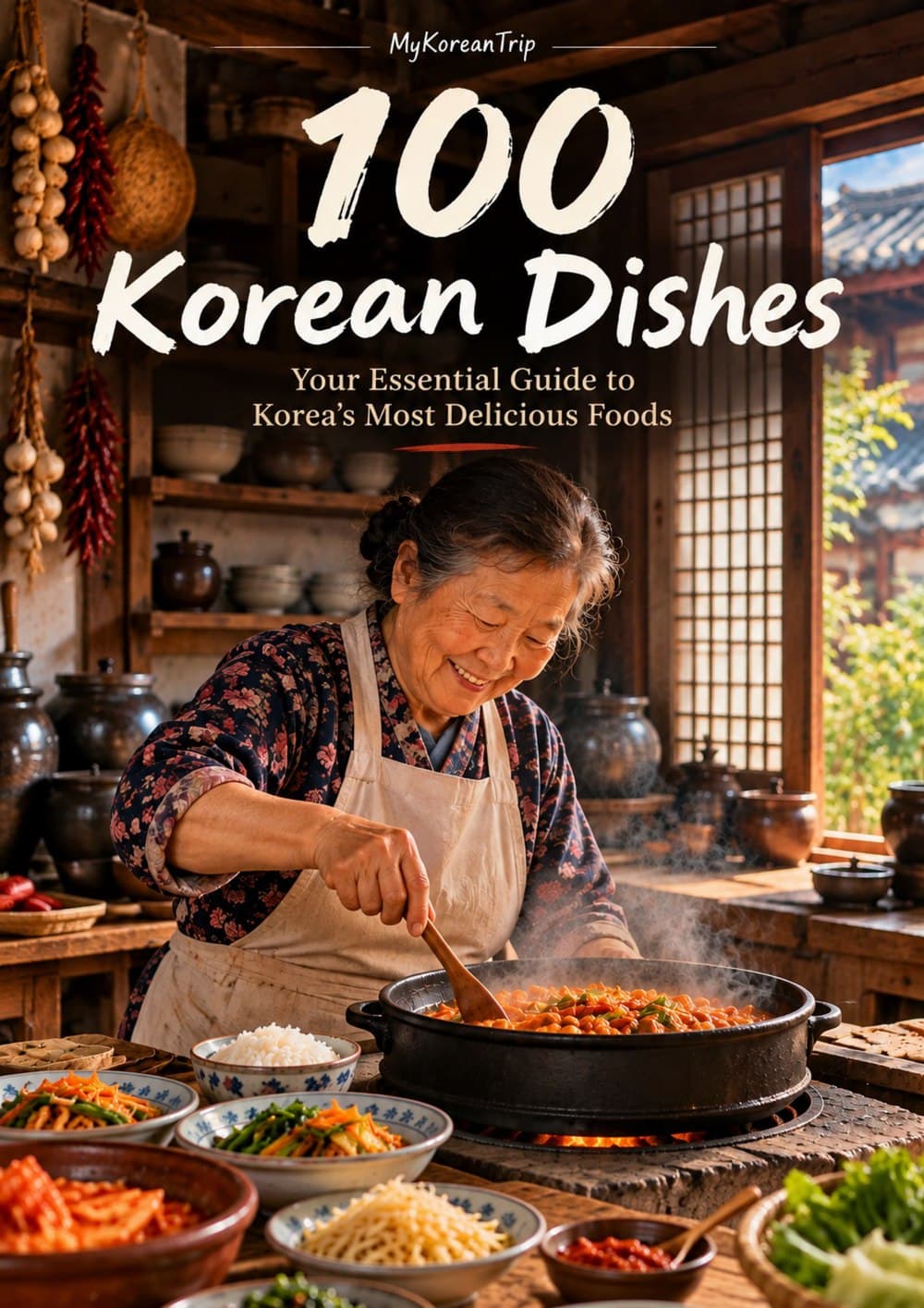
The 100 Korean Foods Cookbook
A hundred Korean recipes, one to a page — the dishes from the free guide, with the Hangul, the method, and what to buy before you start.
Preview — see what you’ll download
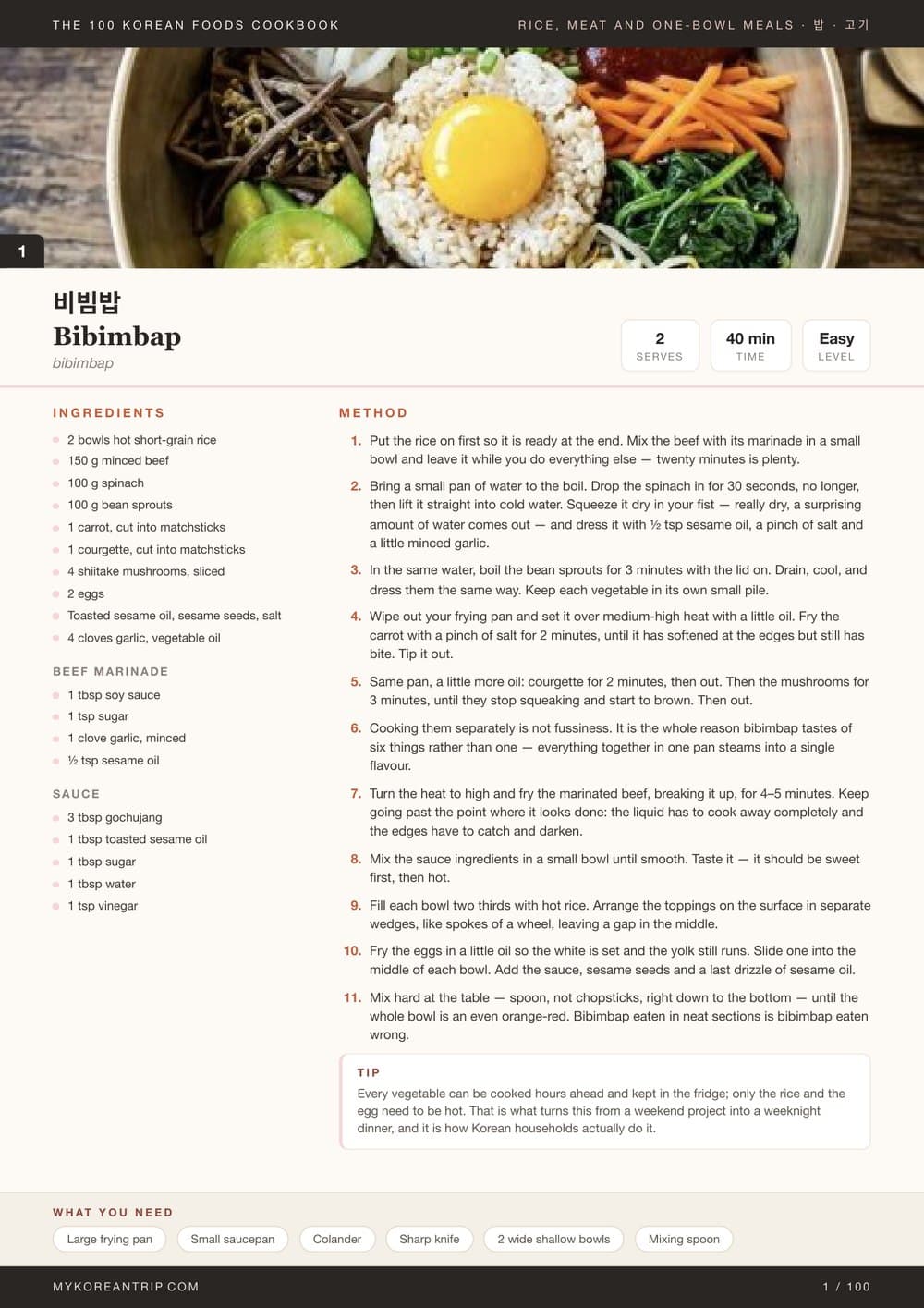
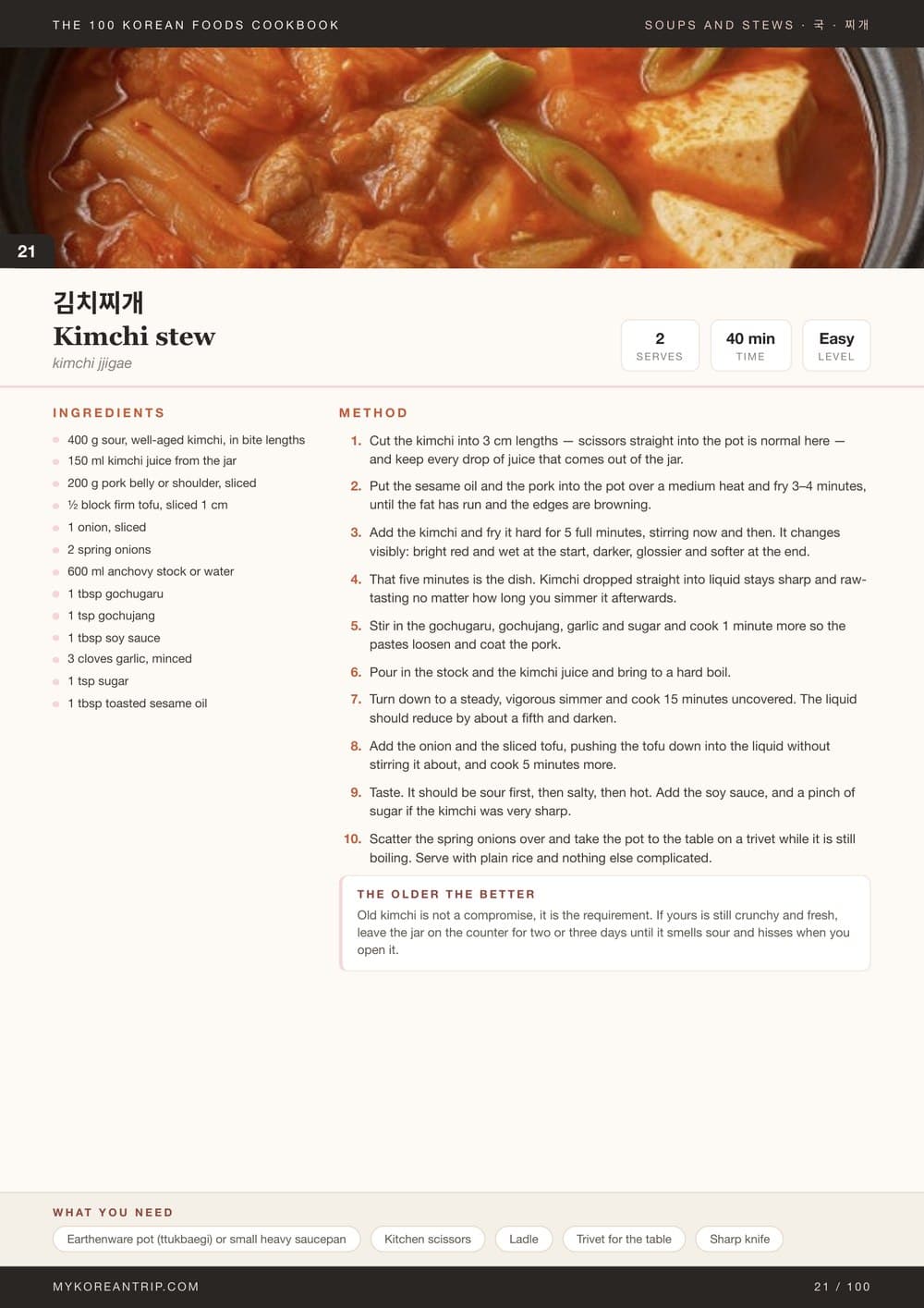
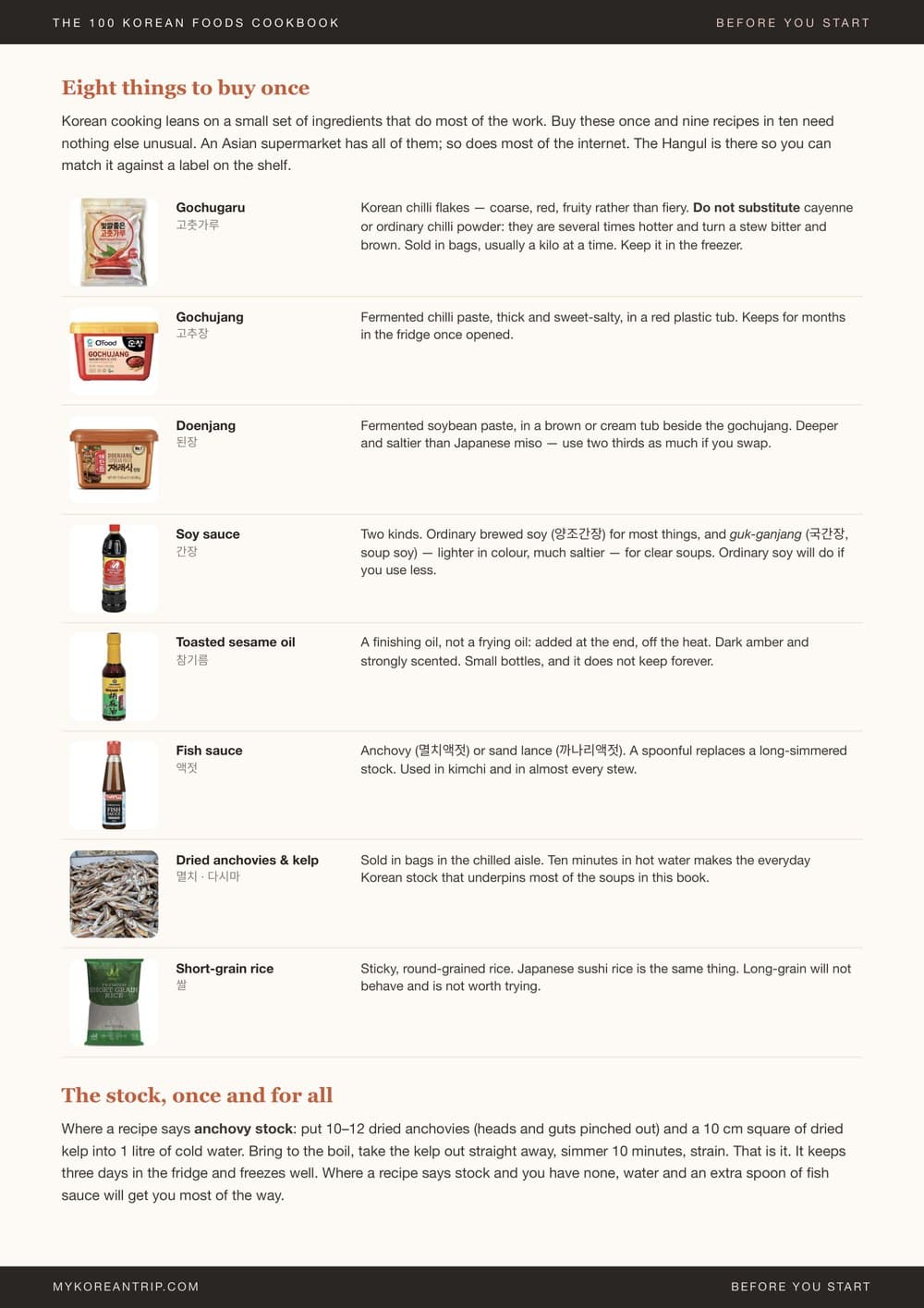
Real pages from the PDF itself — 102 pages, mobile-friendly and printable, yours the moment you buy.
You know what the dishes are. This is how to make them.
Every one of the hundred dishes in the free visual guide, in the same order, with the same photograph — and a full recipe on each page. 102 pages.
What's on every page
The dish photographed, its name in Hangul and English, how long it takes, how many it feeds and how hard it is. Then the ingredients, the method — nine or ten numbered steps, written so you are never guessing what the pan should look like or sound like — and one note on the thing that actually decides whether it works.
And at the foot of every page, what you need: the pans, the bowl, the steamer basket, the bamboo mat. Nobody should get three steps into a recipe and discover they needed a stone bowl.
Written for a kitchen outside Korea
It opens with the eight things worth buying once, pictured, with the Hangul next to each so you can match it against a label on the shelf. It says what each one does, and which supermarket substitutions are fine and which will ruin the dish. Gochugaru is not chilli powder, and the book says so on page one rather than leaving you to find out.
There is one anchovy stock that underpins most of the soups, explained once, in four lines.
What's in it
Rice, meat and one-bowl meals. Bibimbap and the stone-bowl version, kimchi fried rice, gimbap, bulgogi, three kinds of Korean barbecue, dakgalbi, jjimdak, bossam, jokbal.
Soups and stews. Kimchi jjigae, doenjang jjigae, sundubu, army stew, gamjatang, the ox bone broths, samgyetang, the hangover soups.
Noodles. Both cold buckwheat noodles, hand-cut kalguksu, jjajangmyeon, jjamppong, cold soy milk noodles, and yes, the instant ones — cooked the way Koreans actually cook them.
Seafood. Braised mackerel and hairtail, soy-marinated crab, the octopus stir-fries, monkfish, abalone porridge.
Street food, pancakes and sides. Tteokbokki, hotteok, dumplings three ways, five pancakes, japchae, steamed egg, rolled omelette.
An honest note
Five of the hundred are not recipes and are not written as though they were. Raw fish, sea squirt and sea cucumber are bought, cleaned and served, not cooked — so those pages tell you what to buy, how to prepare it and what it is eaten with, which is the part that is genuinely difficult outside Korea.
The download
One PDF, 102 pages, readable on a phone at the market and printable at home.
Start with the free one
The 100 Korean Foods visual guide is free and always will be. This is the book for when you want to cook them rather than order them.
Reviews
No reviews yet — be the first once you’ve tried it.