Things to do
Watching live sport in South Korea
Baseball, volleyball, football, basketball & esports
Want to experience Korea beyond palaces, markets and cafés? Go to a game.
Korean sporting events are loud, social and often very different from what international visitors are used to. Baseball crowds sing a different chant for every player, volleyball is played in compact indoor arenas, football brings proper supporter sections, and Seoul is one of the world’s great cities for watching professional esports.
Tickets are cheap, too, which makes a live game one of the easiest things to add to a trip.
Baseball
KBO League
- Season
- March – October
- Tickets
- Around ₩10,000–₩30,000+, depending on team and seat
- Best for
- First-time visitors
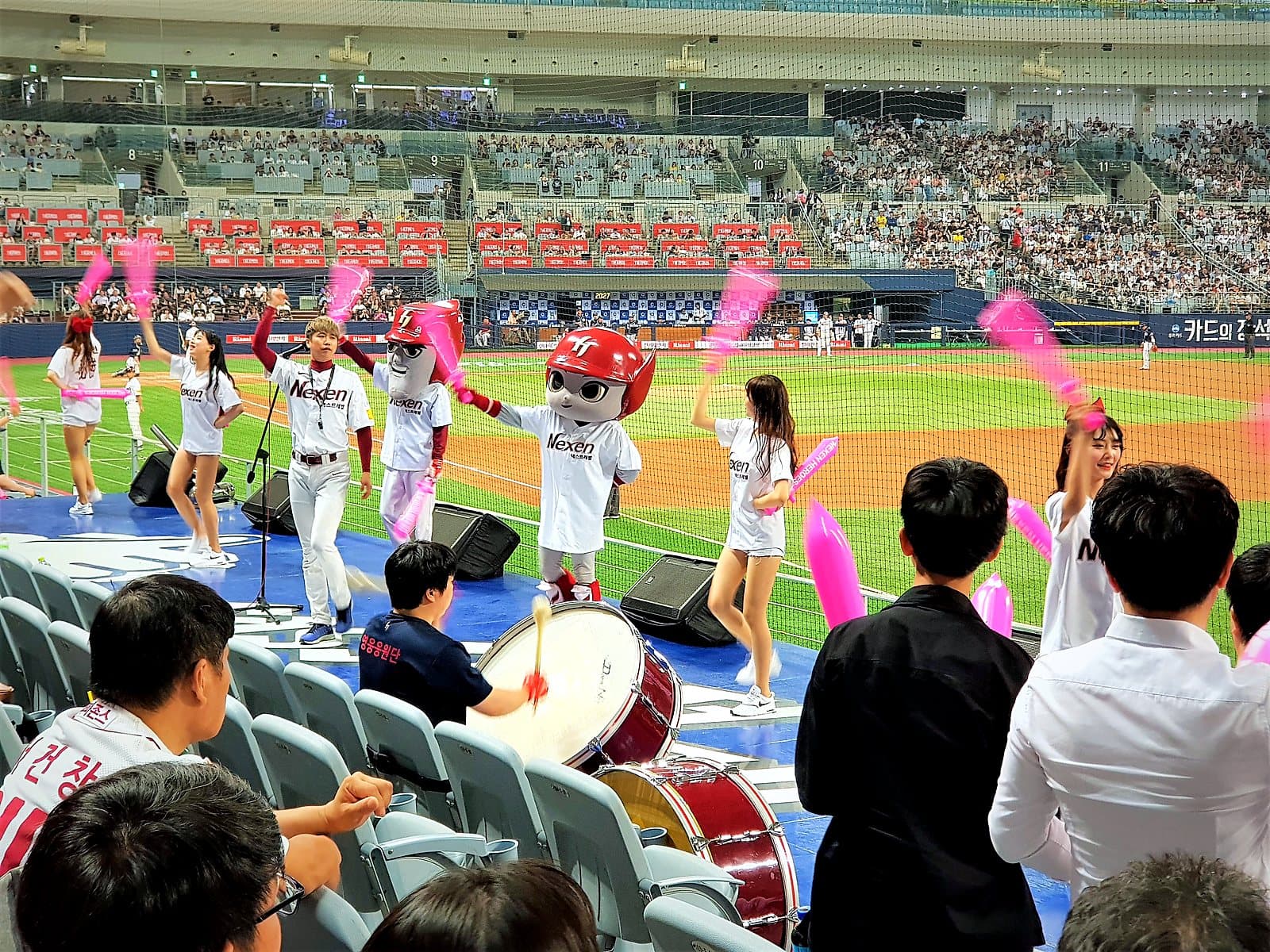
If you're only going to watch one sport in Korea, make it baseball. The KBO League has 10 professional teams and one of the most distinctive live atmospheres in the country.
Forget quietly watching nine innings. Korean baseball is constant chanting, cheerleaders on a dugout stage, team songs, food, beer and entire sections singing a different song for each player as he comes to the plate.
The 2026 regular season began on 28 March, with each club scheduled to play 144 games, running through September before the postseason. Games are commonly 18:30 on weekdays, 17:00 on Saturdays and 14:00 on Sundays, though start times change.
One thing that surprises visitors: you can bring your own food in. Koreans turn up with fried chicken, tteokbokki and convenience-store beer, and there are chicken shops outside every ground that will box it up for you on the way in.
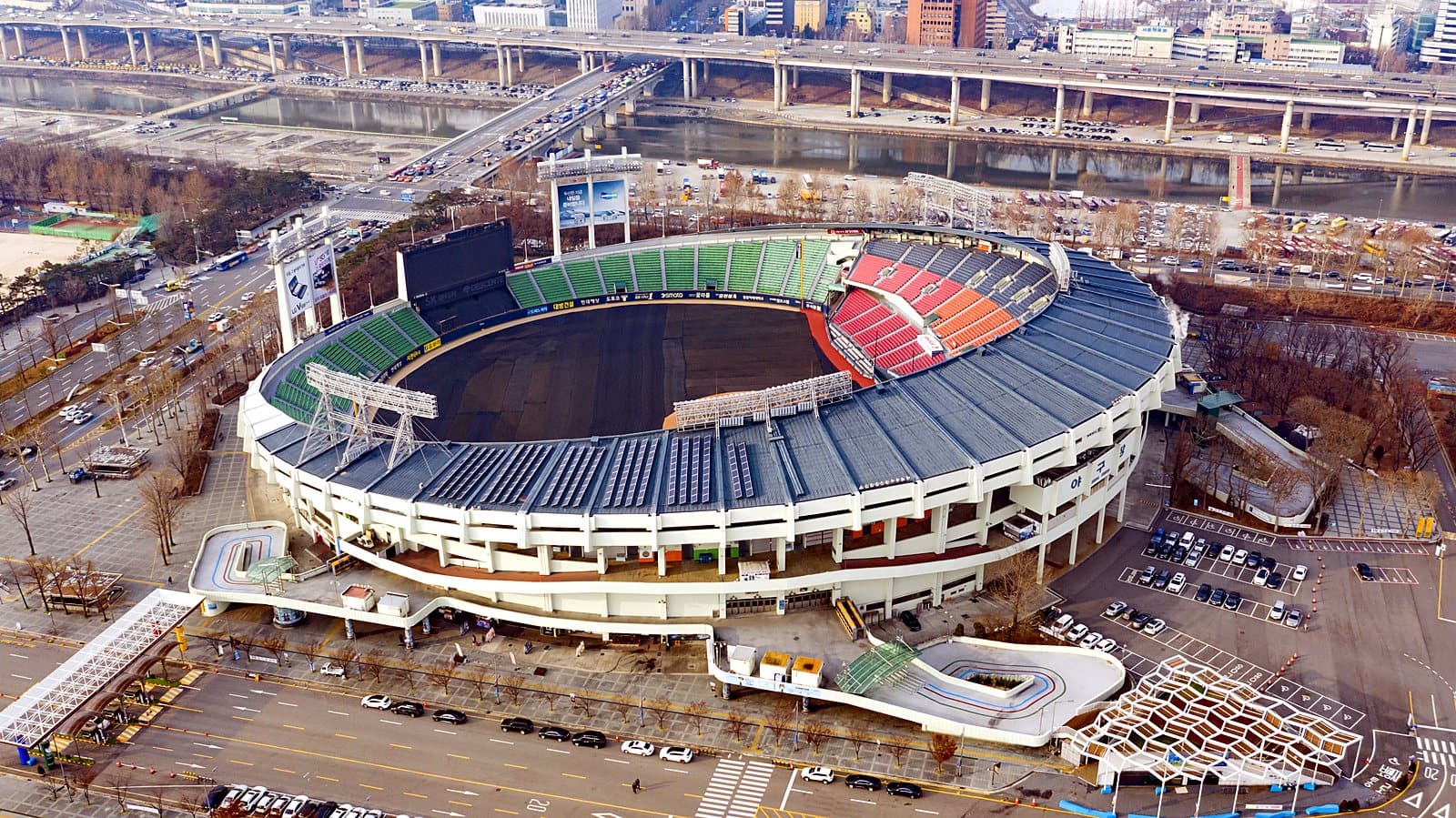
Photograph by Arne Müseler, CC BY-SA 3.0 de
The 10 KBO teams
| City | Team | Stadium |
|---|---|---|
| Seoul | LG Twins | Jamsil Baseball Stadium |
| Seoul | Doosan Bears | Jamsil Baseball Stadium |
| Seoul | Kiwoom Heroes | Gocheok Sky Dome |
| Incheon | SSG Landers | Incheon SSG Landers Field |
| Suwon | KT Wiz | Suwon KT Wiz Park |
| Daejeon | Hanwha Eagles | Daejeon Hanwha Life Ballpark |
| Daegu | Samsung Lions | Daegu Samsung Lions Park |
| Busan | Lotte Giants | Sajik Baseball Stadium |
| Gwangju | KIA Tigers | Gwangju-Kia Champions Field |
| Changwon | NC Dinos | Changwon NC Park |
Jamsil Baseball Stadium
Shared by the LG Twins and the Doosan Bears, and the classic place to see a Korean game. Sports Complex station on Line 2, exit 5 or 6.
Gocheok Sky Dome
Home of the Kiwoom Heroes and the only indoor ballpark in the country, so rain is never a problem. Guil station on Line 1.
Volleyball
V-League
- Season
- Autumn – spring
- Tickets
- Around ₩10,000–₩25,000 for standard seating
- Best for
- Winter visitors
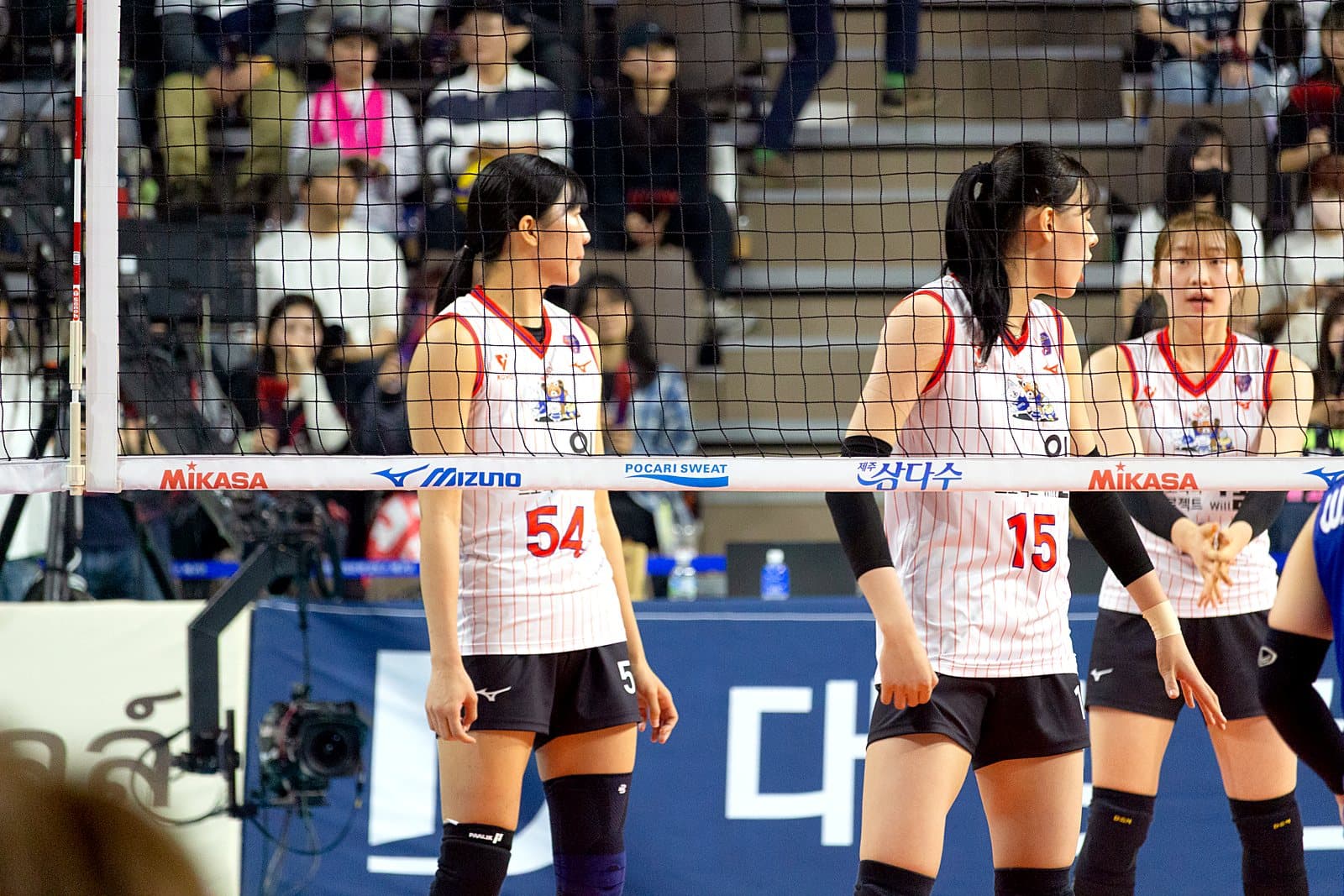
If you're in Korea when baseball isn't being played, professional volleyball is the answer. The V-League runs separate men's and women's competitions in indoor arenas around the country.
The venues are small, so you are much closer to the action than at a ballpark or a football ground — and the organised cheering, music and mascots between points are the same as everywhere else in Korean sport.
In Seoul the easy venue is Jangchung Arena (장충체육관), a short walk from Dongguk University station on Line 3. It holds roughly 4,500 and is home to Seoul Woori Card in the men's league and the GS Caltex Seoul KIXX in the women's.
GS Caltex seating currently runs from around ₩18,000 for a standard adult seat to about ₩25,000 in the cheering section, with premium options above that.
Esports
LCK — League of Legends Champions Korea
- Season
- Events across much of the year
- Tickets
- Around ₩25,000 for a regular-season seat in 2026
- Best for
- Gaming fans
In Korea, gaming isn't only something people do at home. Professional esports is a proper spectator sport, and Seoul is one of the best cities on earth to watch it.
The big competition is the LCK, home to T1, Gen.G, Hanwha Life Esports, Dplus KIA and the rest. Regular matches are played at CHZZK LoL PARK, inside the Gran Seoul building in Jongno — a purpose-built venue that puts the crowd very close to the stage.
It's central, too: Jonggak station is underneath it, which makes a match easy to bolt on to a day around Insadong, Gwanghwamun or Gyeongbokgung.
Regular-season tickets have been about ₩25,000 in 2026; a playoff match at LoL PARK was ₩45,000. Finals often move out to a much larger arena entirely.
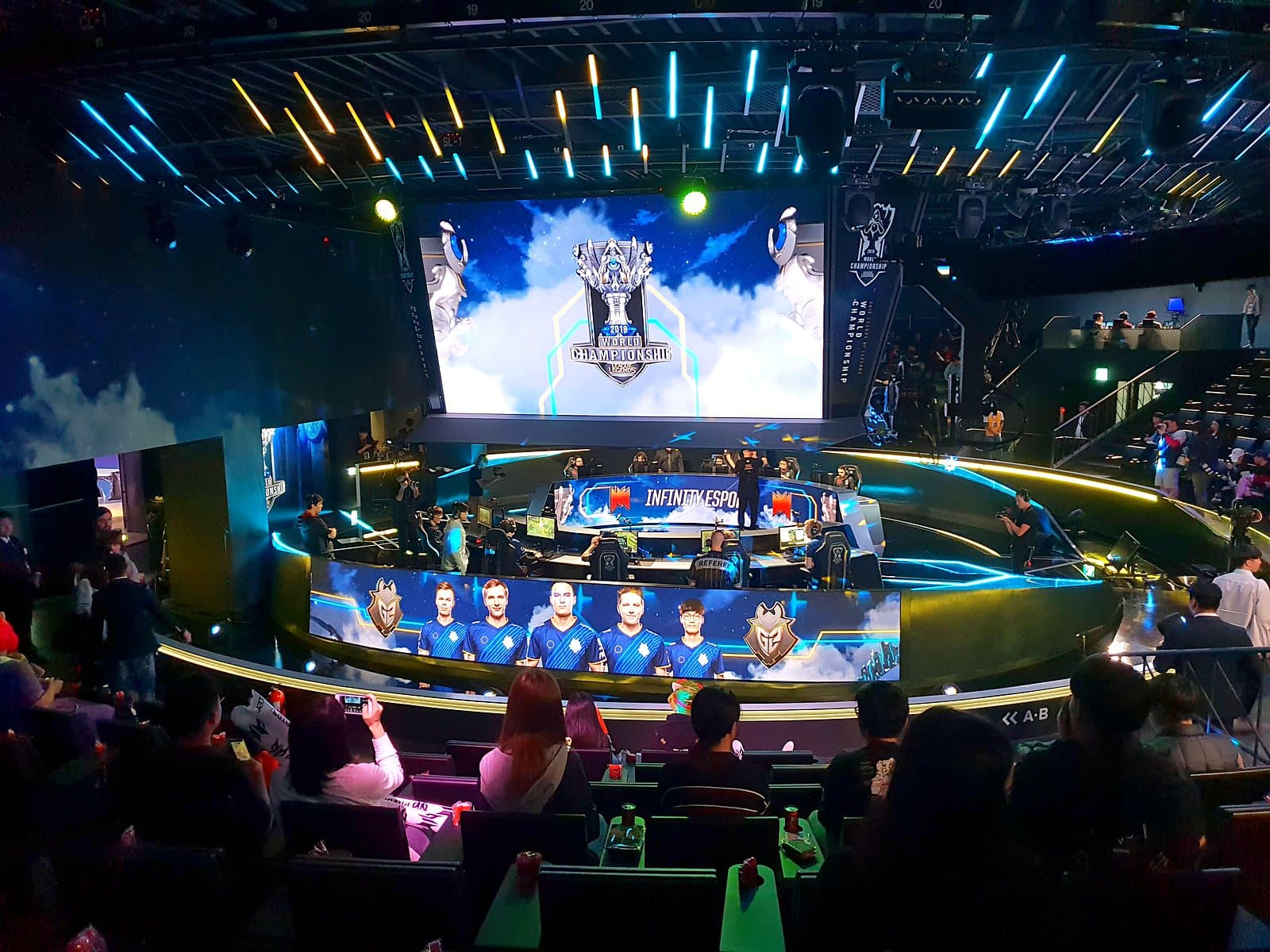
Photograph by Wikimedia Commons contributor, CC BY-SA 4.0
Football
K League 1
- Season
- February/March – autumn
- Tickets
- Around ₩13,000–₩30,000+
- Best for
- Football fans
Korea has its own professional pyramid, headed by K League 1, and the atmosphere is the one European fans will recognise: supporter ends, flags, drums, scarves and organised chants.
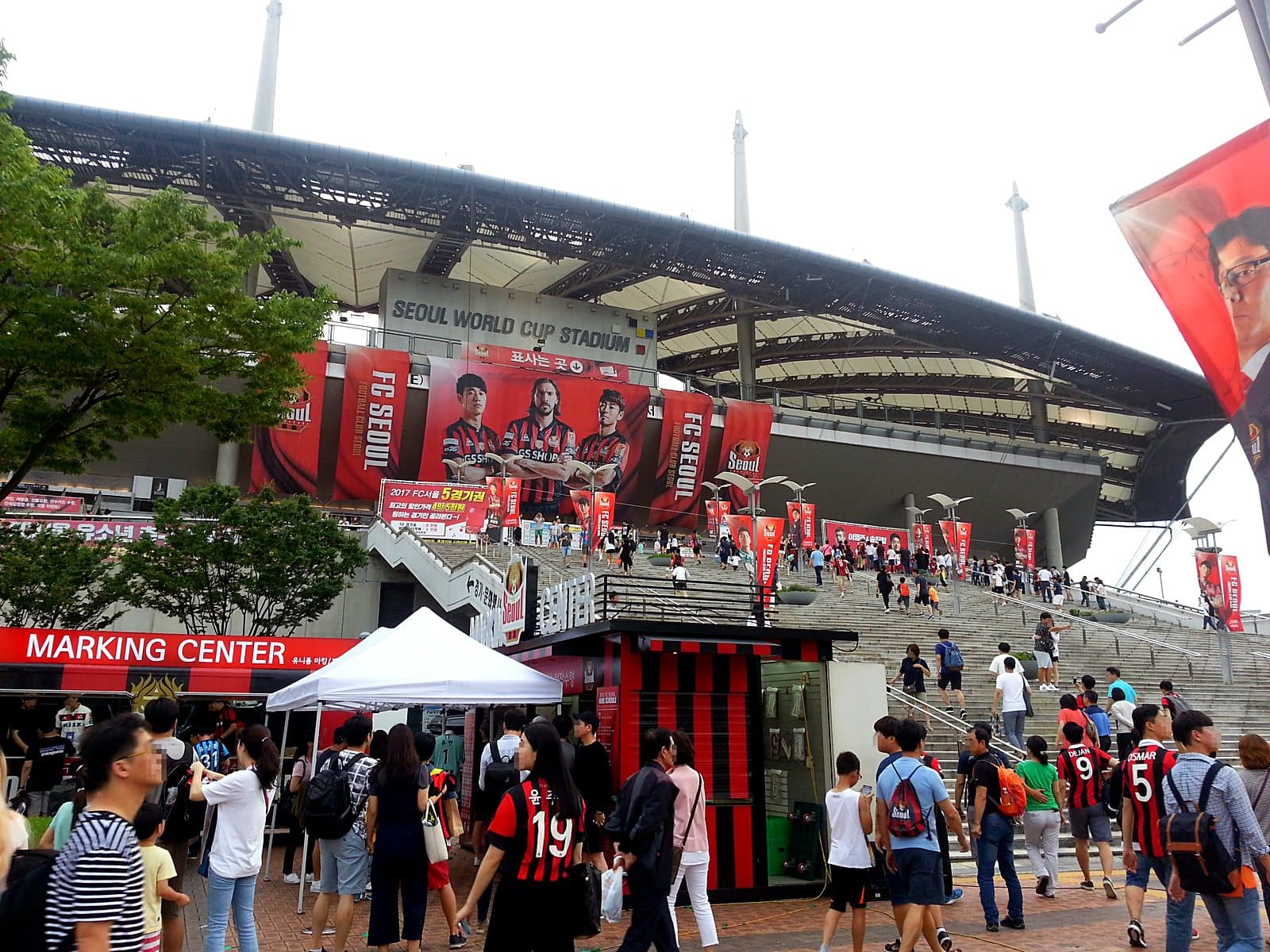
For anyone staying in Seoul the obvious starting point is FC Seoul at Seoul World Cup Stadium, built for the 2002 World Cup and sat directly on top of World Cup Stadium station on Line 6.
Standard adult tickets start around ₩17,000 for E/N seating, with central and pitchside seats costing more and big fixtures carrying a surcharge. Several FC Seoul home games in 2026 drew over 20,000, and some over 30,000.
If you're travelling around the country, the league also gives you a reason to visit Jeonju, Ulsan, Daejeon, Pohang, Gwangju, Incheon and Jeju.
Photograph by Exj, CC BY-SA 4.0
Basketball
KBL
- Season
- October – April
- Tickets
- Usually inexpensive by North American or European standards
- Best for
- Winter evenings indoors
The men's Korean Basketball League has 10 teams, each playing 54 regular-season games — 27 at home, 27 away — with the top six going into the playoffs. The 2025–26 regular season ran from October into April.
The clubs are spread around the country rather than concentrated in Seoul, so basketball is a good option when you're travelling outside the capital in the colder months.
Tickets vary by club and seat, but standard admission is generally cheap compared with the NBA or the big European leagues.
Photograph in the public domain.
MMA
Road FC and the domestic circuit
- Season
- Event-led, across the year
- Tickets
- Varies by card and venue
- Best for
- Combat sports fans
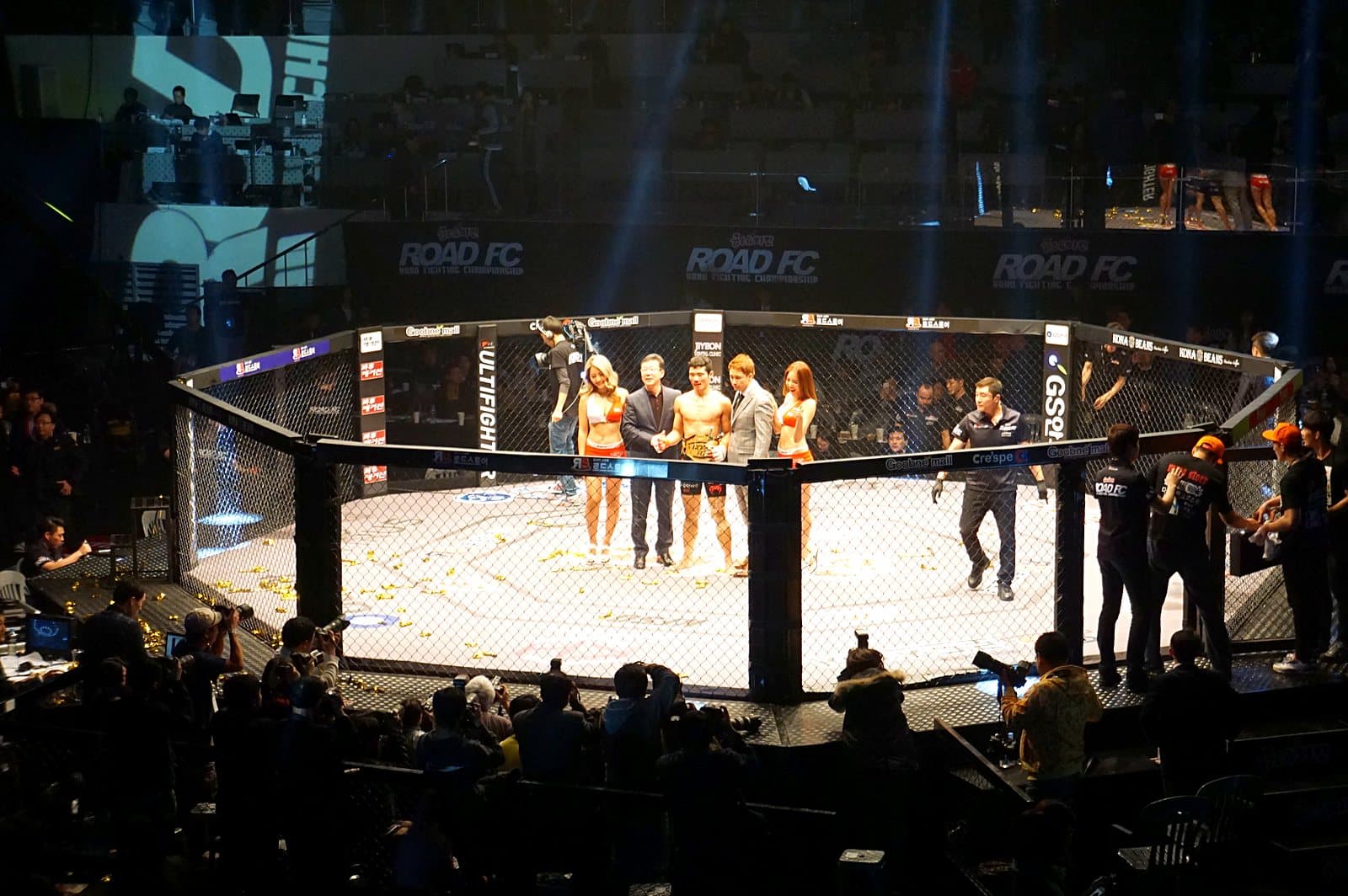
Korea has a real domestic MMA scene, and Road FC is the centre of it. Founded in 2010 and based in Wonju, it became the country's biggest promotion after Spirit MC folded, and it has run well over a hundred cards in Korea, Japan and China since.
It fights across ten weight divisions from atomweight up to heavyweight, plus an openweight bracket with no limit at all — a format that produces the sort of mismatch most promotions won't stage. Since 2012 it has also run an amateur ladder, the Central and Into leagues, which is where most Korean pros come up.
Cards move around the country rather than living in one building; Jangchung Arena in central Seoul, the same hall as the winter volleyball, has hosted title fights. Fights air on SPOTV domestically and a good deal goes up on YouTube, so you can watch before you commit to a ticket.
Scheduling is the catch. Unlike the baseball or football seasons there is no fixture list months ahead — cards are announced a few weeks out, so this is one to check once you know your dates rather than plan a trip around.
Photograph by Road FC, CC BY-SA 4.0
Taekwondo
Demonstrations, competitions and classes
- Season
- Year-round
- Tickets
- Free demonstrations; classes and shows vary
- Best for
- Something uniquely Korean
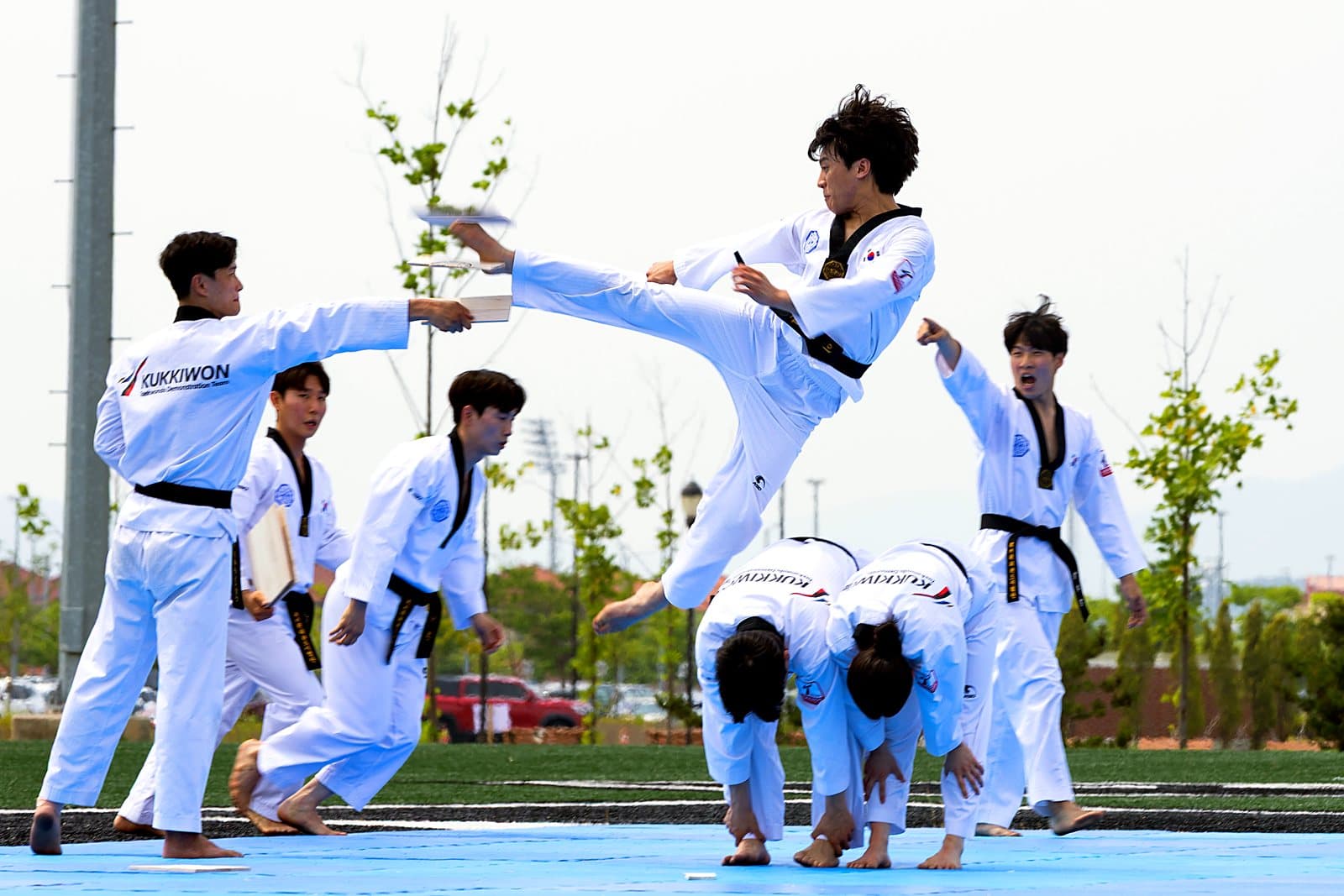
Taekwondo is Korea's best-known martial art and offers something completely different from sitting in a stand. You'll find demonstrations, tournaments, and places that will let you try it yourself.
If your trip happens to coincide with a major competition, watching elite athletes is impressive. For most visitors, though, a demonstration or an introductory class is the easier thing to fit into a Seoul itinerary.
Photograph in the public domain.
What’s actually on while you’re here
Or train while you’re here
Watching isn’t the only option. Seoul has a real combat-sports scene and several gyms are used to visitors passing through.
Ssabi MMA홍대 싸비 MMA
Seogyo-dong, Hongdae, Seoul
A long-standing MMA gym in Hongdae with a fight team on the domestic circuit, and a second location in Gwangju. Message ahead before turning up — drop-in policies and class times at Korean gyms change often and are rarely posted in English.
Gym profile →
How to actually buy a ticket
The ordinary Korean ticketing sites verify you with a Korean mobile number and a resident registration number, which a short-stay visitor doesn't have. That is where most people get stuck.
Ticketlink Global
Sign up with an email address, pay with an overseas card. Carries most KBO clubs, including the LG Twins, KT Wiz, Samsung Lions, Hanwha Eagles, KIA Tigers and NC Dinos.
Interpark Global (NOL)
The same idea, and the route for the Doosan Bears and Kiwoom Heroes. Also the usual place for concerts and musicals.
The club's own app
Some clubs sell through their own app — KT Wiz's 'wizzap', for instance — which can work when the global sites don't.
At the gate
Midweek games rarely sell out. Turning up and buying at the box office is often the simplest plan, cash or card.
Which platform carries which club moves around from season to season, so check both before deciding a game is impossible to book.
Which Korean sport should you watch?
Our pick for first-time visitors
Go to a Korean baseball game
Even if you have never watched baseball before.
Grab some food, buy a beer, learn your team’s chants and spend an evening surrounded by thousands of Korean fans. It is cheap, easy to reach and completely different from visiting another attraction.
You don’t just watch Korean baseball — you join in.
Before you buy tickets
Schedules, venues and prices change by season and sometimes by individual match. Always check the club’s current schedule and ticket page before travelling to the ground — particularly for weekend games, playoffs, finals and the big rivalries.
For baseball, the KBO’s own English daily schedule is the authoritative fixture list.
What’s on in Seoul this month →