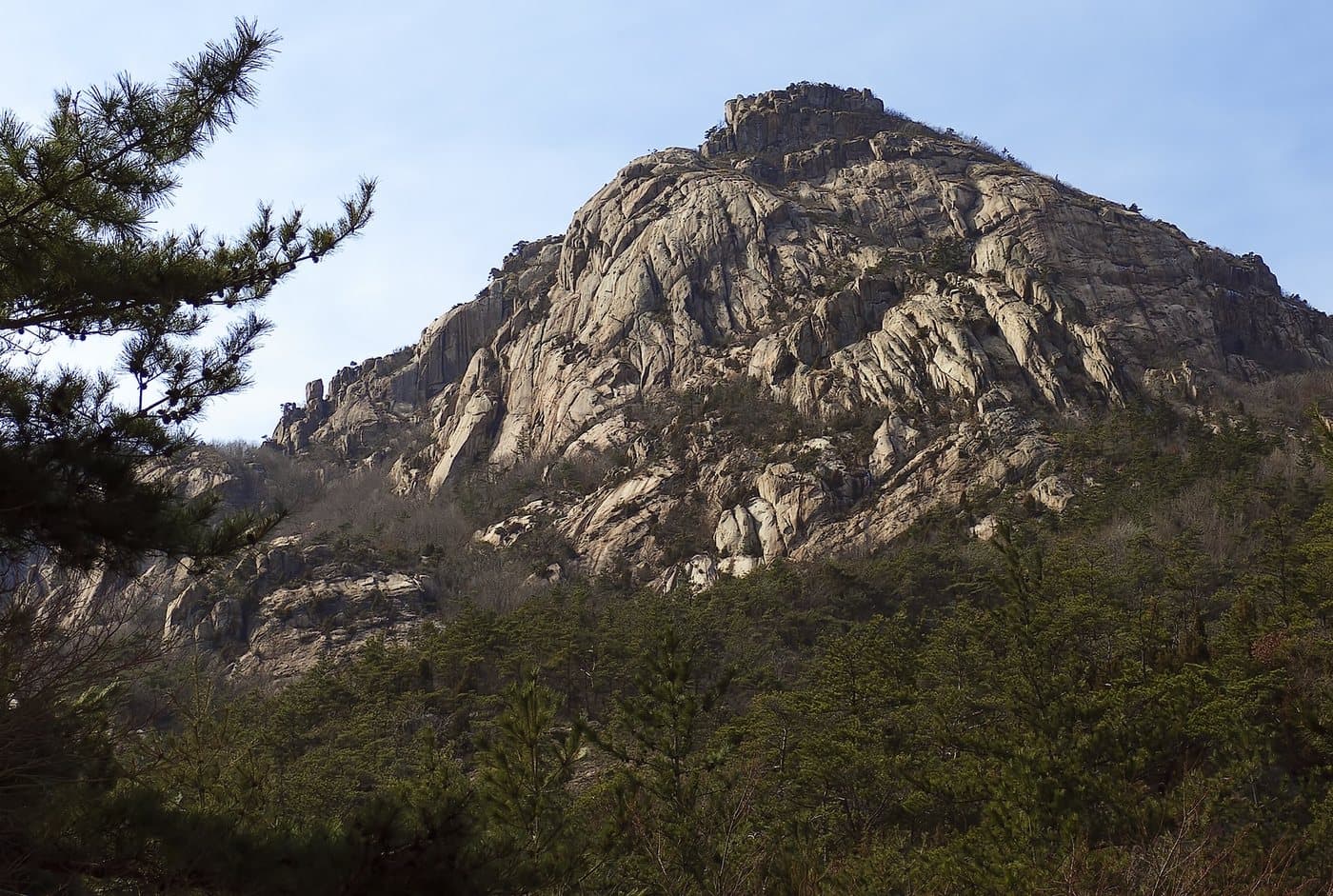
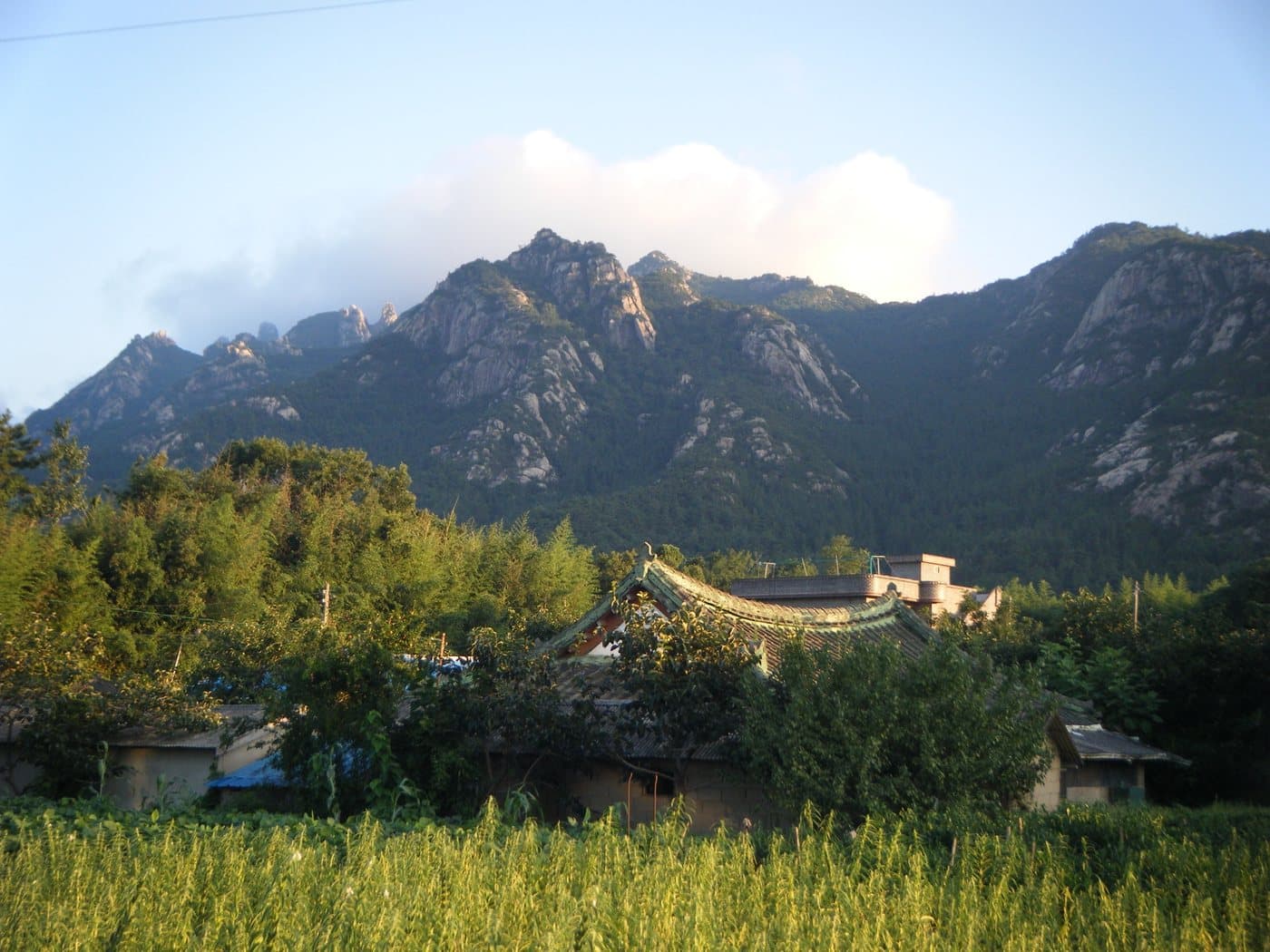
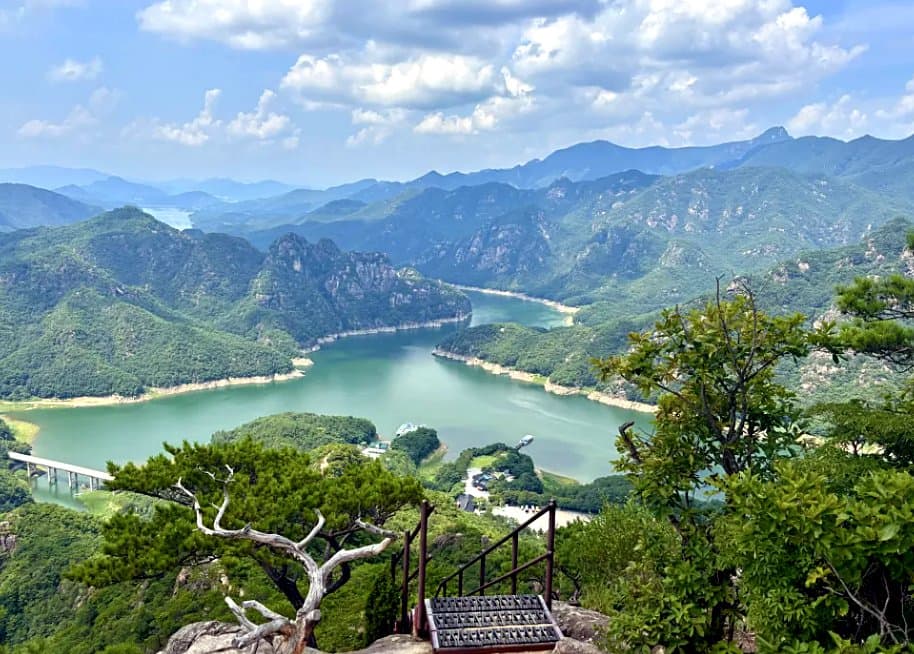
Wolchulsan is the smallest of Korea's national parks at 56 km², and it is the one where size tells you least. The surrounding country is flat coastal farmland, so the granite comes out of the ground with nothing to soften it — from the rice fields at Yeongam the whole massif is in front of you at once.
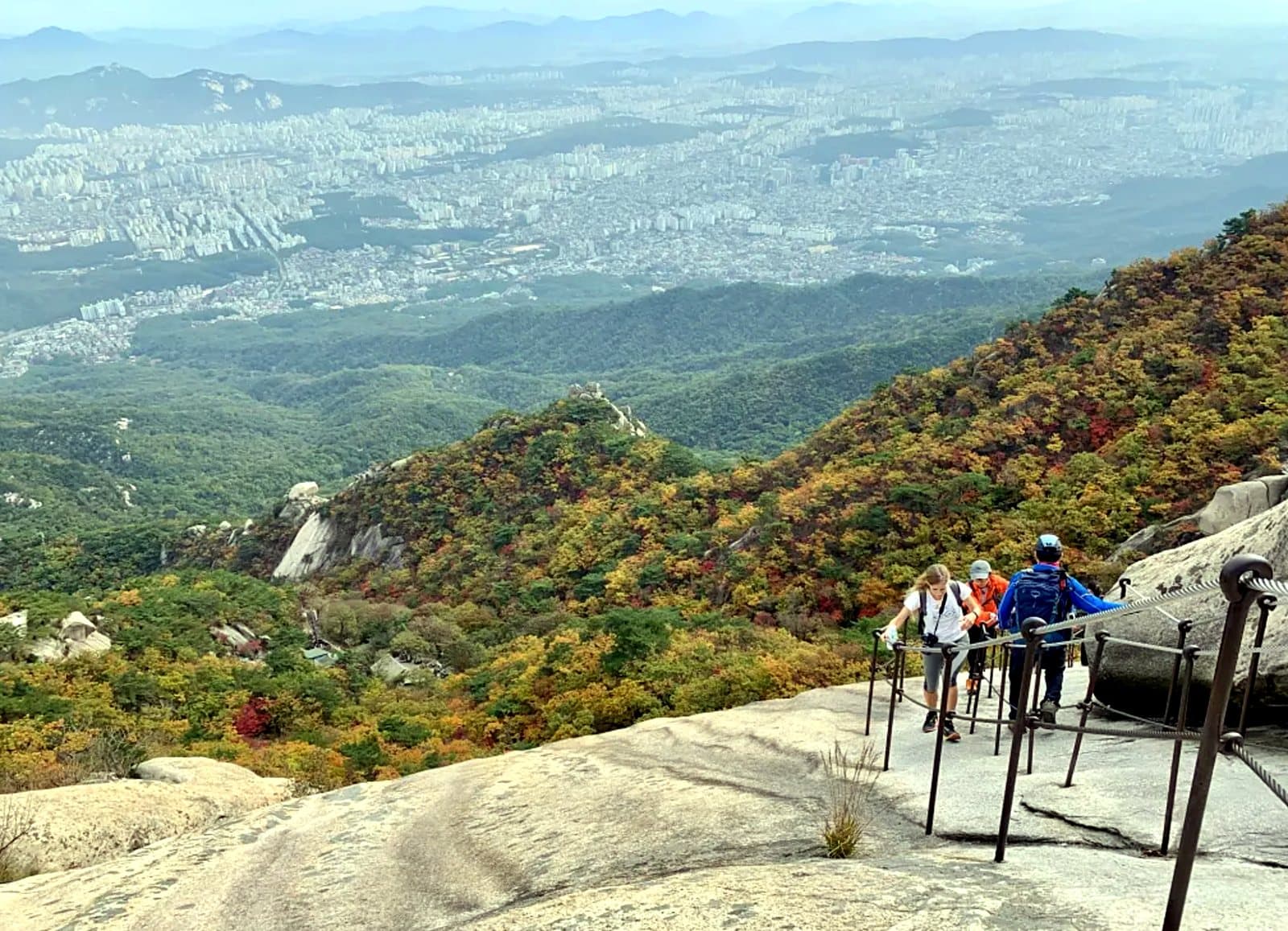
The name means ‘moon-rising mountain’, for the moon coming up between the peaks. The rock has been weathered into spires, blocks and pinnacles, and the routes across it rely heavily on engineering: stone staircases, steel ladders, and the Gureumdari suspension bridge, 52 metres long and about 120 metres above the valley, slung between two of the peaks.
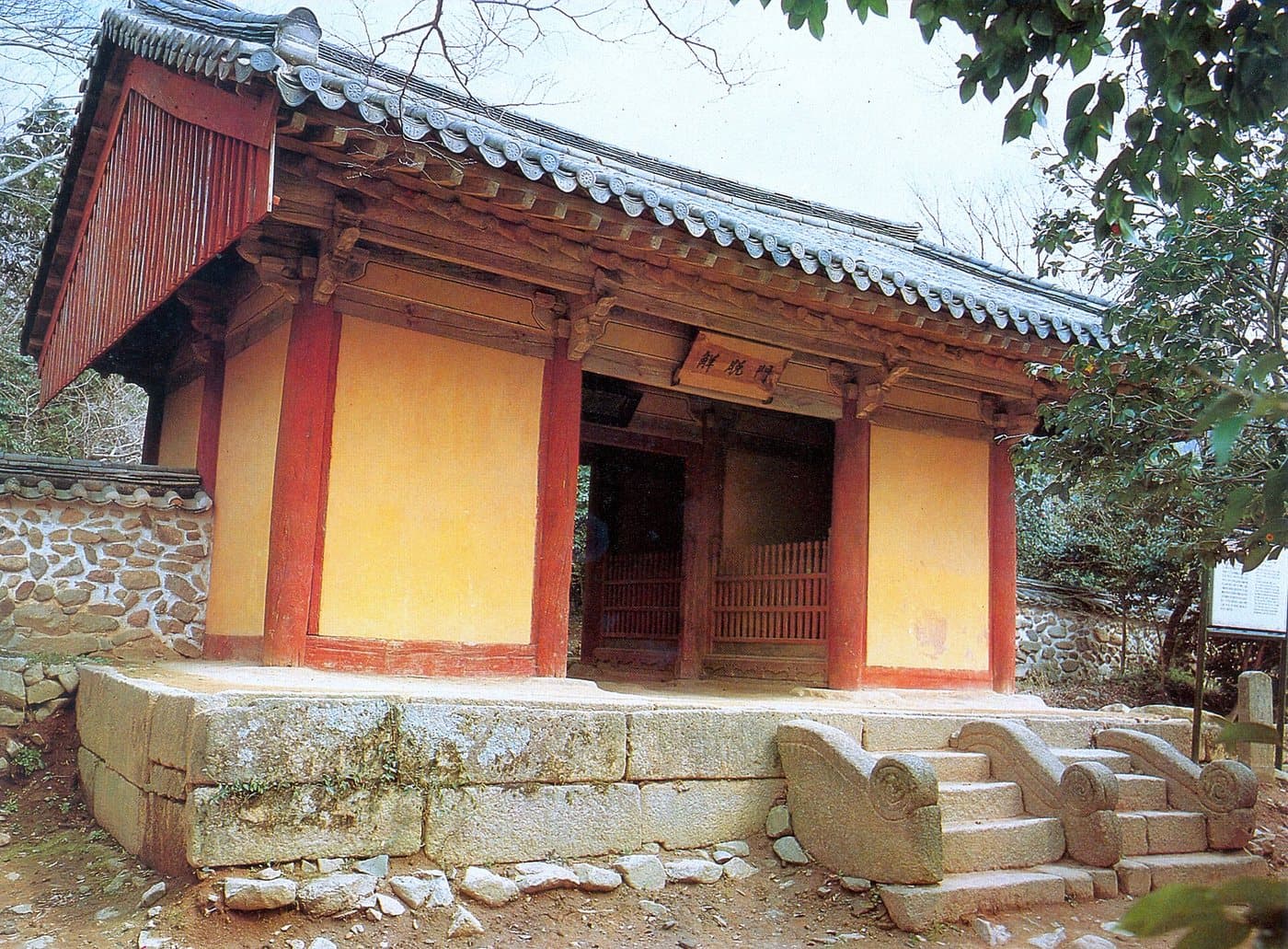
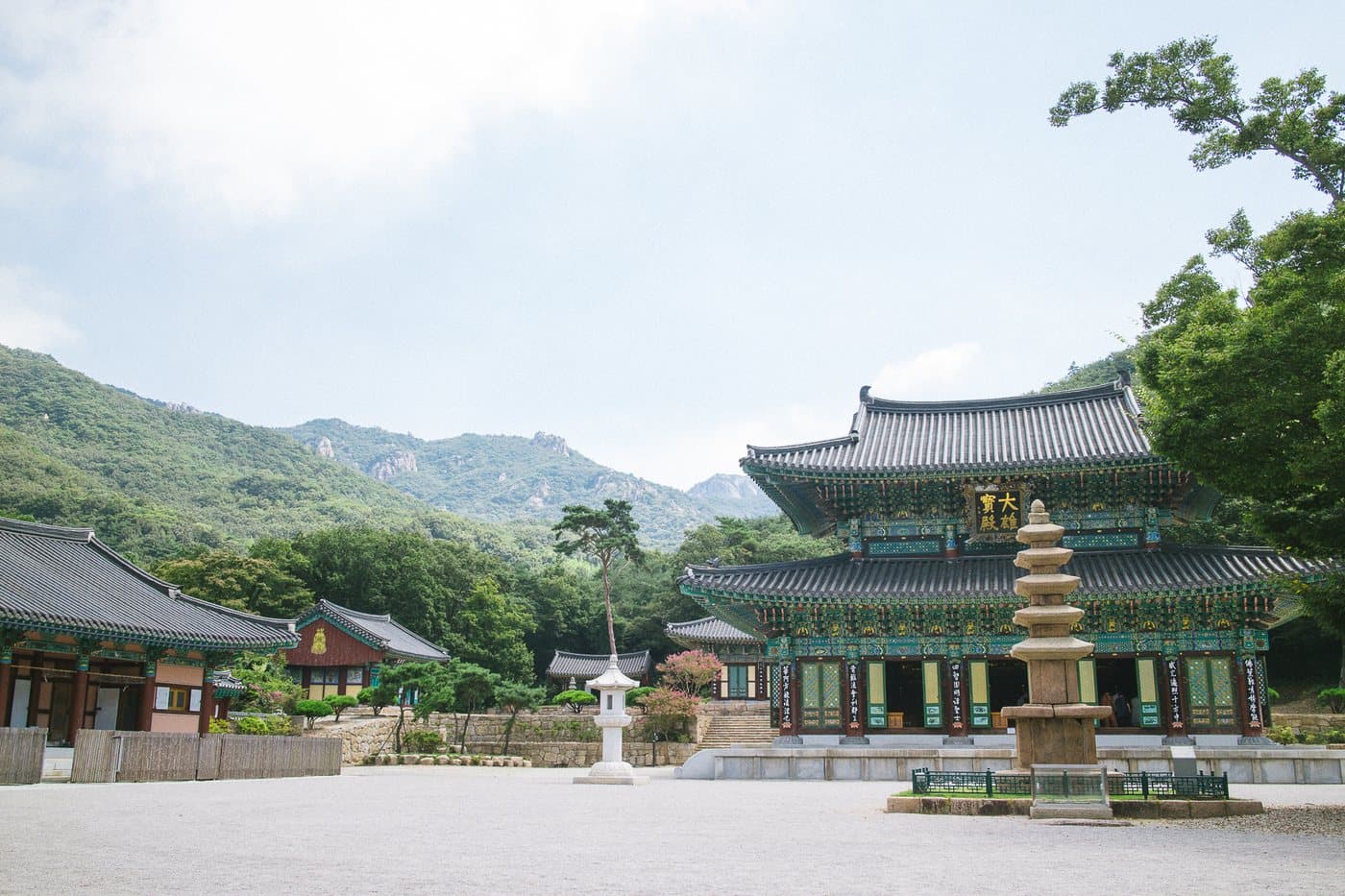
Dogapsa, on the western side, was founded in the Silla period. Its Haetalmun — the gate of liberation — is among the oldest surviving wooden structures in the country and is designated a national treasure.
Because the park is compact and the traverse crosses it end to end, Wolchulsan is one of the few Korean mountains you can genuinely finish rather than sample. That, and the fact that it is the last mountain before the sea, is why people come a long way south for it.