Mountain park · Seoul, Gyeonggi
Bukhansan
북한산국립공원
A proper granite mountain inside Seoul, reachable by subway in under an hour.
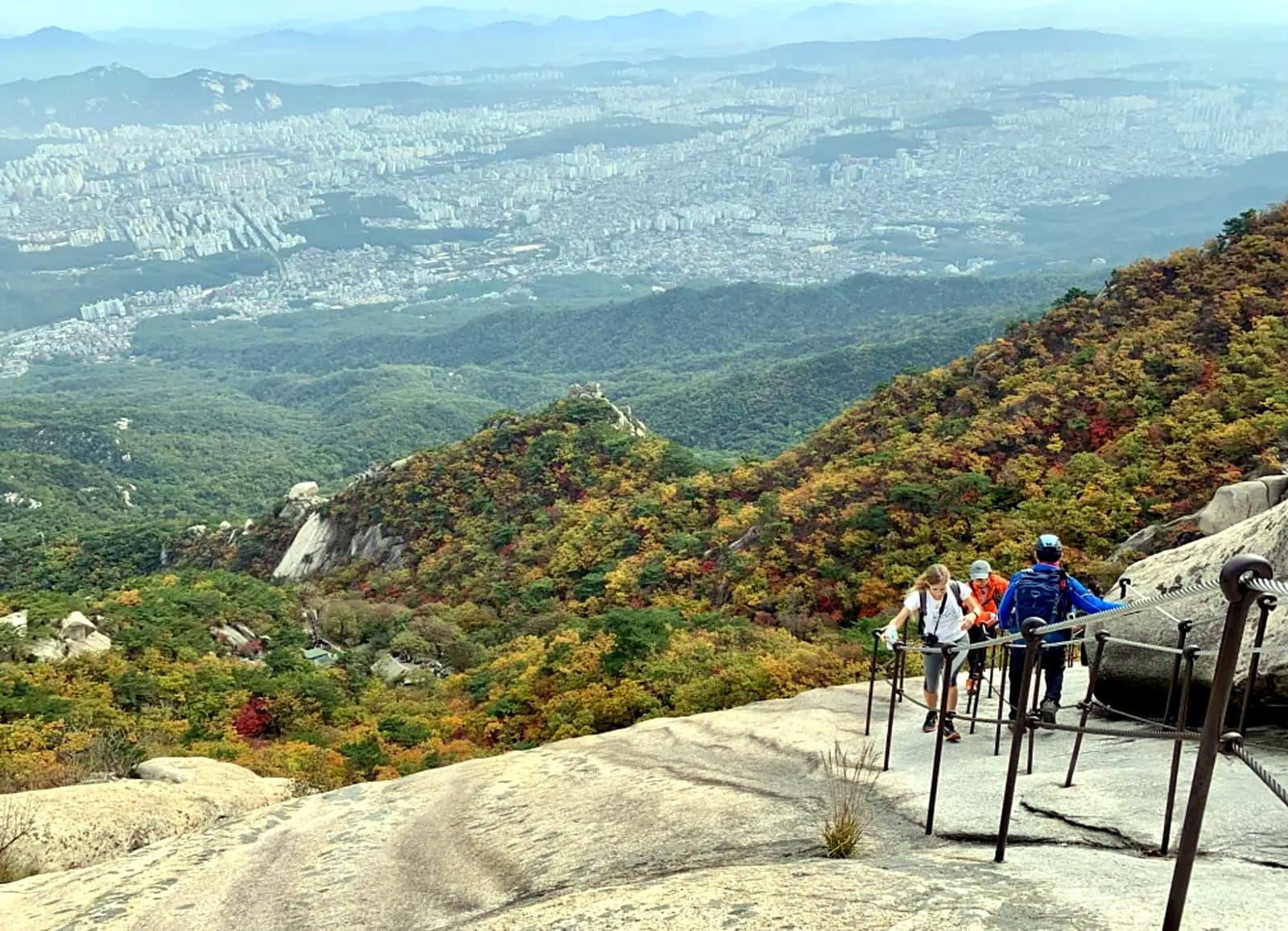
Bukhansan sits on the northern edge of Seoul, which makes it one of the few national parks on earth you can reach on the metro. Baegundae, the high point at 837m, is a scramble up chains and railings on to bare granite with the whole city laid out below.
The ridgeline still carries long stretches of Bukhansanseong, the mountain fortress rebuilt in 1711 to shelter the court in a crisis. Being this close to a city of ten million, it is busy — go early, and go on a weekday if you can.
Getting there from Seoul
Door-to-door estimates for a normal day; they stretch on a holiday weekend. Check the timetable before you rely on a last bus back.
Train
Subway line 3 to Gupabal for the Bukhansanseong entrance, then bus 704. Or line 4 to Suyu, or Uireung on the Ui LRT for the eastern side. Under an hour from central Seoul either way.
Bus
City buses reach every entrance; you will not need an intercity coach for this one.
Car
Possible but pointless. Parking is limited and the subway is faster.
Wildlife & plants
Animals
Wild boar come down into the surrounding neighbourhoods often enough that the city issues warnings — keep your distance and don't run. Also squirrels, weasels, raccoon dogs and a surprising number of raptors riding the thermals off the granite.
Trees & flowers
Pitch pine and Korean red pine on the thin soil over the granite, with oak in the valleys. Royal azalea in May and maple in late October, both busy.
Korea’s wildlife is shy and mostly nocturnal — you’re far more likely to see tracks than animals. Wild boar are the one to know about: keep your distance, don’t run, and never get between a sow and her young.
More parks

Byeonsanbando
The only park that pairs mountains with a west-coast shoreline.

Chiaksan
Steep, quiet and hard work — a hiker's mountain near Wonju.
Dadohaehaesang
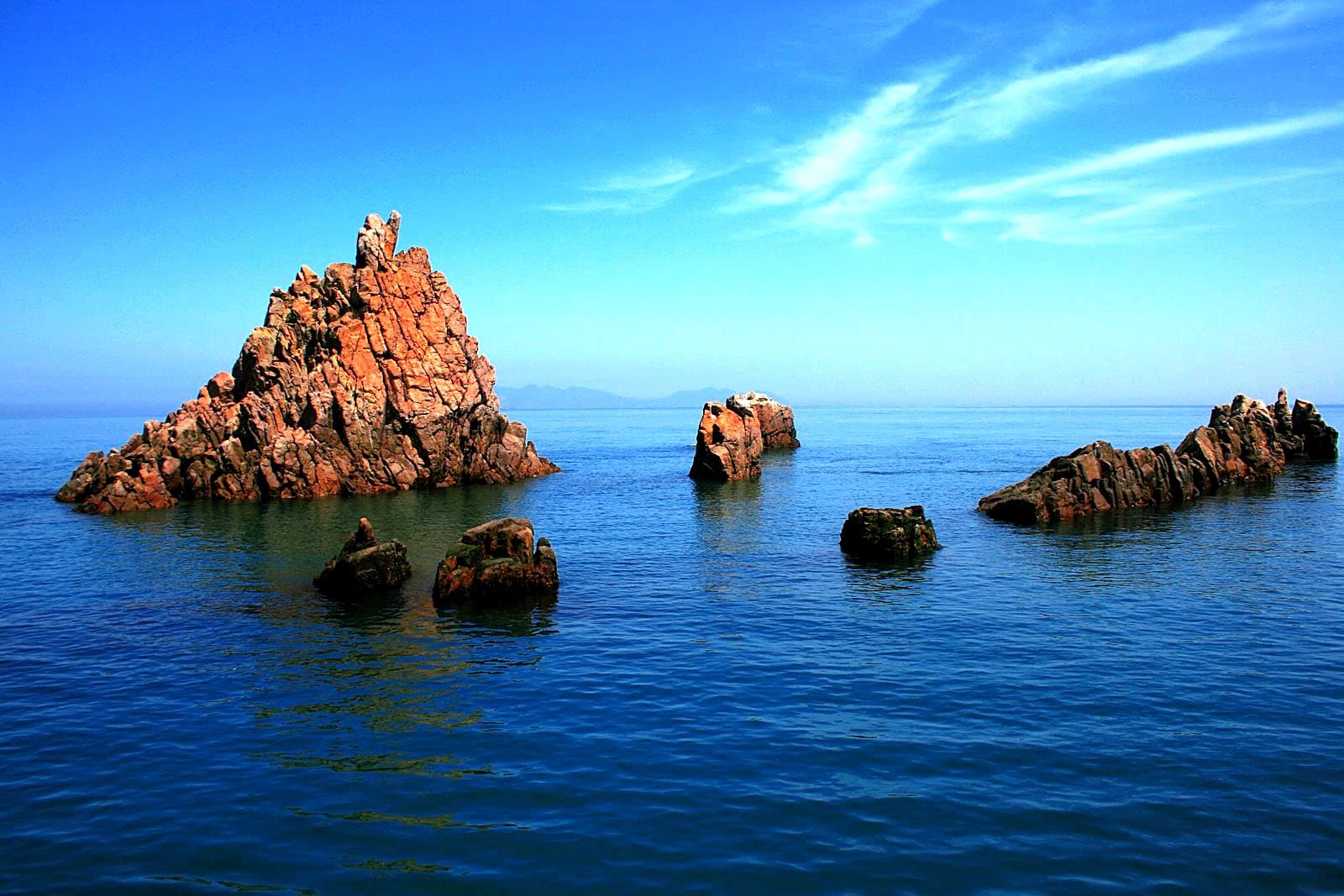
The largest national park in Korea — an archipelago of hundreds of islands.