Skip to content
MyKoreanTrip

Mountain park · Gangwon

Chiaksan National Park

치악산국립공원

Steep, quiet and hard work — a hiker's mountain near Wonju.

Chiaksan has a reputation among Korean walkers for being relentless: the climb to Birobong at 1,288m gains height quickly and does not let up. Guryongsa temple sits at the foot of the usual approach.

It is far less visited than the Gangwon parks further east, which is part of the appeal.

Getting there from Seoul

Door-to-door estimates for a normal day; they stretch on a holiday weekend. Check the timetable before you rely on a last bus back.

  • Train

    KTX to Wonju (Manjong) in about 50 minutes — the fastest park approach from Seoul — then a local bus to Guryongsa.

  • Bus

    Express coach to Wonju, around 1h 30m.

  • Car

    About an hour and a half. The closest big mountain park to the capital after Bukhansan.

Wildlife & plants

Animals

Wild boar, roe deer, marten, and a well-known population of flying squirrels. Woodpeckers are common in the old valley forest.

Trees & flowers

Dense broadleaf and pine forest, with a famous grove of old pine near Guryongsa. The park's steep valleys hold ferns and mosses that stay green late.

Korea’s wildlife is shy and mostly nocturnal — you’re far more likely to see tracks than animals. Wild boar are the one to know about: keep your distance, don’t run, and never get between a sow and her young.

What grows and lives here

The mountain up close

Chiaksan is a steep, watery, wooded mountain just outside Wonju — a wall of ridge with deep valleys cut into it, full of streams and small falls. It is known among Korean hikers for two things: the autumn colour, and how hard it is for a mountain of only 1,288m.

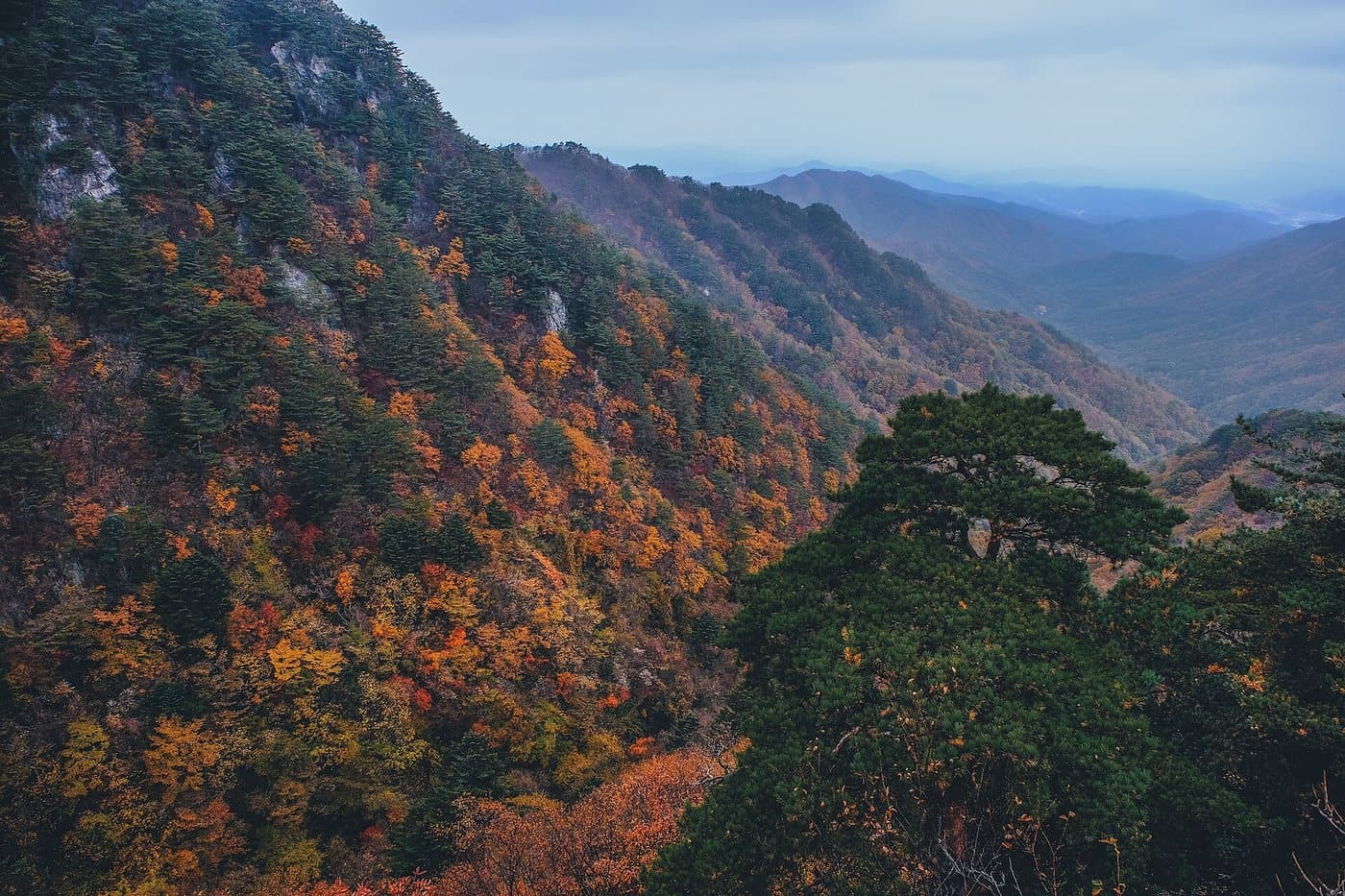
Autumn colour across the wooded slopes of Chiaksan with Wonju visible in the distance

Autumn, with Wonju behind

Chiaksan

Photo by Sohyeon Bak, CC BY-SA 3.0

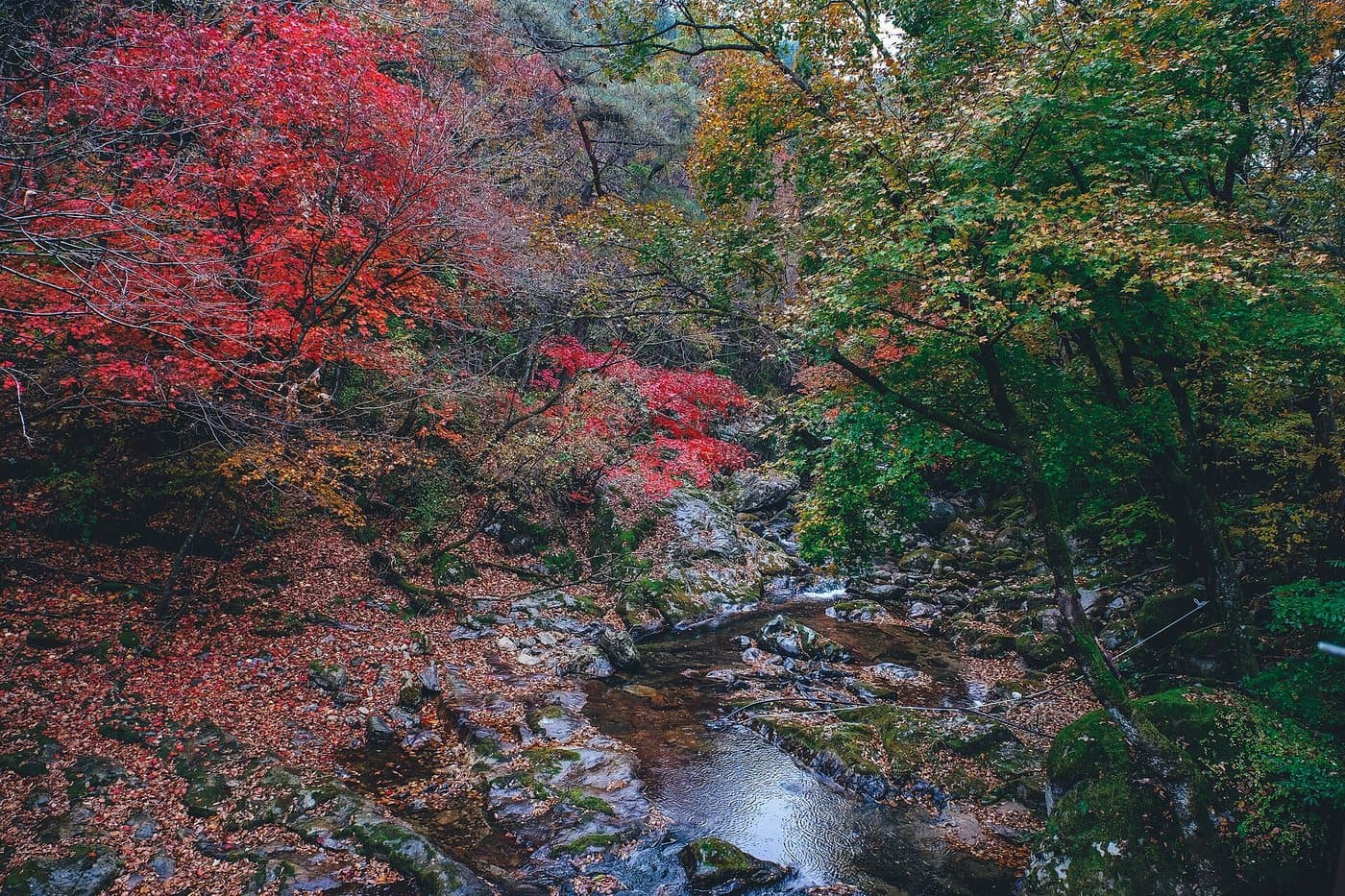
Red maple leaves overhanging a clear stream running through boulders at Chiaksan

Maple over the stream

Chiaksan

Photo by Sohyeon Bak, CC BY-SA 3.0

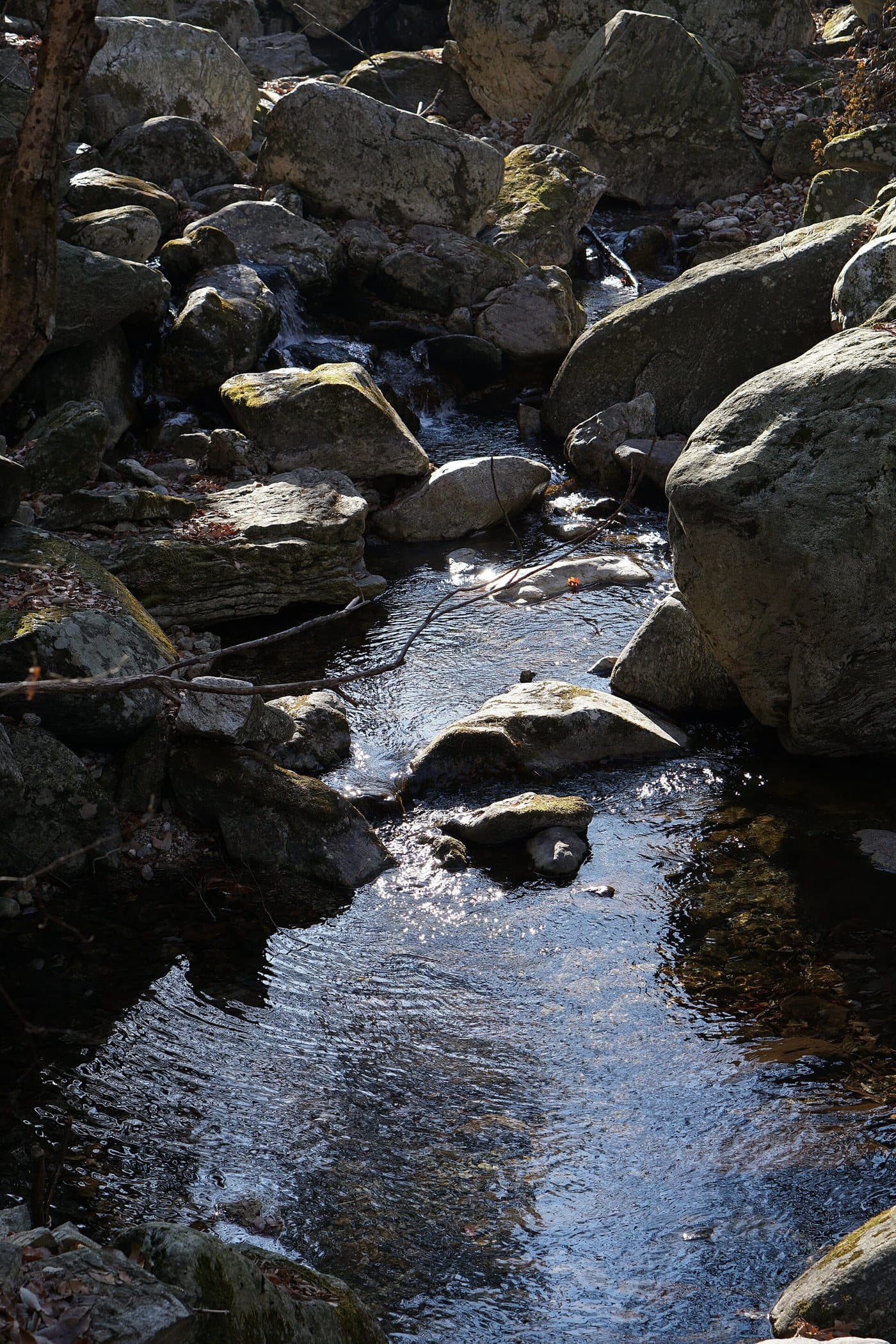
A stream running between mossy boulders in a Chiaksan valley

Water, everywhere on this mountain

Chiaksan

Photo by Loki800530, CC BY-SA 3.0

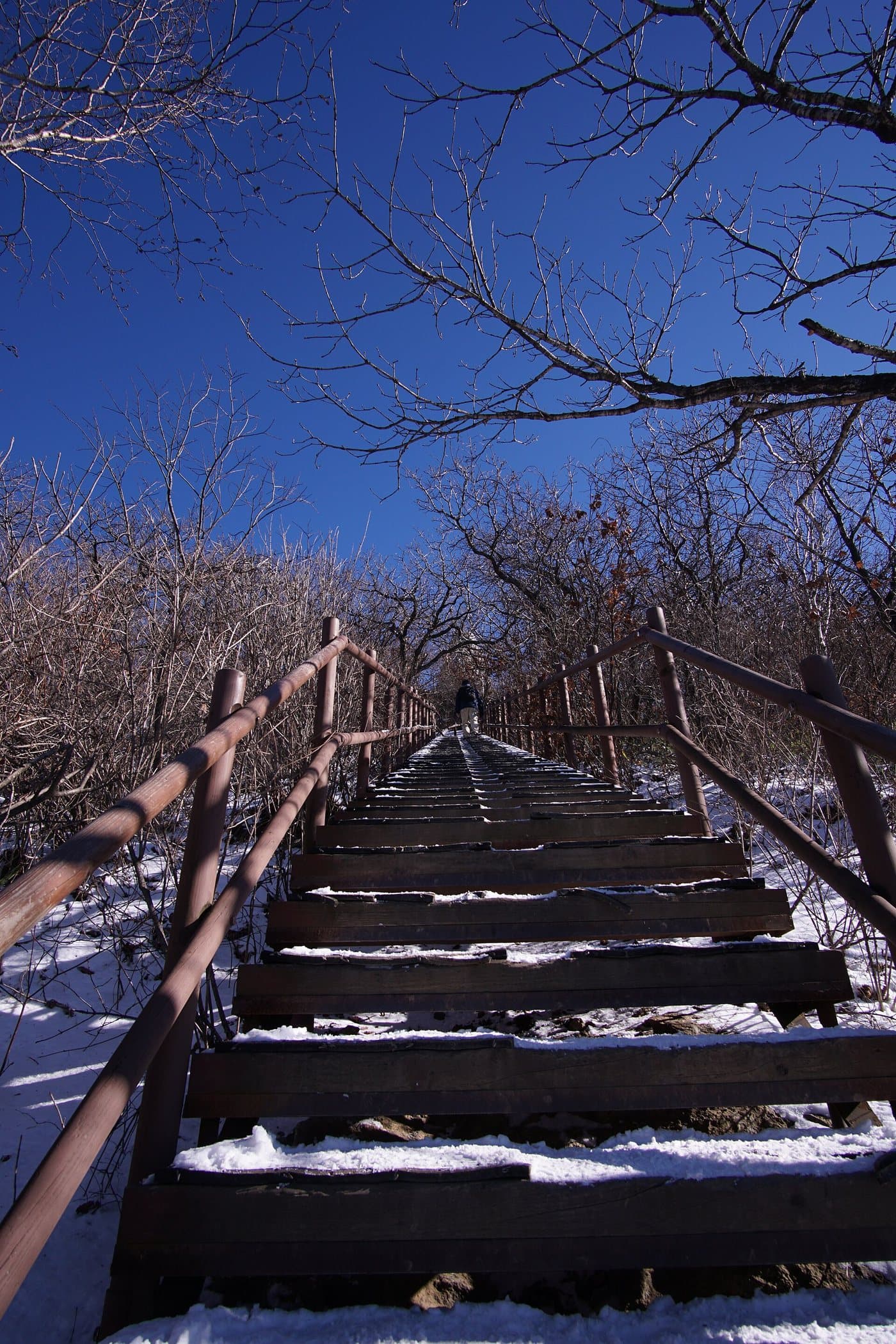
A long wooden staircase climbing steeply through winter woodland on Chiaksan

The stairs — there are a great many

Chiaksan

Photo by Loki800530, CC BY-SA 3.0

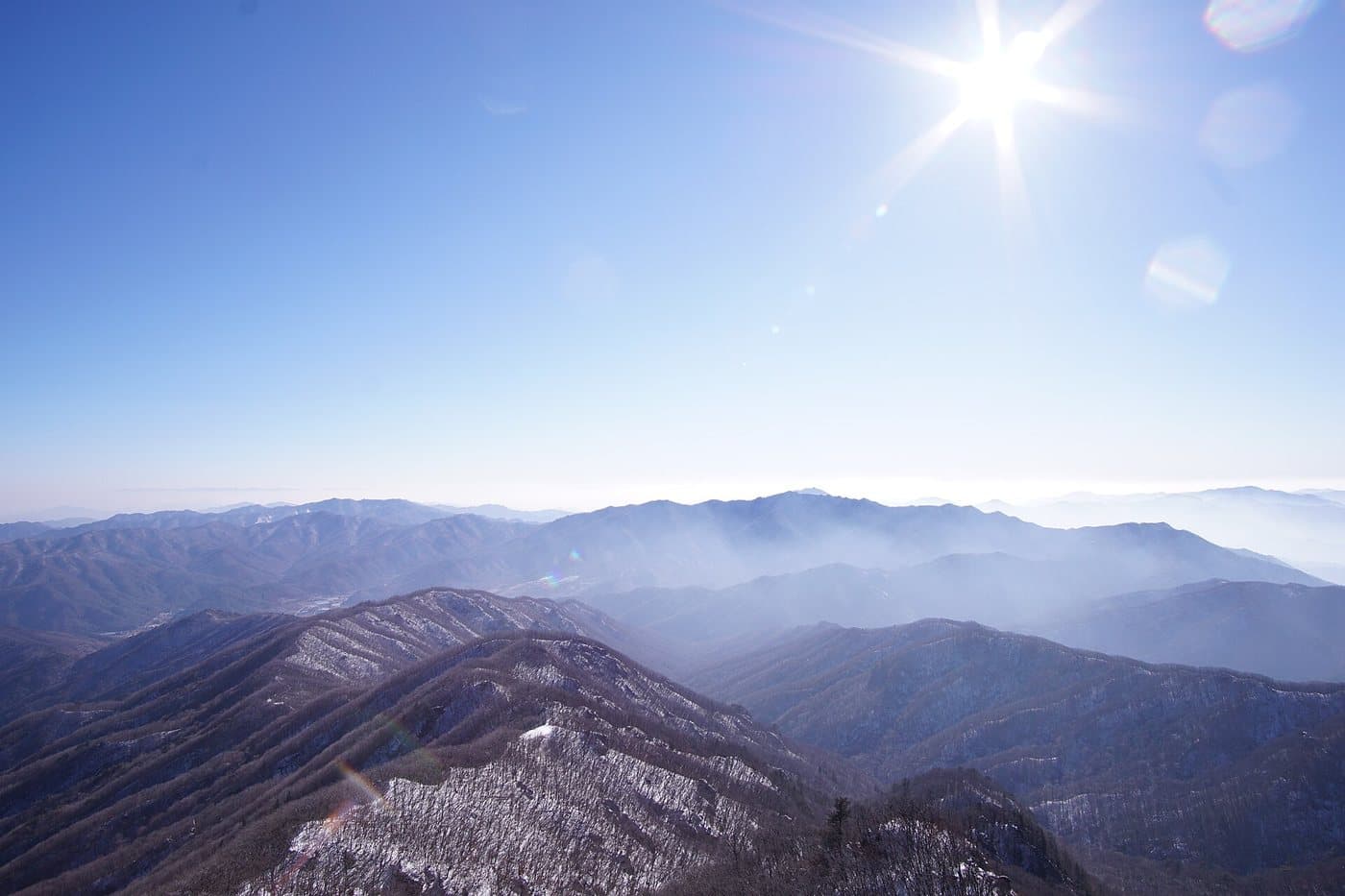
Low winter sun over ridges seen from the summit of Chiaksan

From the top of Birobong

Chiaksan

Photo by Loki800530, CC BY-SA 3.0

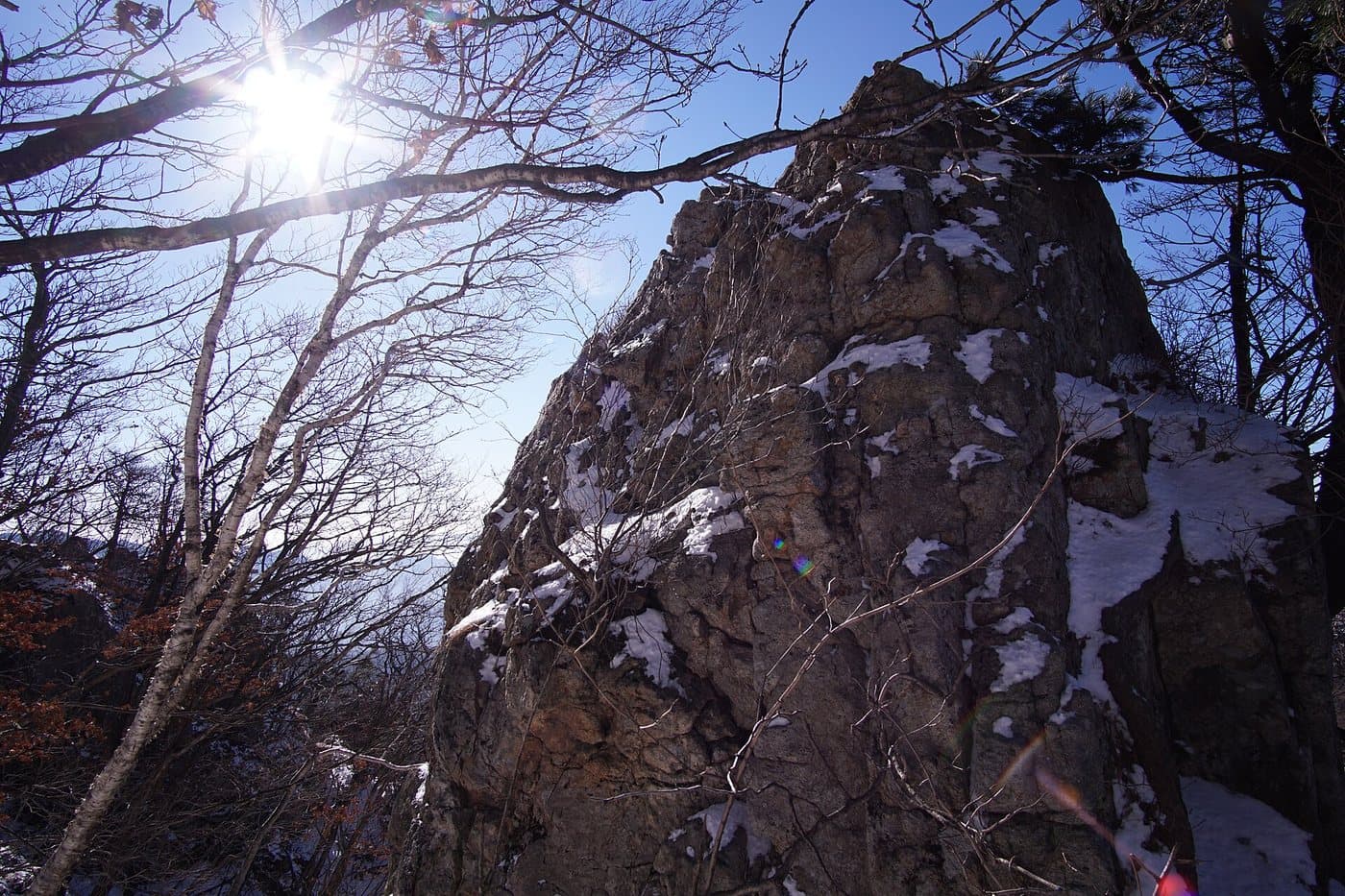
A rocky outcrop and bare trees on Chiaksan in winter with the sun behind

Winter on the ridge

Chiaksan

Photo by Loki800530, CC BY-SA 3.0

Nicknamed the mountain of tears

Korean hikers call Chiaksan 치가 떨리고 악소리 난다 — roughly, it makes your teeth chatter and drags a groan out of you — a pun on the name. The climb from Guryongsa gains around a thousand metres in a short horizontal distance, almost all of it on steps. It is genuinely harder than mountains half again its height. Budget more time than the numbers suggest.

Walking it

Up the stairs

Most routes on Chiaksan start in a temple valley and climb hard to the main ridge. The Sadari Byeongchang-gil — the ladder-and-shelf path above Guryongsa — is the famous one, and it is famous because of the staircases.

Guryongsa to Birobong

The classic, and the hard one

Time
4 hr up
Grade
advanced

Route: Guryongsa → Sereom falls → Sadari Byeongchang-gil → Birobong (1,288m)

Getting to the start: City bus 41 from Wonju to the Guryongsa entrance.

Past the nine-dragon temple and the Sereom waterfall, then the stairs begin and do not really stop. The single most punishing thousand metres of ascent in this part of Korea, and the summit view is worth it.

Seongnam to Birobong

The gentler line

Time
3 hr 30 min up
Grade
advanced

Route: Seongnam ranger station → Sangwonsa → Namdaebong → Birobong

Getting to the start: Bus from Wonju towards Sillim.

Longer but less brutal, and it passes Sangwonsa — the temple in the pheasant legend. Coming up this way and down to Guryongsa is the best full day on the mountain.

Guryongsa and Sereom falls

Stop at the waterfall

Time
1 hr 30 min return
Grade
easy

Route: Guryongsa entrance → the temple → Sereom falls → back

Getting to the start: City bus 41 from Wonju.

You do not have to climb Chiaksan to enjoy it. The valley walk to the temple and the falls is gentle, shaded and the best of the autumn colour is down here anyway.

Given by walking time; the park's own signage uses times rather than distances on these routes.

The story on the bell

The pheasant that repaid a debt

1984
Designated
182 km²
Area
1,288 m
Birobong
≈1,000 m
Ascent from Guryongsa

The mountain is named after a bird. Chiak means 'pheasant peak', and the story is one every Korean schoolchild knows: a traveller shoots a snake that is about to eat a pheasant's chicks. That night he takes shelter in a temple, where the snake's mate coils round him and says she will kill him unless the temple bell rings three times before dawn — knowing the temple is empty.

The bell rings three times. In the morning he finds the pheasant dead at the foot of the bell, having thrown herself against it to repay the debt. The temple in the story is Sangwonsa, which is still there on the mountain.

Chiaksan became a national park in 1984 and covers 182 km² immediately east of Wonju. It is a long north-south wall of ridge — Birobong at 1,288m is the high point — with steep valleys cut into both sides, which is why there is so much water on it and why every route up involves a great deal of climbing in a short distance.

Guryongsa, the 'nine dragon temple', sits in the main valley on the Wonju side, founded in 668. The Sereom waterfall above it is the best short target in the park for anyone not going to the top.
More parks

All 23 national parks →