Skip to content
MyKoreanTrip

Mountain park · North & South Jeolla, South Gyeongsang

Deogyusan National Park

덕유산국립공원

A long, gentle ridge at 1,600m — and the easiest big summit in the country.

Hyangjeokbong stands at 1,614m, but Deogyusan is unusual in that you do not have to earn all of it: the gondola at Muju Deogyudae ski resort lifts you most of the way, leaving a walk of about twenty minutes to the top.

That makes it the most accessible of Korea's high summits, and it is spectacular in winter, when rime ice coats the ridge. Gucheongdong valley on the northern side is the long way up, past waterfalls and Baengnyeonsa temple.

Getting there from Seoul

Door-to-door estimates for a normal day; they stretch on a holiday weekend. Check the timetable before you rely on a last bus back.

  • Bus

    Express coach from Seoul Nambu to Muju, about 3h, then a local bus to the resort or to Gucheondong.

  • Train

    No useful line. The coach is the way.

  • Car

    Around three hours. Worth it in winter, when the resort road is the only sensible approach.

Wildlife & plants

Animals

Asiatic black bears from the Jirisan programme have been tracked moving through this massif, which is the point — the Baekdudaegan ridge is meant to work as a corridor. Also goral on the crags, otter, marten and flying squirrel.

Trees & flowers

Korean fir and yew near the summit, some of the yews several hundred years old. Gucheondong valley is lined with old broadleaf forest and is one of the better autumn valleys in the country.

Korea’s wildlife is shy and mostly nocturnal — you’re far more likely to see tracks than animals. Wild boar are the one to know about: keep your distance, don’t run, and never get between a sow and her young.

What grows and lives here

The mountain up close

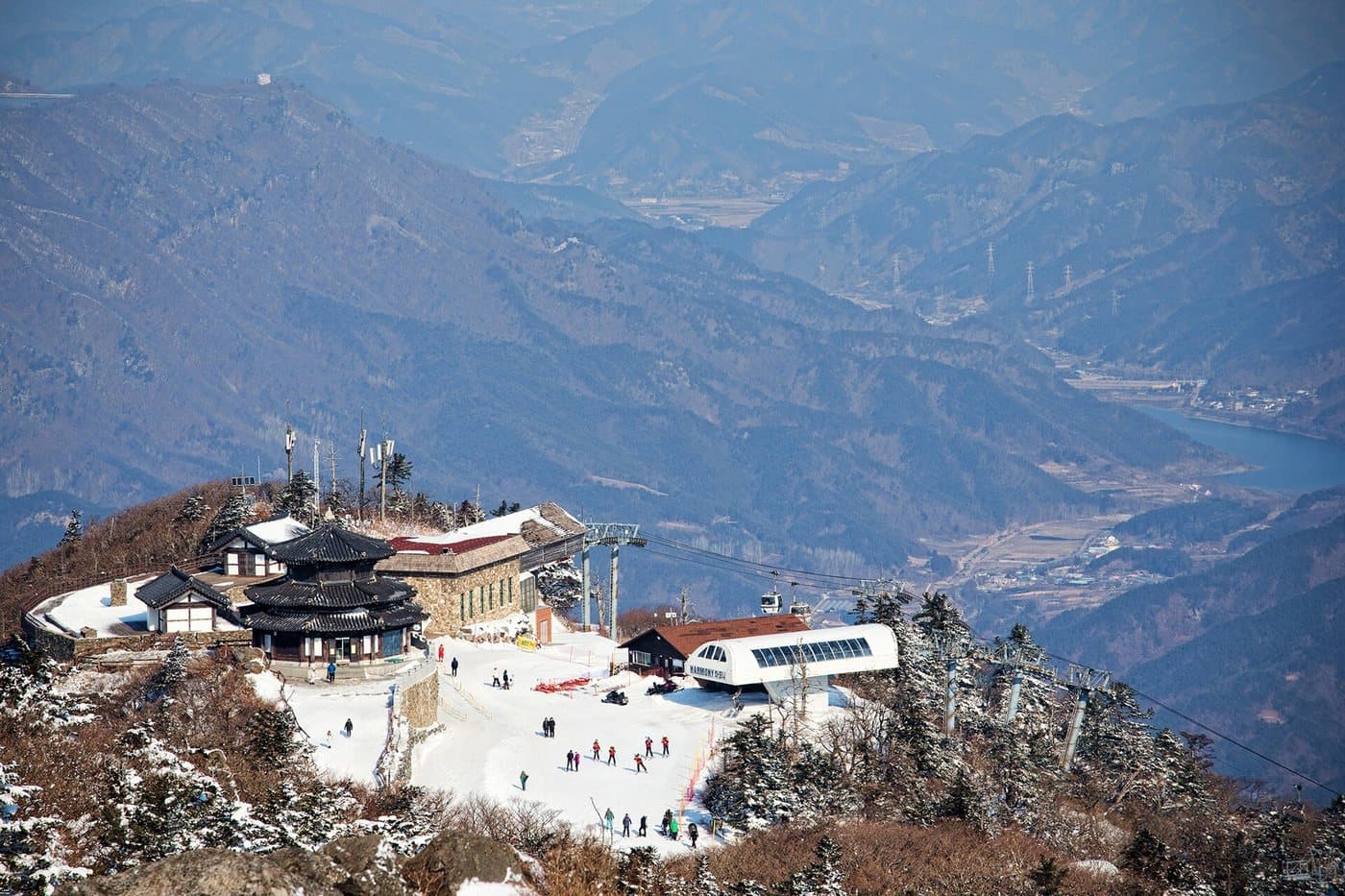
Deogyusan is the easiest high mountain in Korea to stand on top of, because a gondola built for the ski resort will take you to 1,520m and leave you a twenty-minute walk from the 1,614m summit. In winter that summit is coated in rime ice and busy with people who have not climbed anything.

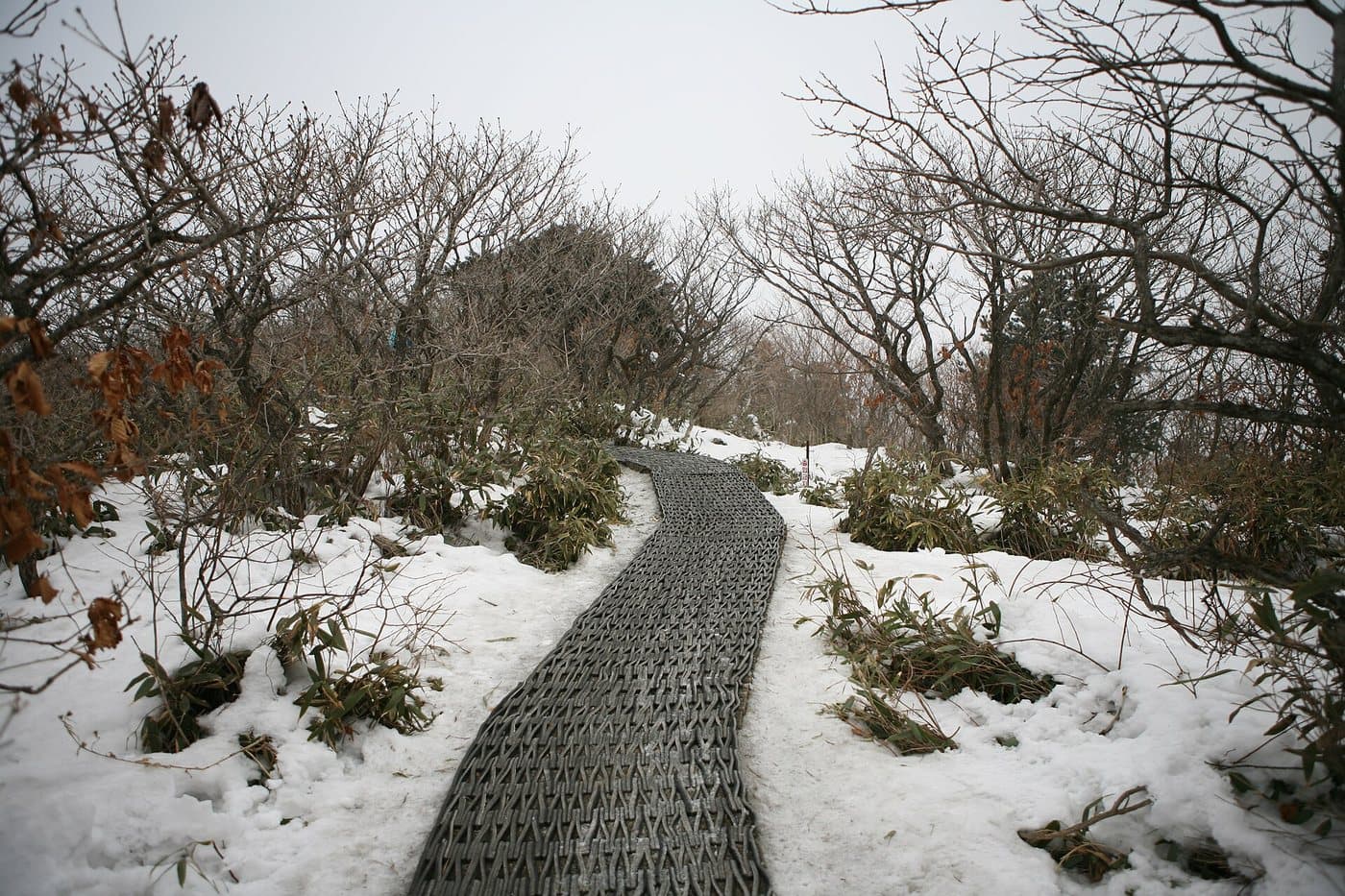
A snow-covered stepped path climbing through frosted trees on Deogyusan

The path up in deep snow

Deogyusan

Photo by Byungjoon Kim, CC BY 2.0

The gondola top station and buildings at Seolcheonbong with visitors in the snow

Seolcheonbong, where the gondola lands

Deogyusan

Photo by Mg shin, CC BY-SA 4.0

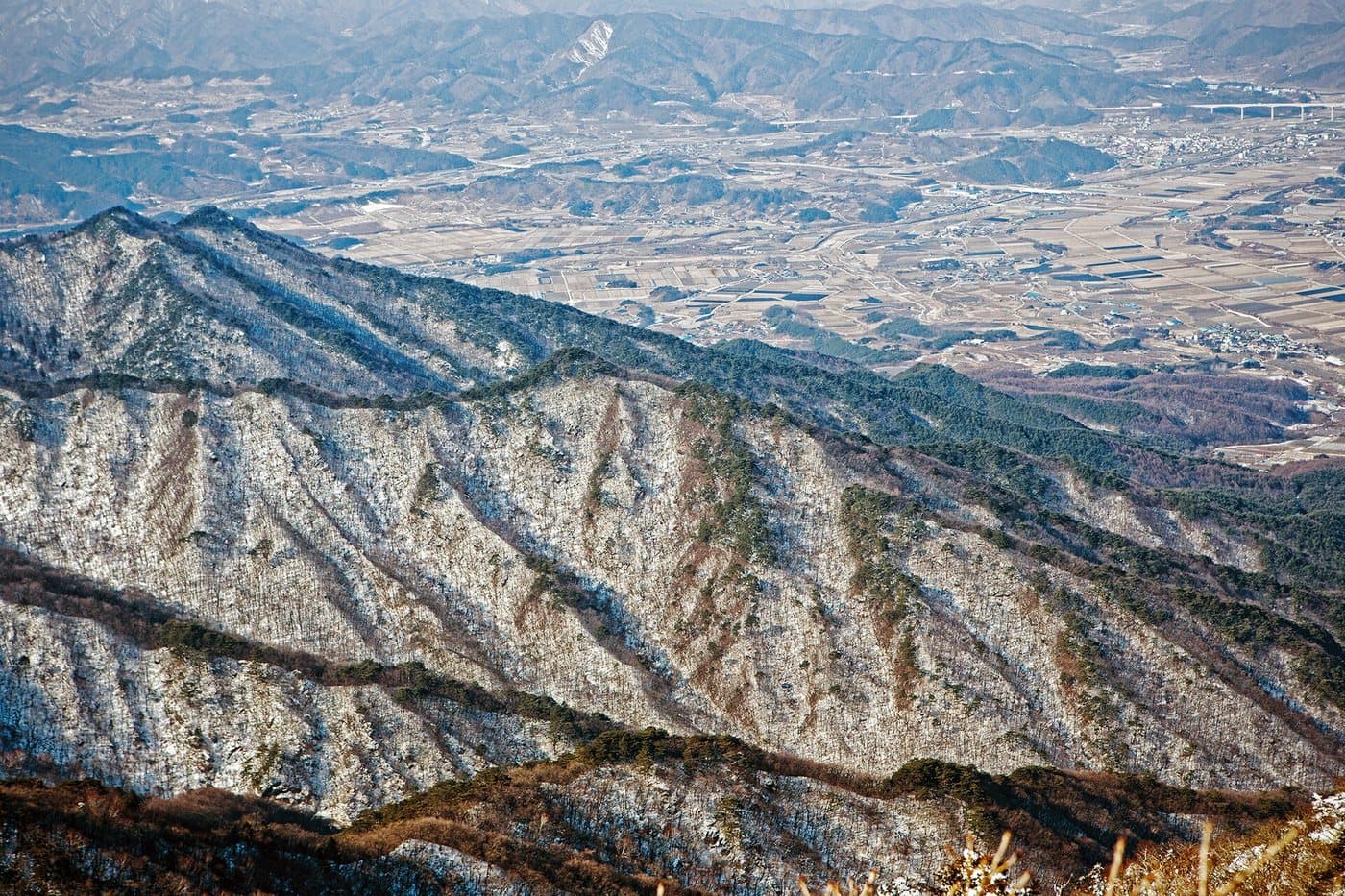
Frost-covered ridges stretching away from the summit of Hyangjeokbong

From Hyangjeokbong, 1,614m

Deogyusan

Photo by Mg shin, CC BY-SA 3.0

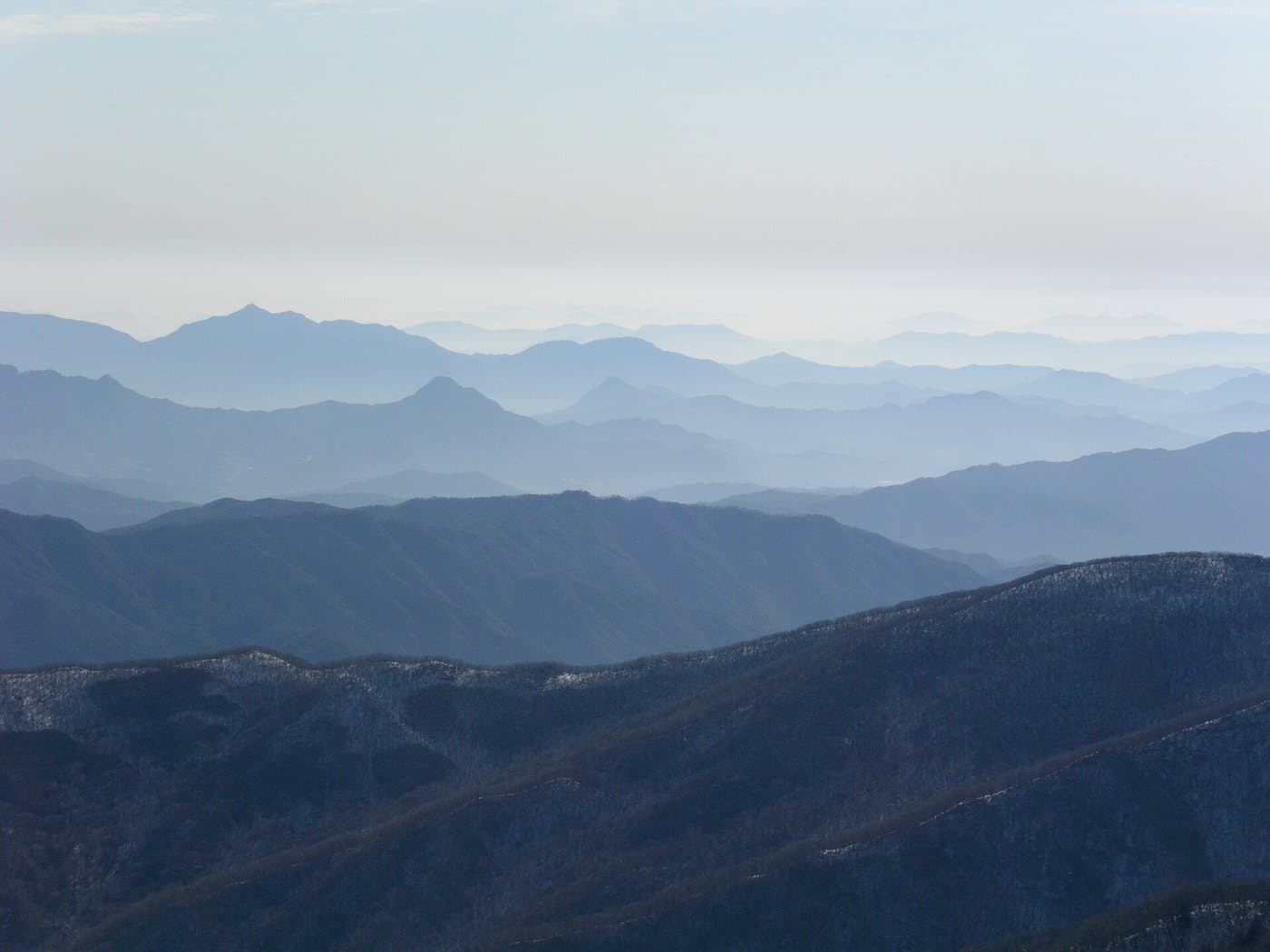
Layered blue ridges seen from Hyangjeok Peak on Deogyusan

The ridges in summer haze

Deogyusan

Photo by Yoo Chung, CC BY-SA 2.0

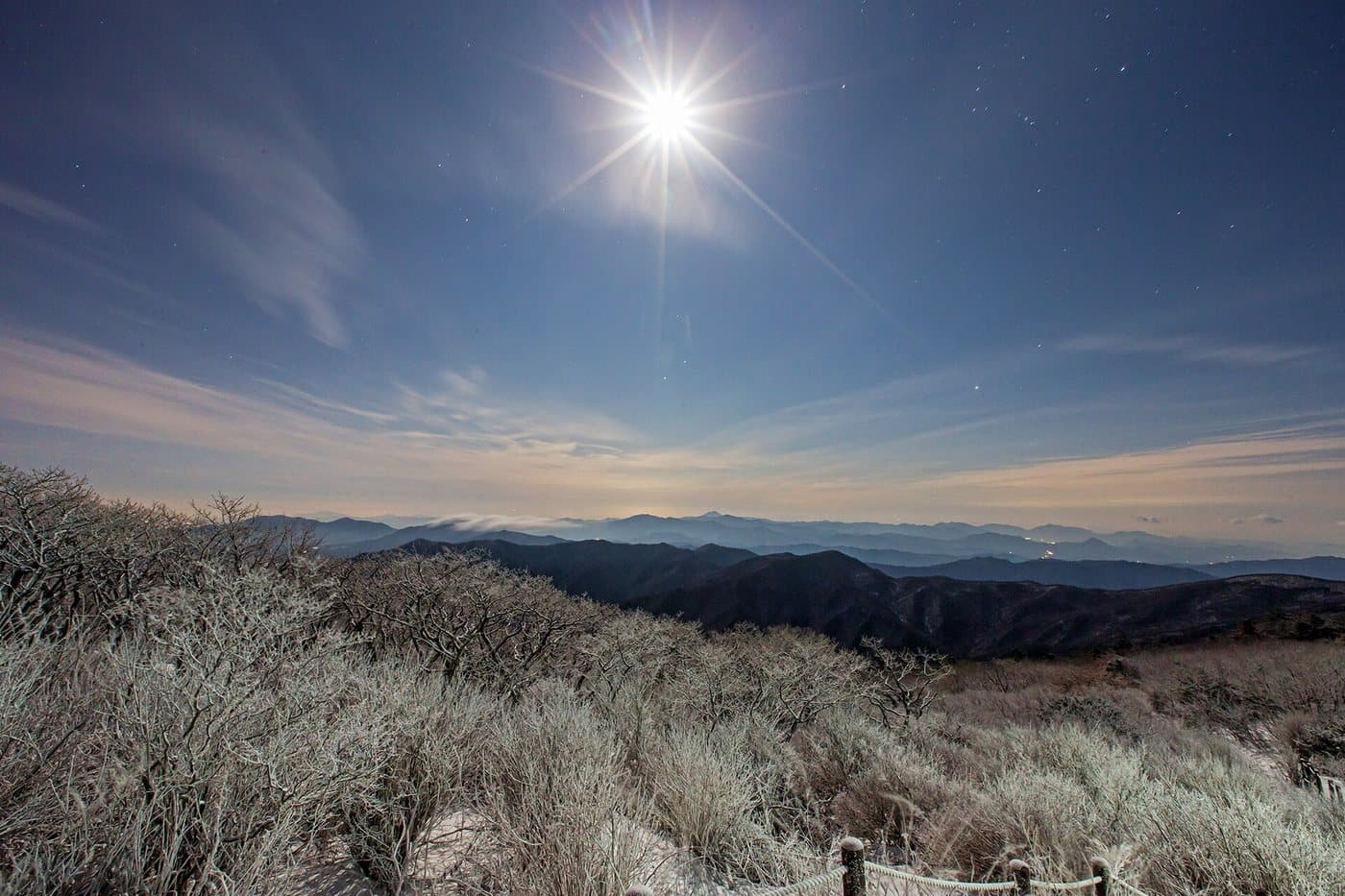
Dusk over the frosted summit ridge of Deogyusan

Winter dusk on the ridge

Deogyusan

Photo by Mg shin, CC BY-SA 3.0

The gondola is the whole plan, so check it runs

Muju Deogyusan's gondola is what makes the summit accessible, and it does not run every day of the year — it closes for maintenance periods and in high wind, and its operating season and hours differ between the ski months and the rest of the year. Check before you travel, because the walk up from Gucheondong instead is a serious five-hour climb.

Walking it

The easy summit, and the long valley

Two completely different days here. Either you ride up and walk the ridge, or you walk the Gucheondong valley, which is one of the great valley walks in Korea and involves no summit at all.

Gondola to Hyangjeokbong

1,614m for almost no effort

Distance
0.6 km
Time
20–30 min from the top station
Grade
easy

Route: Muju resort base → gondola → Seolcheonbong (1,520m) → Hyangjeokbong (1,614m)

Getting to the start: Bus to Muju, then local bus or taxi to the resort base station.

The gondola does the climbing. From the top station it is a short, mostly boardwalked walk along the ridge to the highest point in the park. In January the trees up here are solid rime ice.

Gucheondong valley

Thirty-three views, no climbing

Distance
6 km
Time
3 hr
Grade
easy

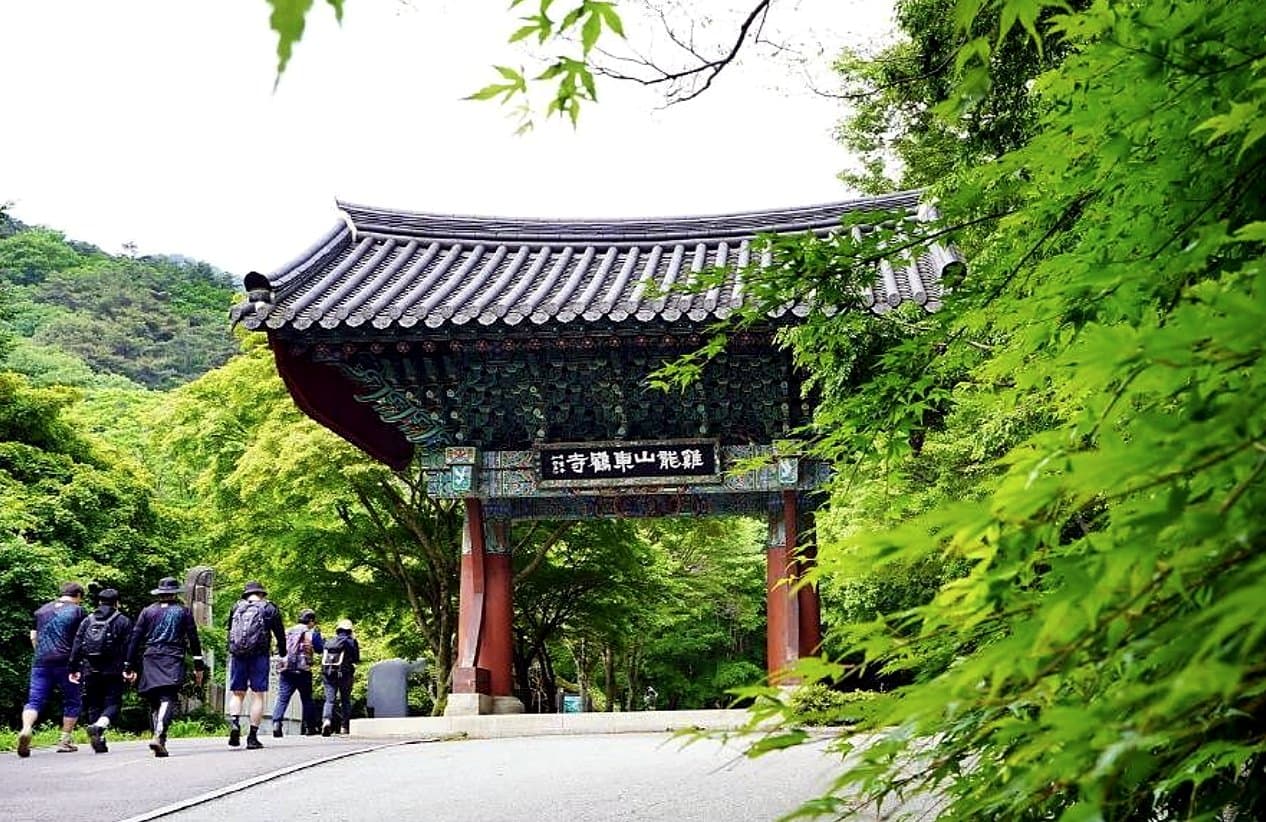
Route: Gucheondong entrance → Inwoldam → Gucheon falls → Baengnyeonsa

Getting to the start: Bus from Muju to Gucheondong.

The valley is catalogued into thirty-three named scenes — pools, falls and rocks, each with its own name and story. Flat, shaded and follows water the whole way to Baengnyeonsa temple at the head of it.

Gucheondong to Hyangjeokbong

Earning it

Time
5 hr up
Grade
advanced

Route: Baengnyeonsa → Osuja → Hyangjeokbong

Getting to the start: Continue past the valley walk above.

The walking route to the summit for anyone who would rather not take a ski lift up a national park. Long and steady rather than steep.

The ridge to Namdeogyu

For a long day

Time
7–8 hr
Grade
advanced

Route: Hyangjeokbong → Middaebong → Namdeogyusan → Yeonggak

Getting to the start: Start with the gondola to save four hours.

Deogyusan's ridge runs a very long way south. Walking it end to end is a proper mountain day, and in June the azaleas along the top are the reason to do it.

Given by walking time. The gondola's own timings and season are published by the Muju Deogyusan resort and change seasonally.

Ski lifts and national parks

The mountain with a resort on it

1975
Designated
232 km²
Area
1,614 m
Hyangjeokbong
33
Gucheondong scenes

Deogyusan is the fourth-highest mountain in South Korea and covers 232 km² across the border between North Jeolla and South Gyeongsang. It became a national park in 1975 — and the ski resort on its northern flank predates that designation, which is why a national park has a gondola, hotels and pistes inside it.

However you feel about that, the practical effect is real: Deogyusan is the only place in Korea where someone who cannot walk up a mountain can stand on a 1,600m summit in winter and see the rime ice for themselves. The gondola climbs to Seolcheonbong at 1,520m and the walk from there to Hyangjeokbong is short and gentle.

The other half of the park is Gucheondong, the long valley on the Muju side, which Korean tradition divides into thirty-three named scenes — Inwoldam, Waryongdam, the Gucheon falls and so on, each with its own story. It is a flat walk beside water for as long as you want to make it.

Muju itself is worth knowing about for the firefly festival, held each September; the valleys here are clean enough to still have them in numbers, which is rare.
More parks

All 23 national parks →