Skip to content
MyKoreanTrip

Marine park · South Jeolla

Dadohaehaesang National Park

다도해해상국립공원

The largest national park in Korea — an archipelago of hundreds of islands.

At 2,325 km² this is far and away the biggest of the parks, and most of it is water. The name means 'many islands sea', which is exactly what it is: a scattering of islands and headlands along the south-western coast.

Hongdo and Heuksando are the best known, reached by ferry from Mokpo, and the sunsets from the cliffs on Hongdo are the reason most people make the trip.

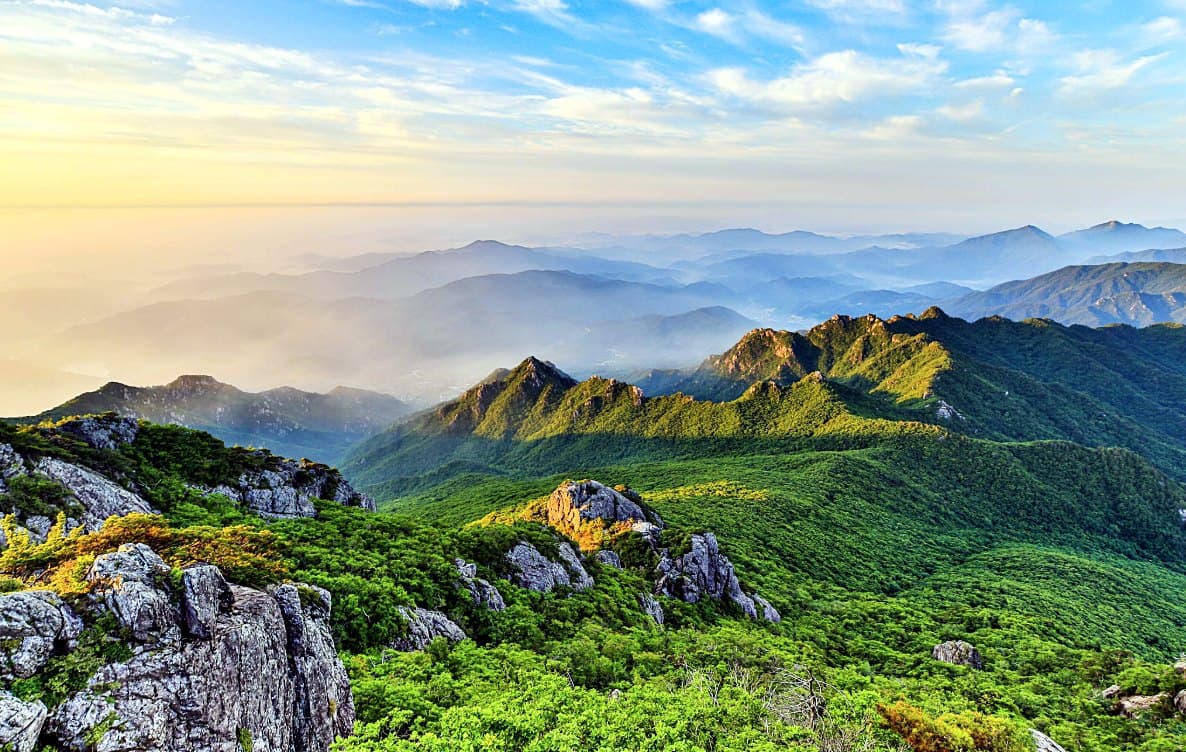
Park photograph by justinjfj, licensed under CC BY 2.0. Shown on the National parks index; resized.

Getting there from Seoul

Door-to-door estimates for a normal day; they stretch on a holiday weekend. Check the timetable before you rely on a last bus back.

  • Train

    KTX to Mokpo, about 2h 30m, for the ferries to Hongdo and Heuksando. KTX to Yeosu Expo serves the eastern end.

  • Bus

    Express coach to Mokpo or Yeosu, around 4h, if the train is full.

  • Ferry

    The park is mostly water, so the ferry is the visit. Hongdo is about 2h 30m from Mokpo. Sailings are cancelled in rough weather — build slack into the plan.

Wildlife & plants

Animals

Seabird colonies are the draw: black-tailed gulls, Chinese egrets and the rare Styan's grasshopper warbler breed on the islands. Finless porpoise and dolphins are seen offshore. The tidal flats feed migrating shorebirds on the East Asian–Australasian flyway.

Trees & flowers

Evergreen broadleaf forest — camellia, castanopsis and machilus — which barely exists elsewhere in Korea. Hongdo is a designated natural monument in its entirety, and landing is restricted to protect it.

Korea’s wildlife is shy and mostly nocturnal — you’re far more likely to see tracks than animals. Wild boar are the one to know about: keep your distance, don’t run, and never get between a sow and her young.

What grows and lives here

The islands up close

Dadohaehaesang means ‘sea of many islands’, and it is not an exaggeration: this is the largest national park in Korea by a wide margin, scattered across roughly 1,700 islands off the south-western corner of the peninsula. Most of them nobody lives on.

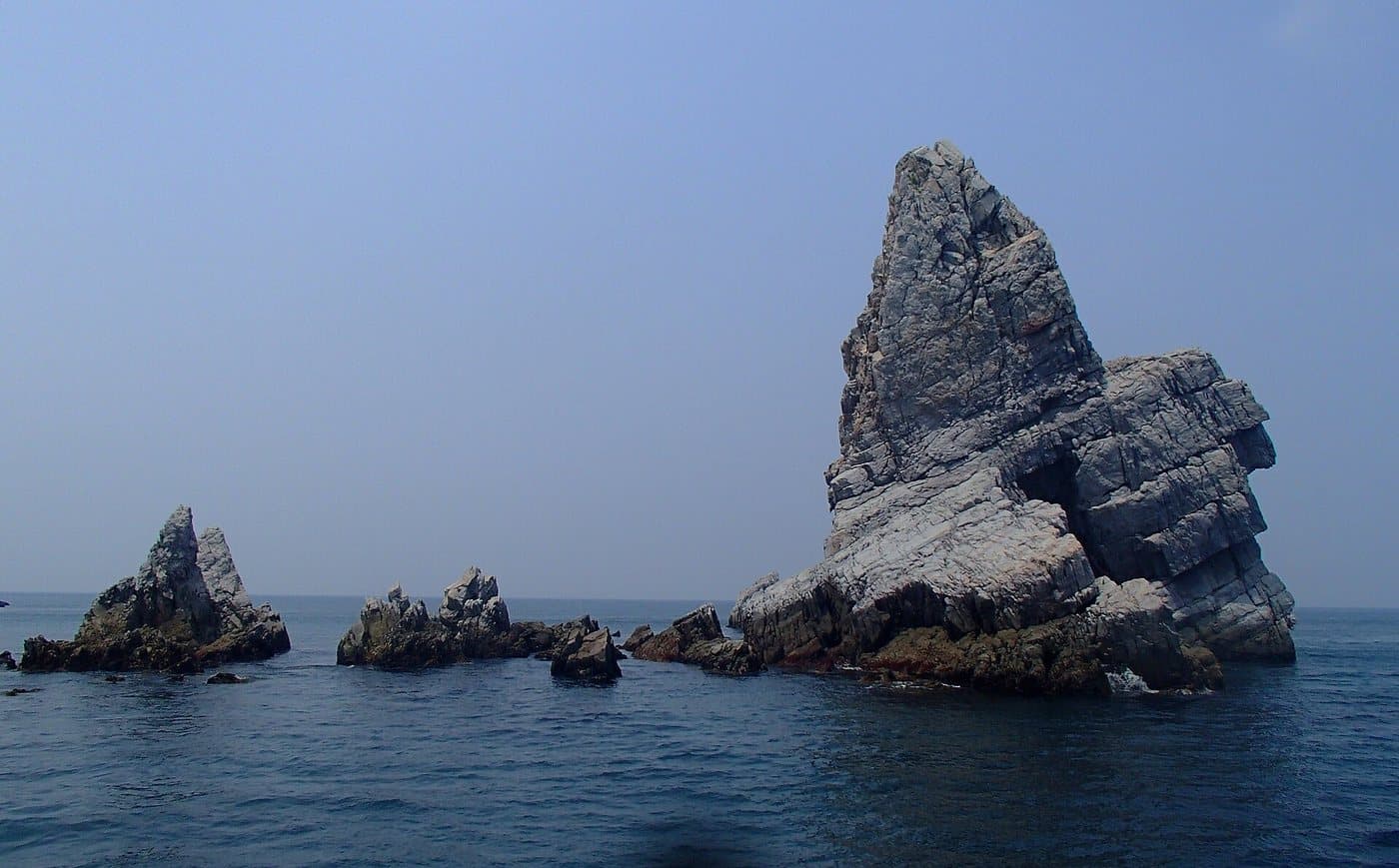
Tall pointed sea stacks standing out of calm water in Dadohaehaesang National Park

Candle Rock, standing offshore

Dadohaehaesang

Photo by Lcarrion88, CC BY-SA 4.0

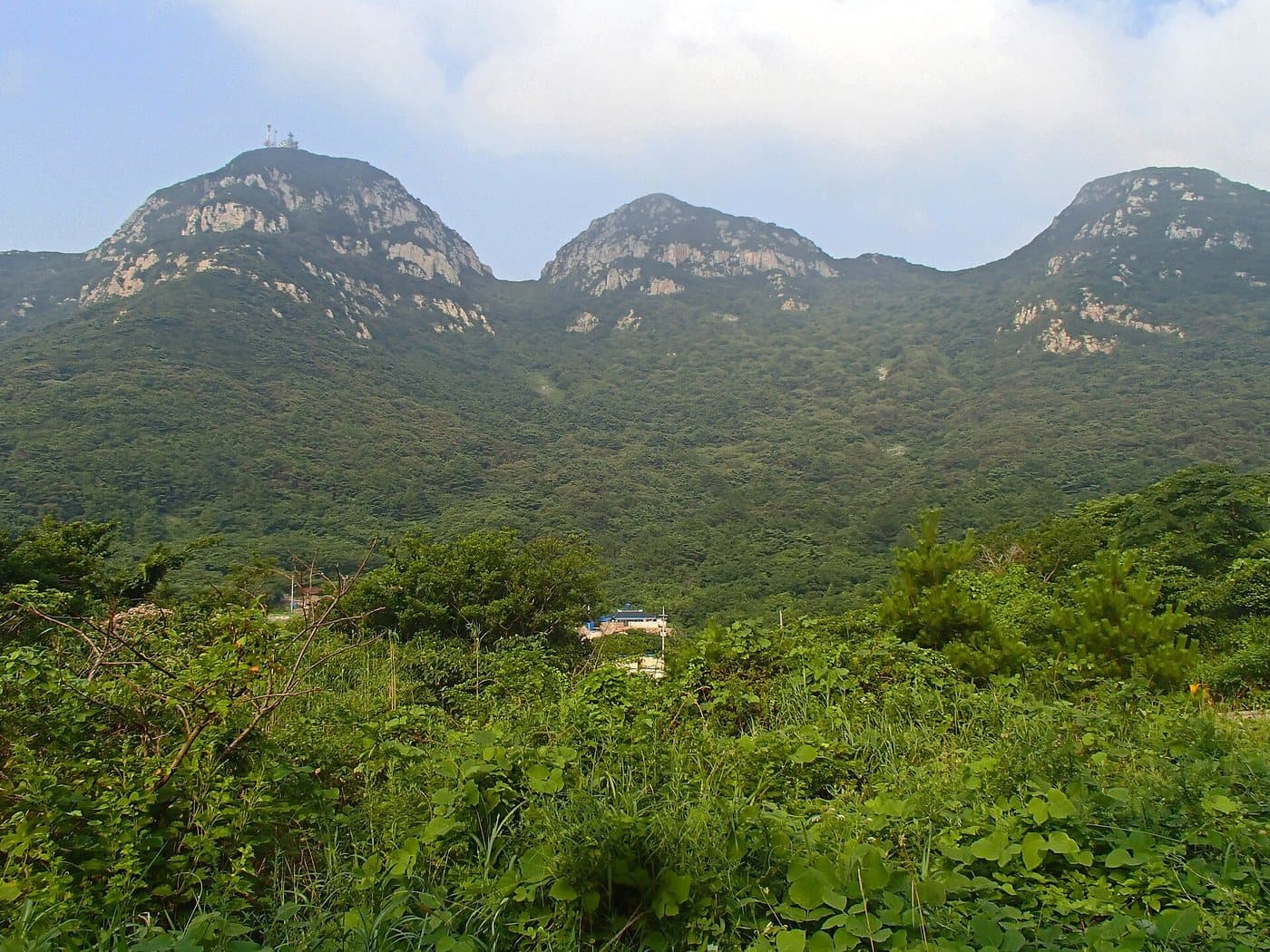
Twin green peaks rising above the trees on Heuksando island

The peaks of Heuksando

Heuksando

Photo by Lcarrion88, CC BY-SA 4.0

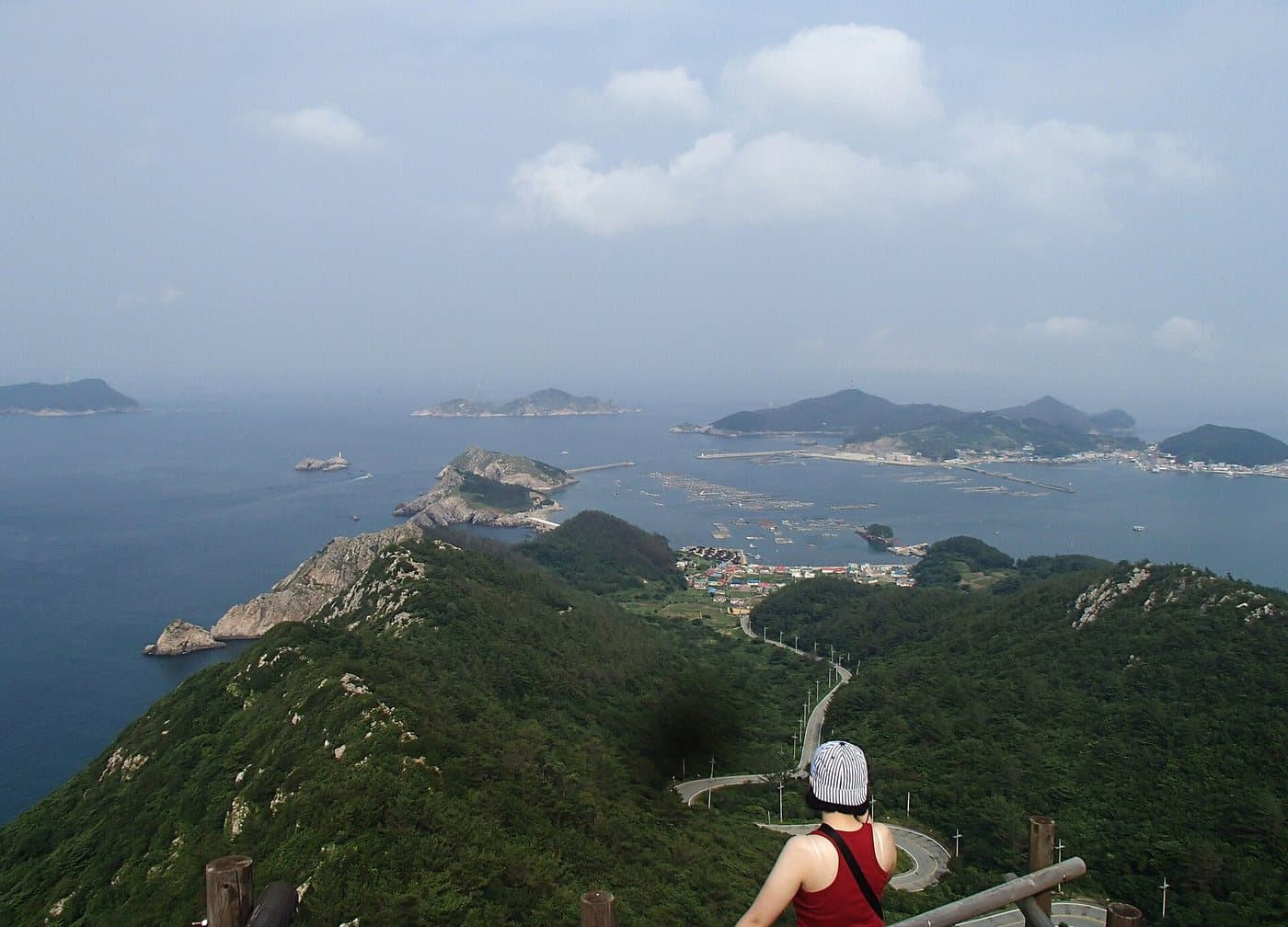
The view from Sangrabong peak on Heuksando over the island and the sea beyond

From Sangrabong, on Heuksando

Heuksando

Photo by Lcarrion88, CC BY-SA 4.0

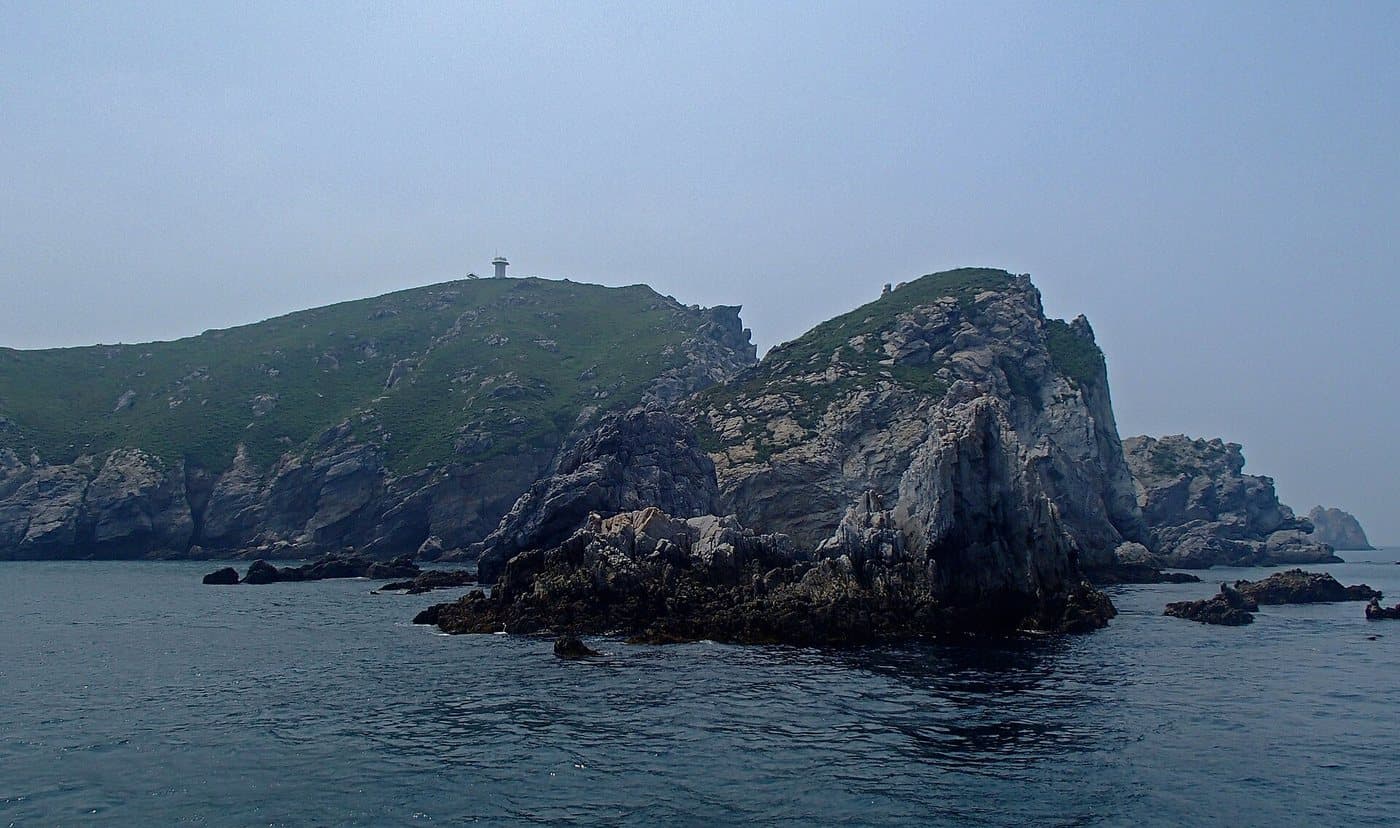
A small uninhabited island in the sea within Dadohaehaesang National Park

One of the uninhabited ones

Dadohaehaesang

Photo by Lcarrion88, CC BY-SA 4.0

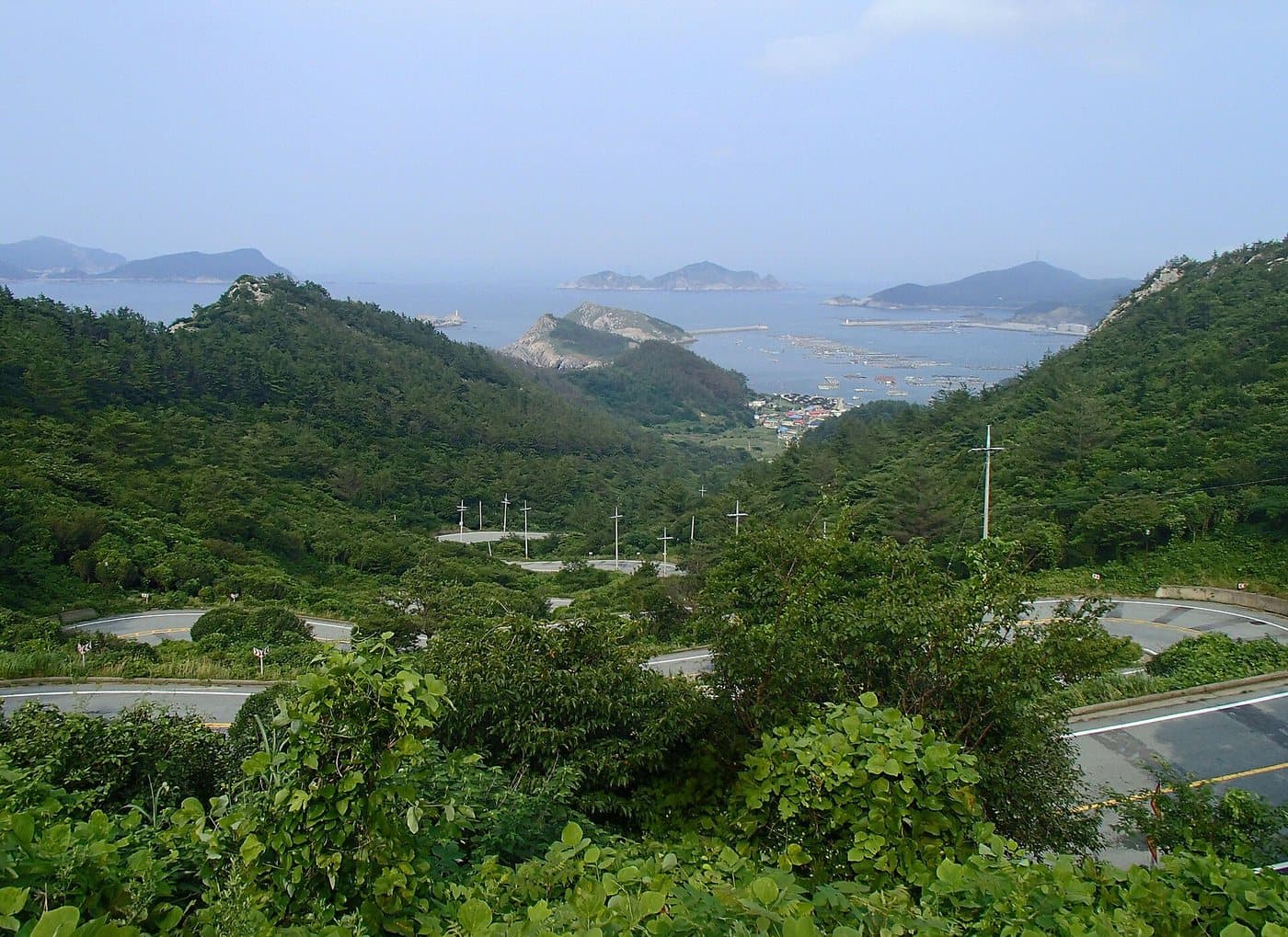
A coastal road winding around the green slopes of Heuksando above the sea

The road round Heuksando

Heuksando

Photo by Lcarrion88, CC BY-SA 4.0

Ferries are the whole trip, and they cancel

Everything in this park is reached by boat from Mokpo, Wando or Yeosu, and the crossings to the outer islands — Hongdo and Heuksando in particular — are two to three hours across open water. They are cancelled for wind and fog with no notice and no alternative, which in practice means you can be stuck on an island for an extra day, or fail to reach one at all. Build slack into the plan and do not book a flight home for the evening you are due back.

Getting around it

By boat, mostly

You do not hike Dadohaehaesang so much as travel through it. The park is spread over an archipelago the size of a small country, and the walking happens in pieces on individual islands.

Hongdo island circuit

The famous one

Time
2 hr 30 min by sea from Mokpo
Grade
easy

Route: Mokpo → Hongdo → the sightseeing boat around the island

Getting to the start: Ferry from Mokpo, usually via Heuksando.

Hongdo — ‘red island’ — is a natural monument, and the way to see it is the boat that runs right around it past the sea stacks and arches. Most of the island is off-limits to protect it, which is why the circuit is done from the water.

Heuksando and Sangrabong

The island you can actually walk

Time
3 hr return
Grade
average

Route: Yeri harbour → the ridge path → Sangrabong

Getting to the start: Ferry from Mokpo, about two hours.

Bigger and more lived-in than Hongdo, with a road round it and proper walking on the ridge. The climb to Sangrabong gives you the archipelago laid out in every direction.

Baekdo from Geomundo

Rocks in the open sea

Time
1 hr 30 min boat tour
Grade
easy

Route: Geomundo → the Baekdo group → back

Getting to the start: Ferry from Yeosu to Geomundo, then a local tour boat.

Baekdo is a scatter of uninhabited rock islets, closed to landing and visited only by boat. It is the strangest scenery in the park and a long way from anywhere.

Wando and Bogildo

The easy end of the park

Time
30 min by sea
Grade
easy

Route: Wando → Bogildo → Yun Seon-do's garden at Buyongdong

Getting to the start: Wando is reached by road; the Bogildo ferry is short and frequent.

If the outer islands are too much of a commitment, this is the accessible version — short crossing, a pebble beach, and the seventeenth-century garden the exiled poet Yun Seon-do built for himself.

Crossing times are typical scheduled durations and vary by operator and conditions.

2,325 square kilometres

Korea's biggest park, and its emptiest

1981
Designated
2,325 km²
Area
≈1,700
Islands
Uninhabited
Mostly

Dadohaehaesang is the largest national park in South Korea at 2,325 km², which is bigger than the next four put together. Almost all of that is water. Inside the boundary are something like 1,700 islands, and the great majority have nobody living on them at all.

It was designated in 1981 and runs along the south-western corner of the peninsula, from the waters off Yeosu westwards past Wando and out to the far islands beyond Mokpo. Parts of it overlap the Sinan Dadohae Biosphere Reserve, recognised for its tidal flats and its birdlife.

Hongdo and Heuksando are the two names everyone knows. Hongdo is a natural monument, small and steep and mostly closed to walkers, seen instead from a boat that runs around its stacks and arches. Heuksando is larger and inhabited, with a road, fishing harbours and a ridge you can walk.

This is the least convenient park in Korea to visit and the one that feels furthest from anywhere. That is the appeal. It is also worth remembering that these islands are working places — fishing, seaweed and abalone farming — rather than a resort, and the ferry timetable is built around residents, not visitors.
More parks

All 23 national parks →