Mountain park · Gangwon, North Gyeongsang
Taebaeksan
태백산국립공원
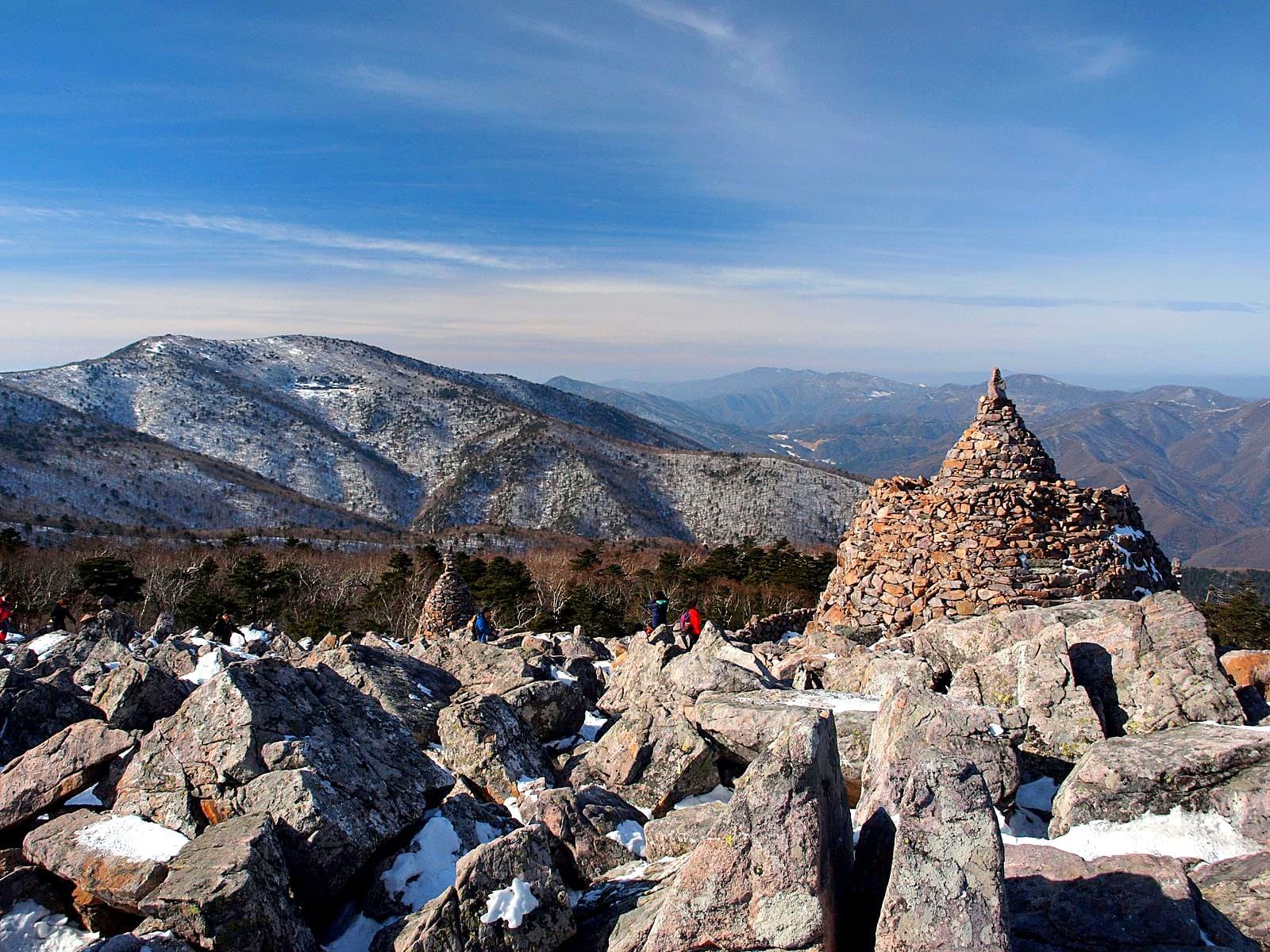
An ancient ritual peak, and the most reliable snow in the country.
Taebaeksan has been a place of ritual for a very long time — Cheonjedan, the stone altar on the summit ridge, is still used for ceremonies to heaven each October.
It became a national park only in 2016. The high slopes hold ancient yew trees, and the snow festival in January is built on the fact that this is about the surest snow in South Korea.
Photograph by Dcpeets, licensed under CC BY-SA 3.0. Resized for this page.
Getting there from Seoul
Door-to-door estimates for a normal day; they stretch on a holiday weekend. Check the timetable before you rely on a last bus back.
Train
Train to Taebaek on the Taebaek line, about 4h — slow but scenic. Getting off at Cheoram and taking a bus is sometimes quicker.
Bus
Express coach from Seoul Dong Seoul to Taebaek, about 3h 30m. The better option.
Car
About three and a half hours. In January the roads up are usually clear but tyres matter.
Wildlife & plants
Animals
Goral, marten, musk deer, and one of the few Korean sites where the Siberian flying squirrel is regularly recorded. The high open ground holds birds that are scarce further south.
Trees & flowers
The yew forest near the summit is the park's treasure — trees over a thousand years old, twisted by wind, standing dead for centuries and still upright. Also subalpine birch and dwarf bamboo.
Korea’s wildlife is shy and mostly nocturnal — you’re far more likely to see tracks than animals. Wild boar are the one to know about: keep your distance, don’t run, and never get between a sow and her young.
More parks
Wolchulsan
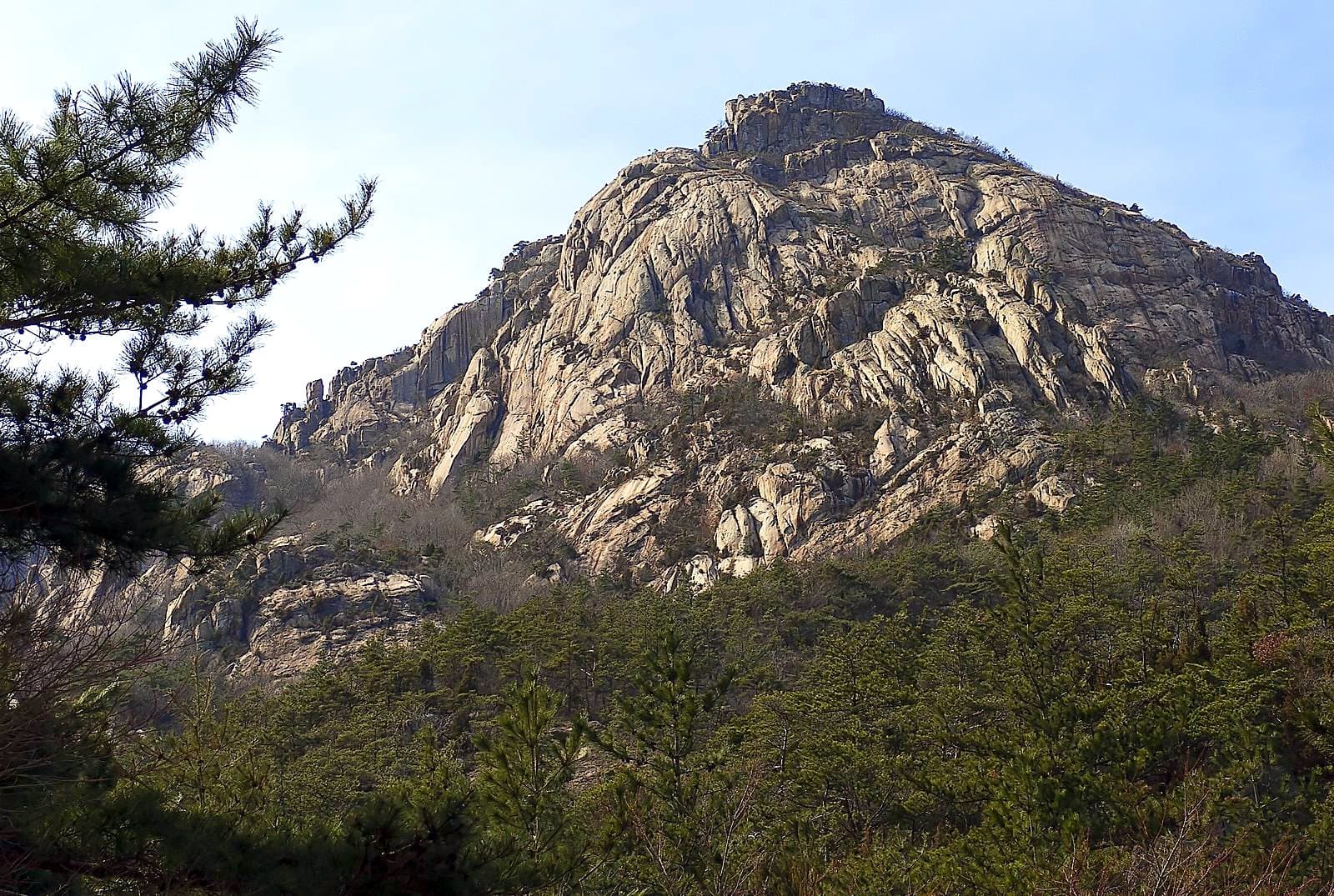
The smallest park, and the most vertical — with a bridge slung between two peaks.

Woraksan
A rock peak standing over the water of Chungju Lake.
Bukhansan
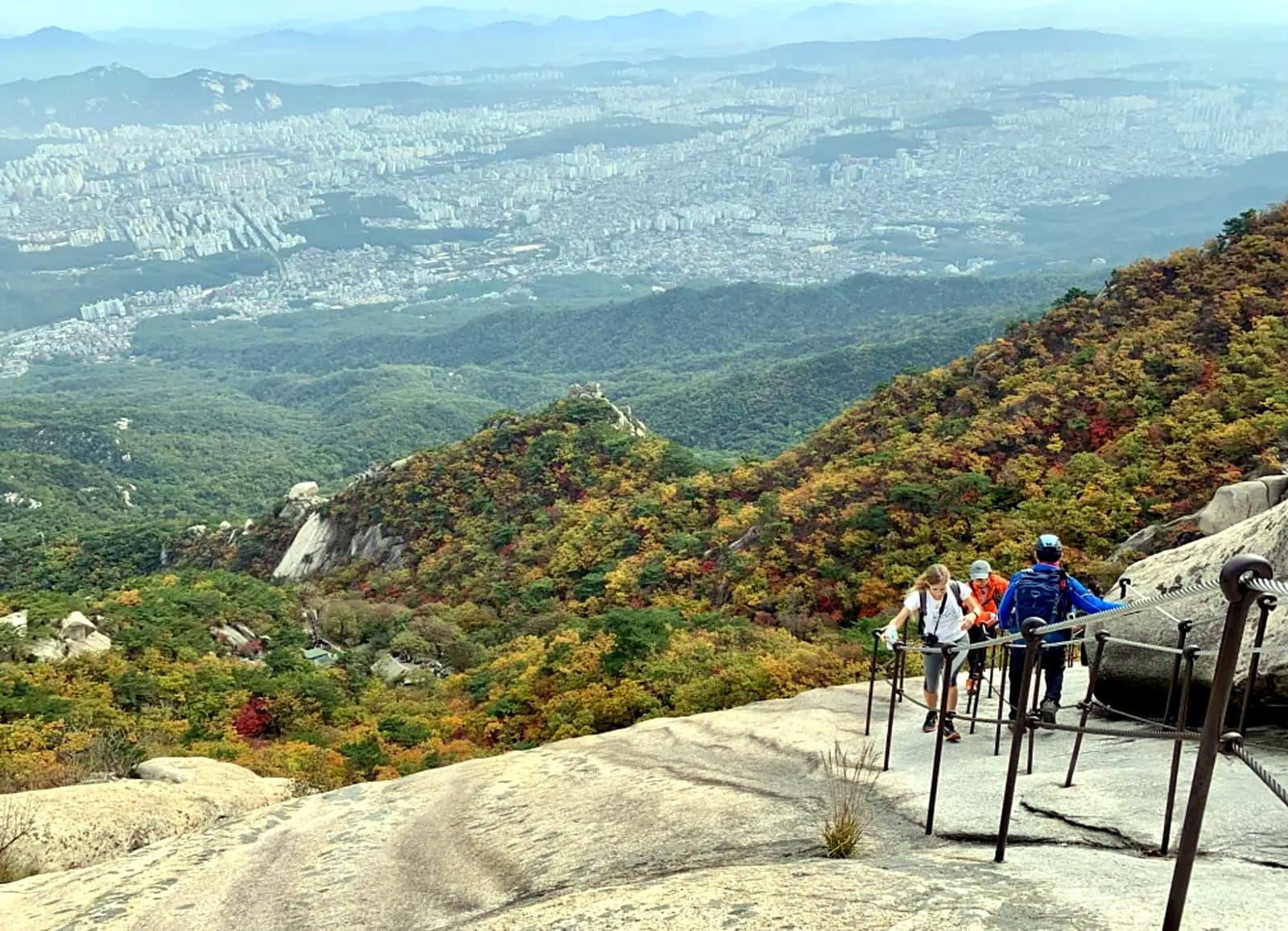
A proper granite mountain inside Seoul, reachable by subway in under an hour.