Skip to content
MyKoreanTrip

Marine park · South Chungcheong

Taeanhaean National Park

태안해안국립공원

Beaches, dunes and mudflats along the west coast.

A long, thin park following the Taean peninsula on the Yellow Sea coast, made up of beaches, sand dunes and the tidal flats that go with a coastline where the water withdraws a long way twice a day.

Sinduri's dune field is the largest coastal dune system in the country and protected as a natural monument.

Getting there from Seoul

Door-to-door estimates for a normal day; they stretch on a holiday weekend. Check the timetable before you rely on a last bus back.

  • Bus

    Express coach from Seoul Central City to Taean, about 2h 30m, then local buses along the coast. Bus 313 serves Sinduri.

  • Train

    No line to the peninsula.

  • Car

    Around two hours. The park is a long thin strip of coastline with 28 separate beaches, so a car changes what you can see.

Wildlife & plants

Animals

The tidal flats are internationally important for migrating shorebirds — spoon-billed sandpiper, great knot and curlew stop here on the flyway. Spotted seals appear offshore in winter.

Trees & flowers

The Sinduri dune system supports plants found almost nowhere else in Korea, including the sand-binding grasses that hold the dunes together. Behind the beaches, old coastal pine groves planted as windbreaks.

Korea’s wildlife is shy and mostly nocturnal — you’re far more likely to see tracks than animals. Wild boar are the one to know about: keep your distance, don’t run, and never get between a sow and her young.

What grows and lives here

The coast up close

Taeanhaean is Korea's coastal national park — not a mountain with a shore attached, but 326 km² of beaches, dunes, headlands and small islands strung down the west coast. It also holds the only substantial coastal sand dune system in the country.

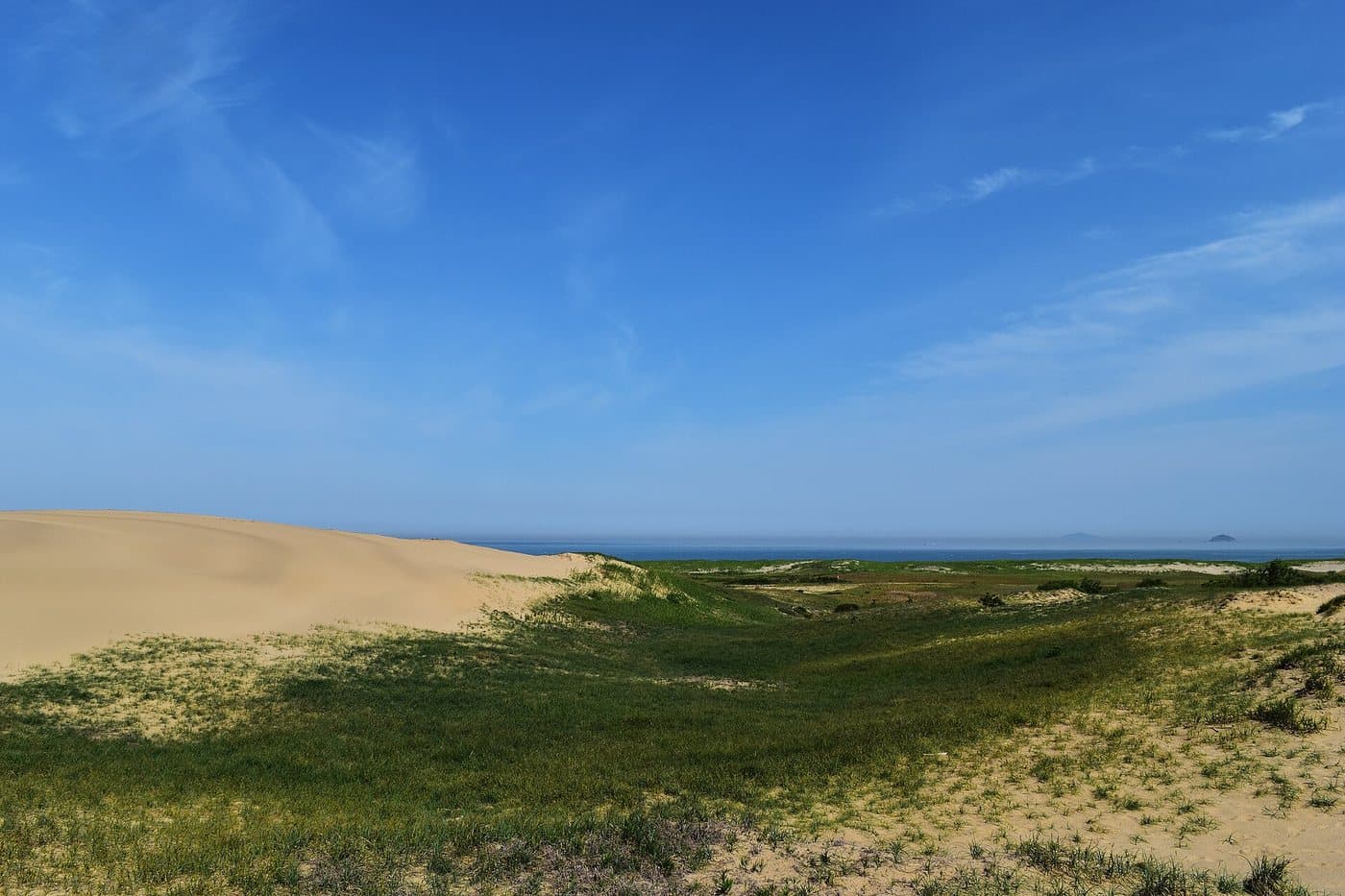
The rolling grass-covered sand dunes at Sinduri on the Taean coast

Sinduri dunes — the only ones like this in Korea

Taeanhaean

Photo by Jjw, CC BY-SA 4.0

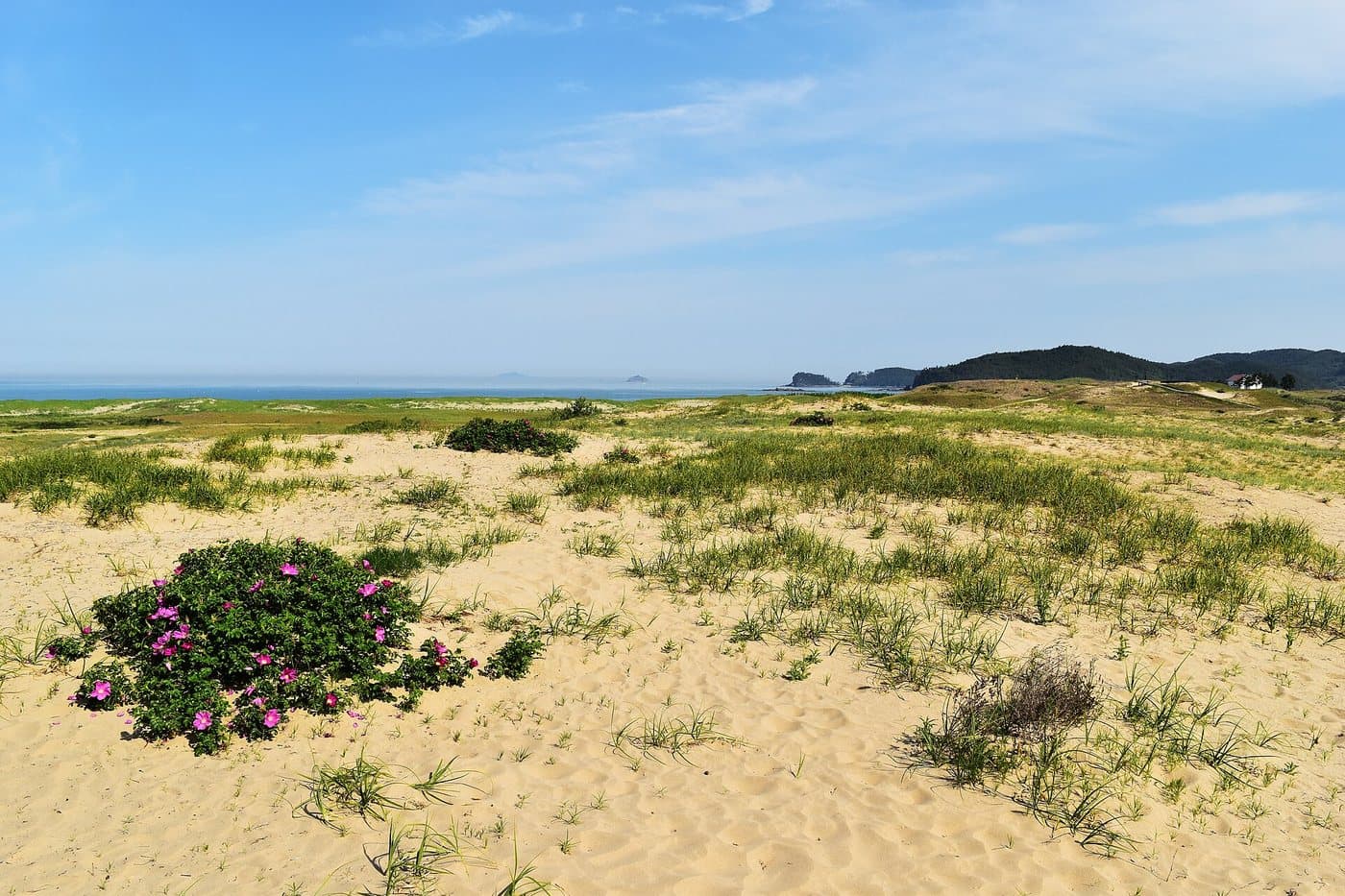
Flowering plants growing among the sand at the Sinduri dunes

Dune plants, holding the sand together

Sinduri, Taeanhaean

Photo by Jjw, CC BY-SA 4.0

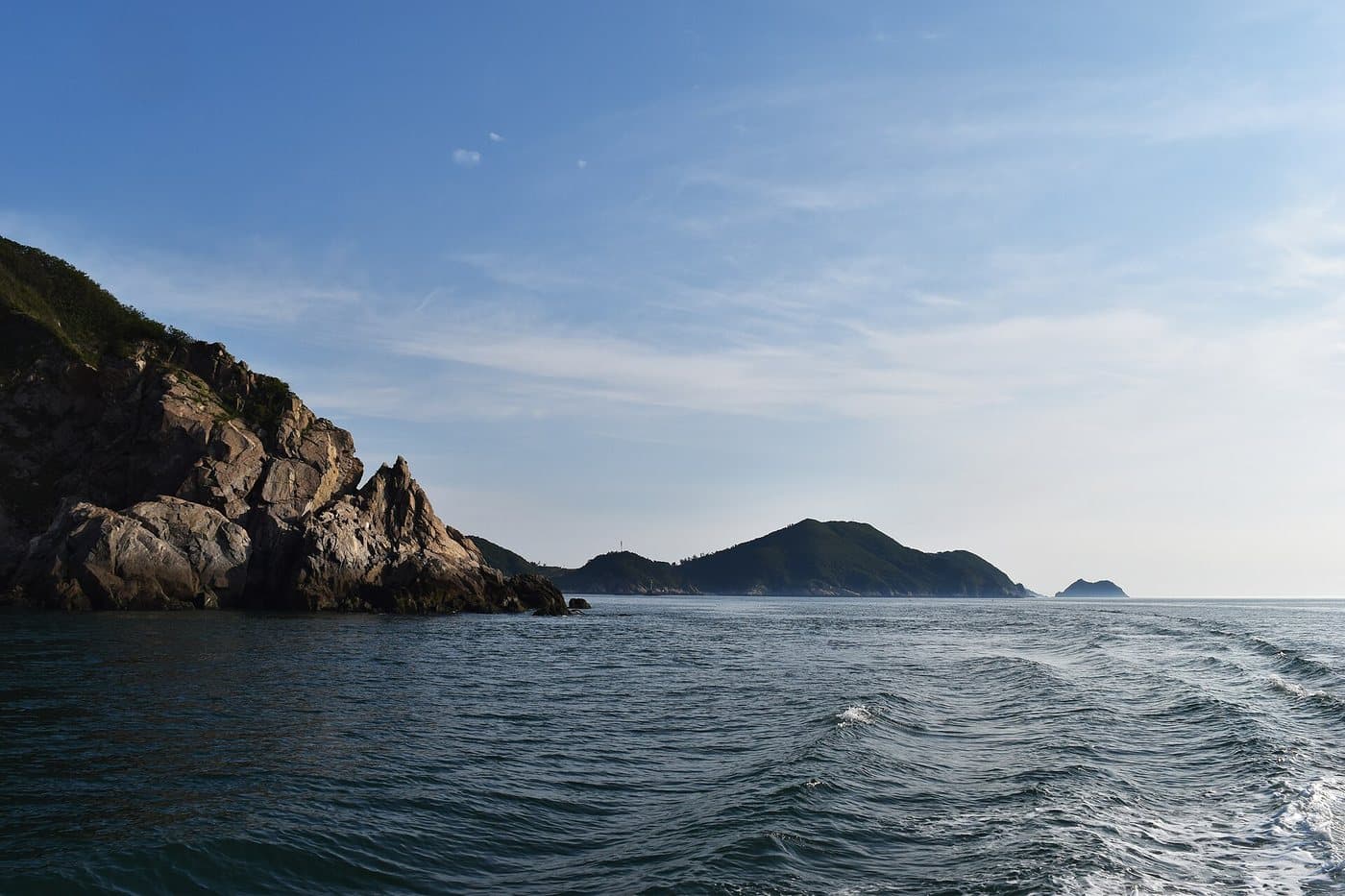
A rocky headland and calm sea at Gauido in Taeanhaean National Park

Gauido, one of the park's islands

Taeanhaean

Photo by Jjw, CC BY-SA 4.0

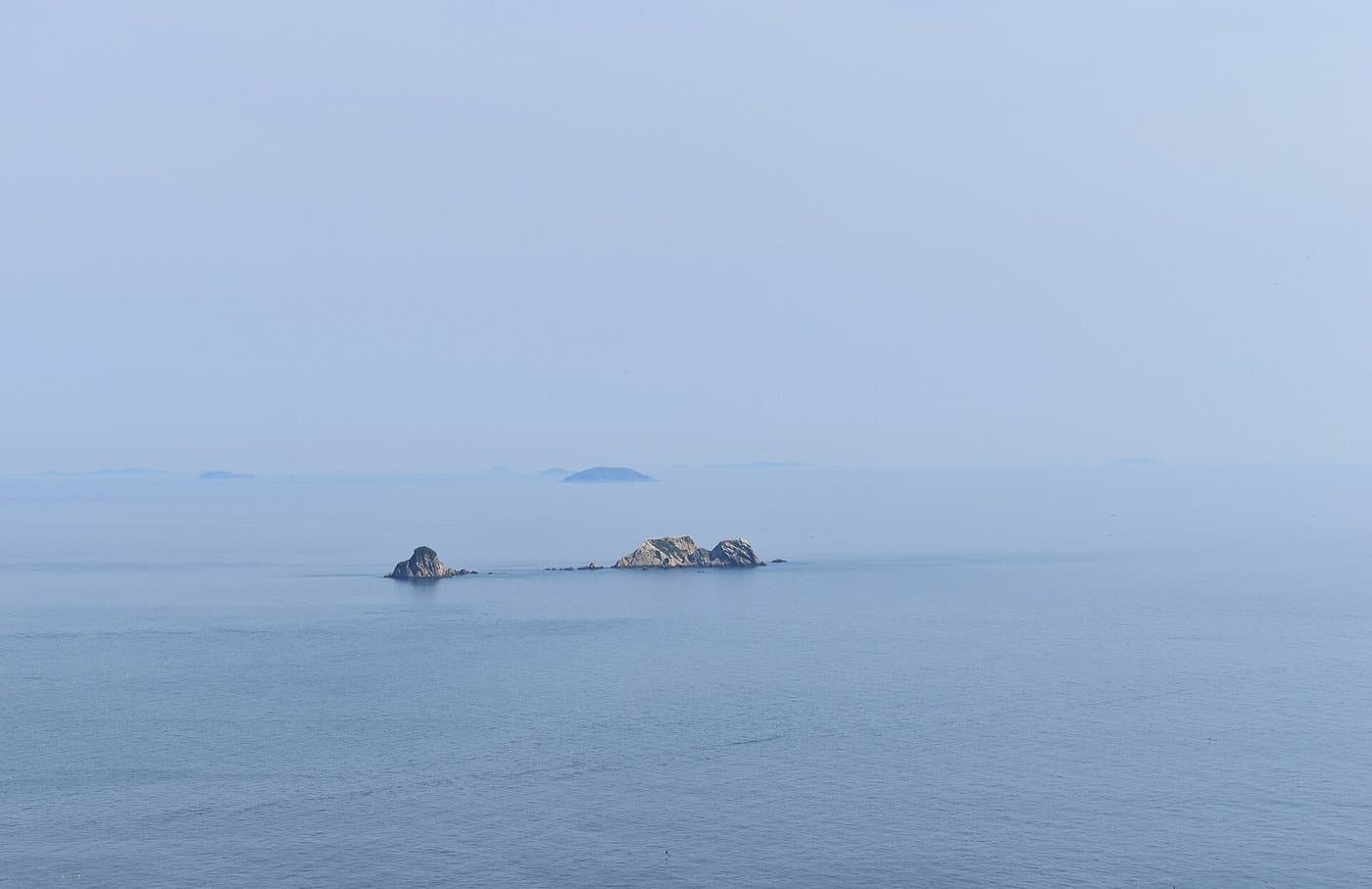
Distant low islands lying off the Taean coast in flat calm water

Byeongpungdo, offshore

Taeanhaean

Photo by Jjw, CC BY-SA 4.0

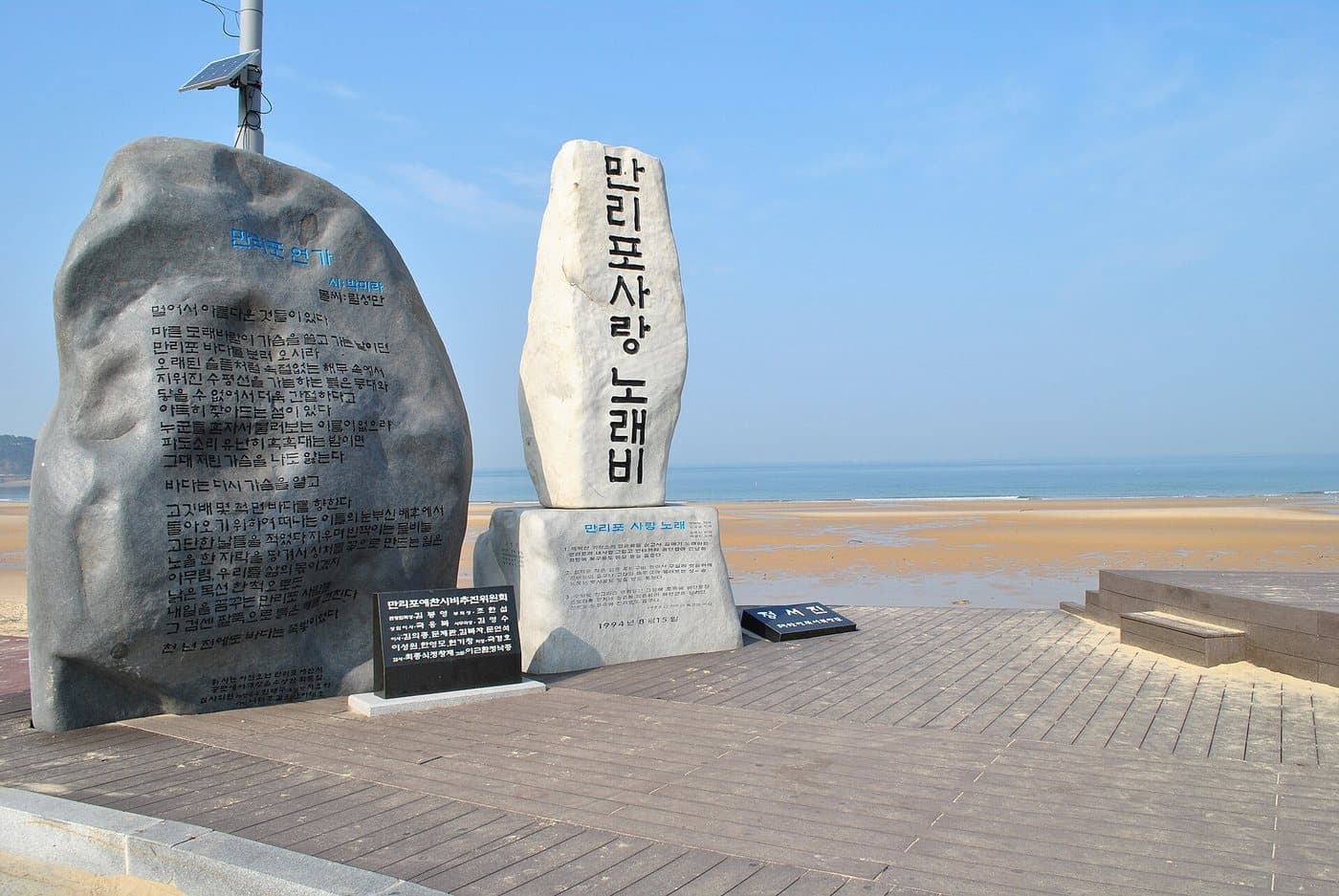
The seafront promenade and monument at Mallipo beach on the Taean coast

Mallipo, where the oil came ashore in 2007

Taeanhaean

Photo by Jjw, CC BY-SA 3.0

Everything here is tidal

The west coast tidal range is among the largest in the world, and on this coast the water can go out several hundred metres. That is the attraction — mudflat walking, shellfish digging, islands you can walk to on foot — and it is also the hazard, because the tide comes back across flat ground faster than you can comfortably walk. Never cross to an island without knowing when the water returns.

Walking it

Along the shore

There are no summits here. Taeanhaean is walked along its coast — the Haebyeon-gil, a long-distance coastal path broken into numbered sections, plus the dunes and a string of beaches that run for most of the peninsula.

Sinduri dunes

The one genuinely unusual thing

Distance
2 km
Time
1 hr
Grade
easy

Route: Sinduri car park → the boardwalk through the dune field → the lookout

Getting to the start: Bus from Taean town towards Sinduri.

A boardwalk loop through the largest coastal dune system in Korea, protected as a natural monument. Behind the dunes lies the Duung wetland, a rare freshwater marsh trapped between sand and land.

Mallipo to Cheollipo

Beach, then arboretum

Distance
3 km
Time
1–2 hr
Grade
easy

Route: Mallipo beach → the headland → Cheollipo arboretum

Getting to the start: Bus from Taean to Mallipo.

A short coastal walk between two of the best-known beaches, ending at Cheollipo Arboretum — a private collection begun by an American-born Korean, Min Byung-gal, and now holding thousands of species.

Kkotji beach and the twin rocks

Sunset

Distance
2 km
Time
1 hr
Grade
easy

Route: Kkotji car park → the beach → the Halmi and Harabi rocks

Getting to the start: On Anmyeondo, reached by road bridge from Taean.

Two sea stacks known as the grandmother and grandfather rocks stand just offshore, and the sun goes down between them. One of the classic west-coast sunsets, and it is a five-minute walk from the car.

Haebyeon-gil coastal path

If you have days rather than hours

Distance
100 km
Time
Multi-day
Grade
average

Route: Numbered sections running the length of the Taean coast

Getting to the start: Sections start from the main beaches and are individually signed.

The full coastal route runs roughly a hundred kilometres in numbered sections, each walkable in a day or a half day. You do not have to commit to the whole thing — most people pick one section and a beach.

Section lengths are as published for the Taean Haebyeon-gil coastal route.

7 December 2007

The spill, and the million people who came

1978
Designated
326 km²
Area
12,547 kL
Oil spilled
≈1.3 million
Volunteers

Taeanhaean was designated in 1978 as Korea's coastal national park — the only one of the twenty-three defined by its shoreline rather than a mountain. It covers 326 km² of beaches, dunes, headlands and islands down the Chungcheong coast.

On 7 December 2007 a crane barge under tow broke loose in bad weather and struck the anchored tanker Hebei Spirit off Mallipo. Roughly 12,547 kilolitres of crude oil went into the sea — the worst spill in Korean history — and within days it had coated the beaches, the dunes and the mudflats along this coast and kept going south.

What happened next is the part people here still talk about. Something close to 1.3 million volunteers travelled to Taean over the following months, many of them ordinary families with buckets and rags, and wiped the rock and sand by hand. It removed perhaps a fifth of the oil directly, and it kept going long after the news crews left; traces of the spill were still being found in the sediment four years later.

The coast recovered far faster than anyone predicted. Long-term monitoring has tracked the seabed communities returning over the following decade, and the beaches were back in use within a few years. The volunteer effort is commemorated along this shore, and it is worth knowing about while you are standing on it.
More parks

All 23 national parks →