Skip to content
MyKoreanTrip

Mountain park · North Chungcheong, North Gyeongsang

Songnisan National Park

속리산국립공원

Beopjusa temple and its great bronze Buddha, under a rocky ridge.

The name translates as 'mountain away from the ordinary world', which tells you what it was for. The main draw is Beopjusa, a temple founded in 553 and one of the seven Korean mountain monasteries inscribed together as a World Heritage Site in 2018.

The standing bronze Maitreya in the temple courtyard is 33m tall and visible long before you reach it. Behind it, trails climb to Munjangdae and the ridge at around 1,050m.

Getting there from Seoul

Door-to-door estimates for a normal day; they stretch on a holiday weekend. Check the timetable before you rely on a last bus back.

  • Bus

    Direct express coach from Seoul Express Bus Terminal to Songnisan terminal, about 3h. It drops you a short walk from Beopjusa, which makes this the rare park with a door-to-door coach.

  • Train

    KTX to Osong or Daejeon, then a bus on — slower overall than the direct coach.

  • Car

    About two and a half hours on the Jungbu expressway.

Wildlife & plants

Animals

Wild boar, roe deer, marten and otter along the streams. The old-growth around the temple is good for woodpeckers and owls.

Trees & flowers

The Jeongipum pine on the approach road is over 600 years old and holds a government rank granted by a king — it is a natural monument. Beyond it, old pine and oak forest, with maple colour in late October.

Korea’s wildlife is shy and mostly nocturnal — you’re far more likely to see tracks than animals. Wild boar are the one to know about: keep your distance, don’t run, and never get between a sow and her young.

What grows and lives here

The mountain up close

Songnisan means ‘the mountain that leaves the ordinary world behind’. It is a broadleaf mountain — maple, hornbeam, wild pear, oak and lime rather than pine — which makes it quietly green all summer and one of the better autumn valleys in central Korea.

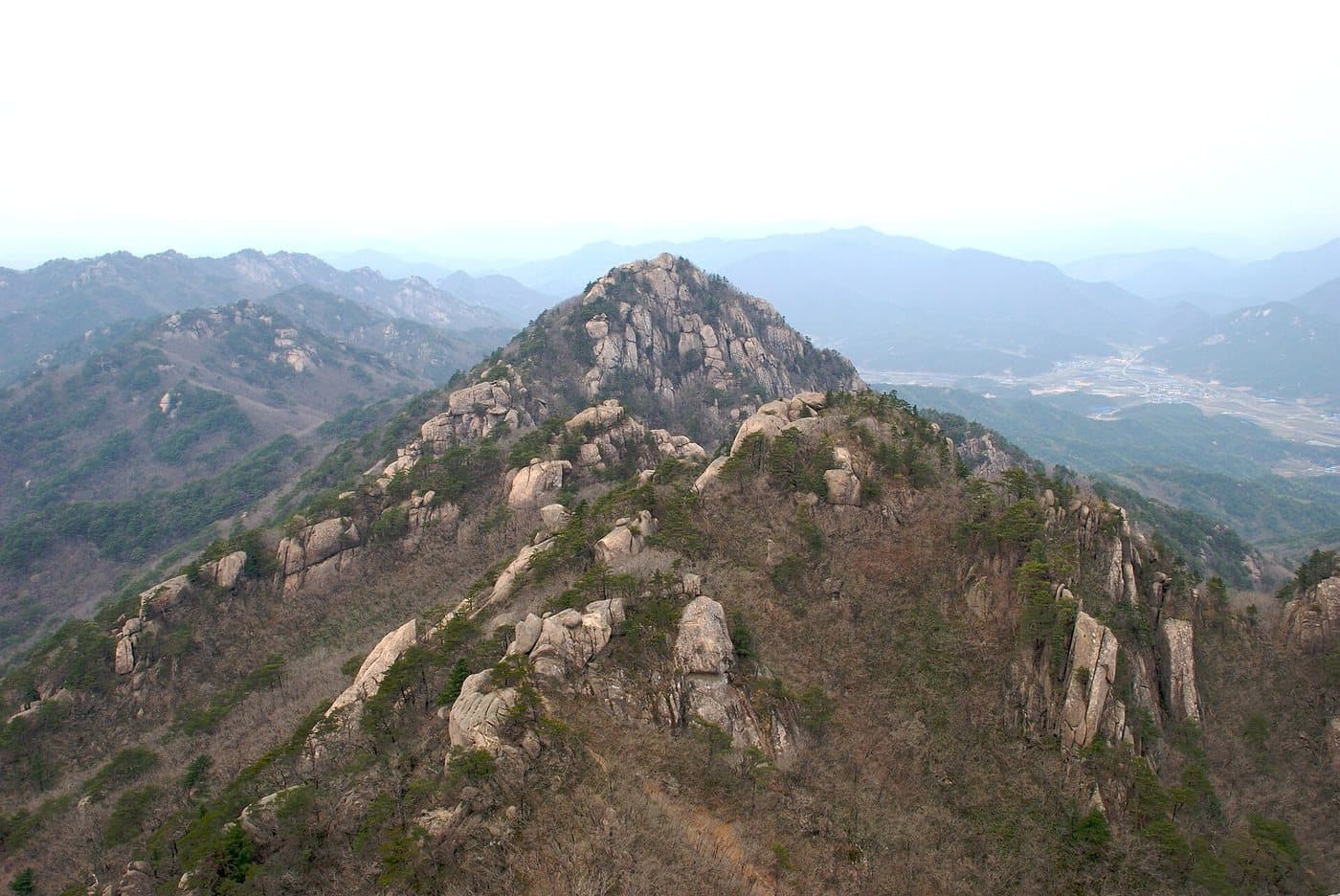
The rocky summit of Gwaneum Peak seen from Munjangdae at Songnisan

Gwaneumbong, seen from Munjangdae

Songnisan

Photo by Yoo Chung, CC BY-SA 2.0

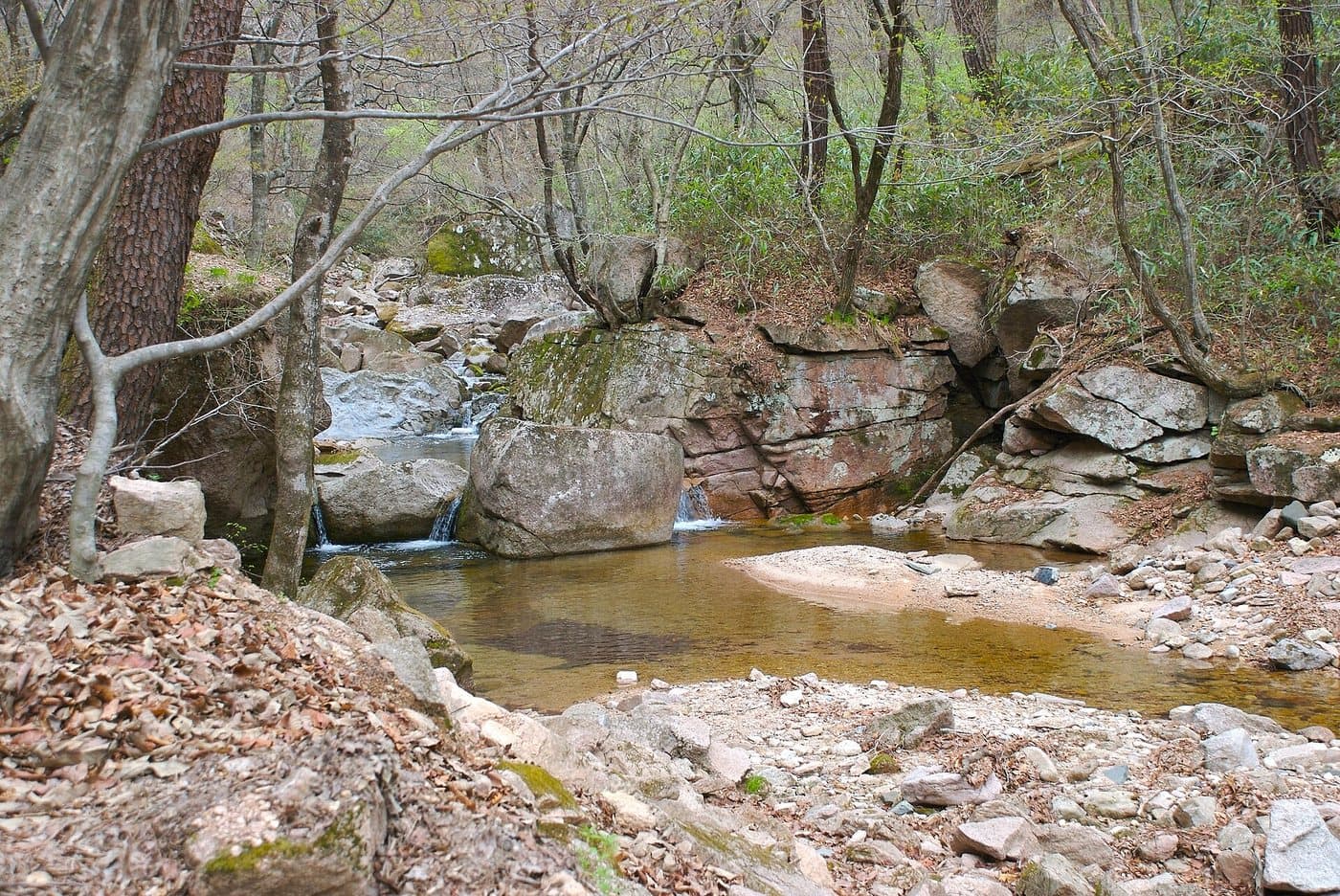
A clear stream running over pale rock through wooded valley at Songnisan

One of the valleys below the ridge

Songnisan

Photo by Ashy Minivet, Public domain

A small clear pool in a brook among rocks at Songnisan

Mogyokso, a pool in the brook

Songnisan

Photo by Yoo Chung, CC BY-SA 2.0

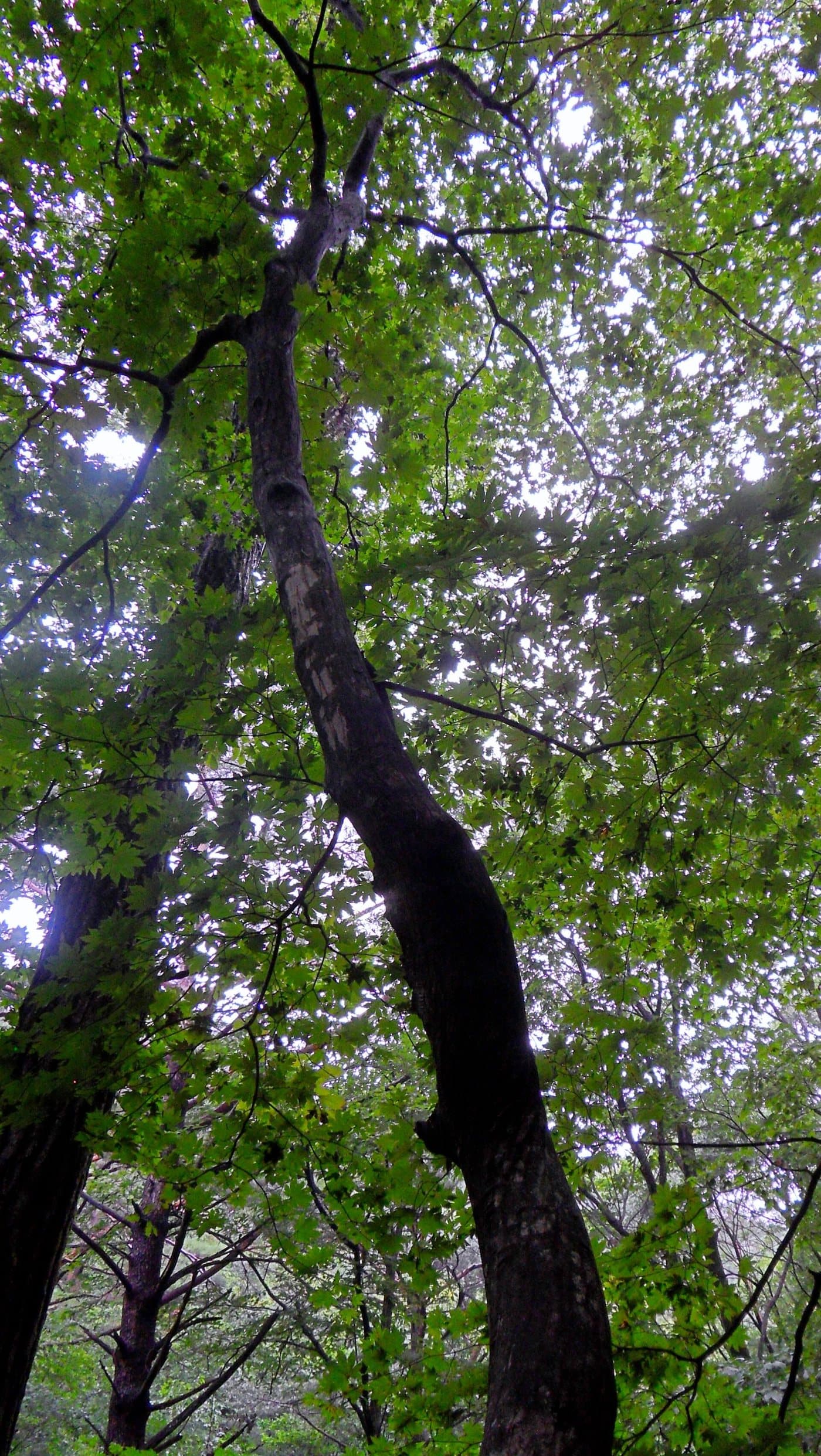
The canopy of a Korean maple seen from below against the sky

Korean maple — the tree that turns the valley red

Songnisan

Photo by Ashy Minivet, Public domain

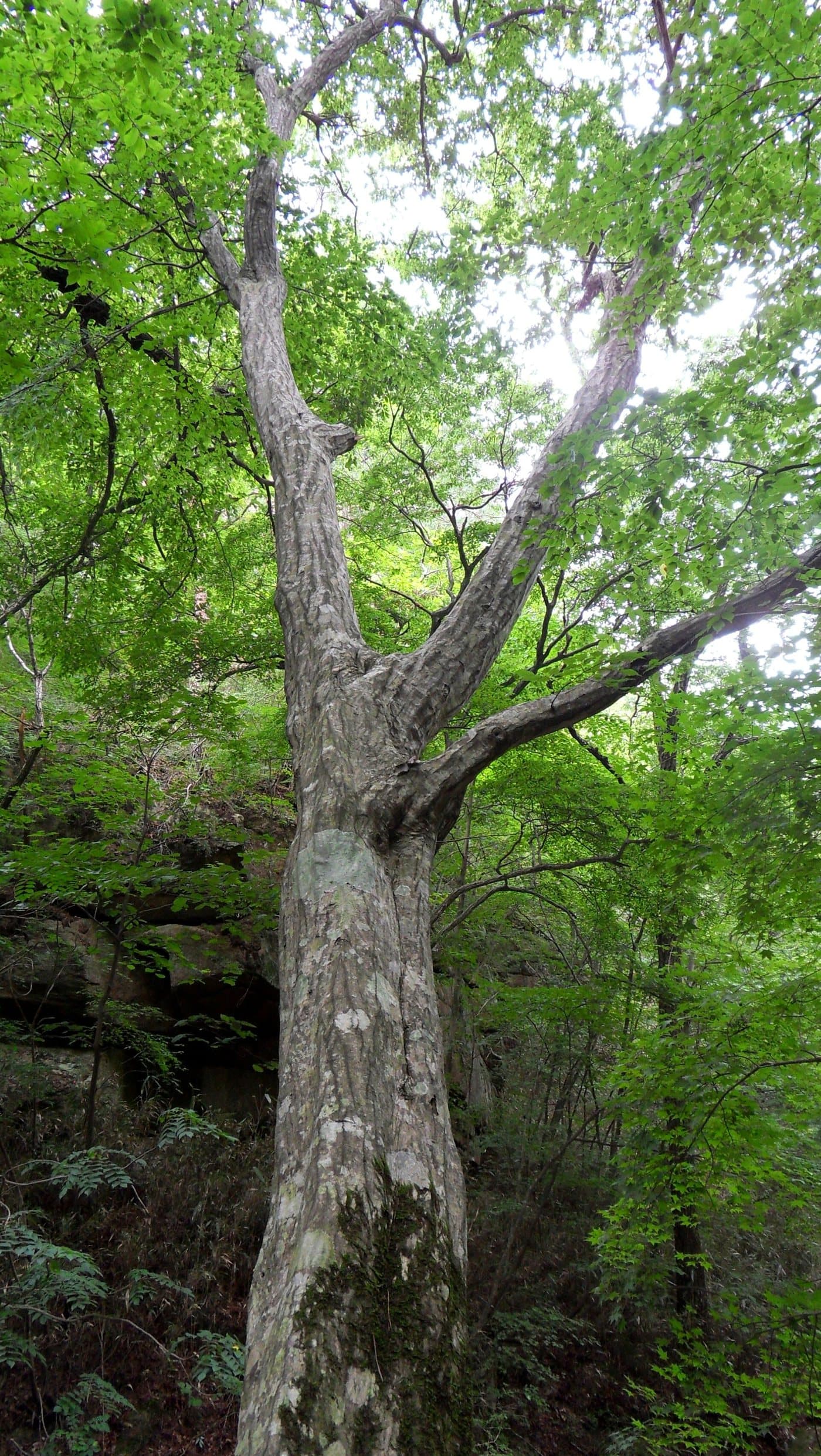
The smooth grey trunk and spreading canopy of a hornbeam at Songnisan

Hornbeam, the quiet backbone of the forest

Songnisan

Photo by Ashy Minivet, Public domain

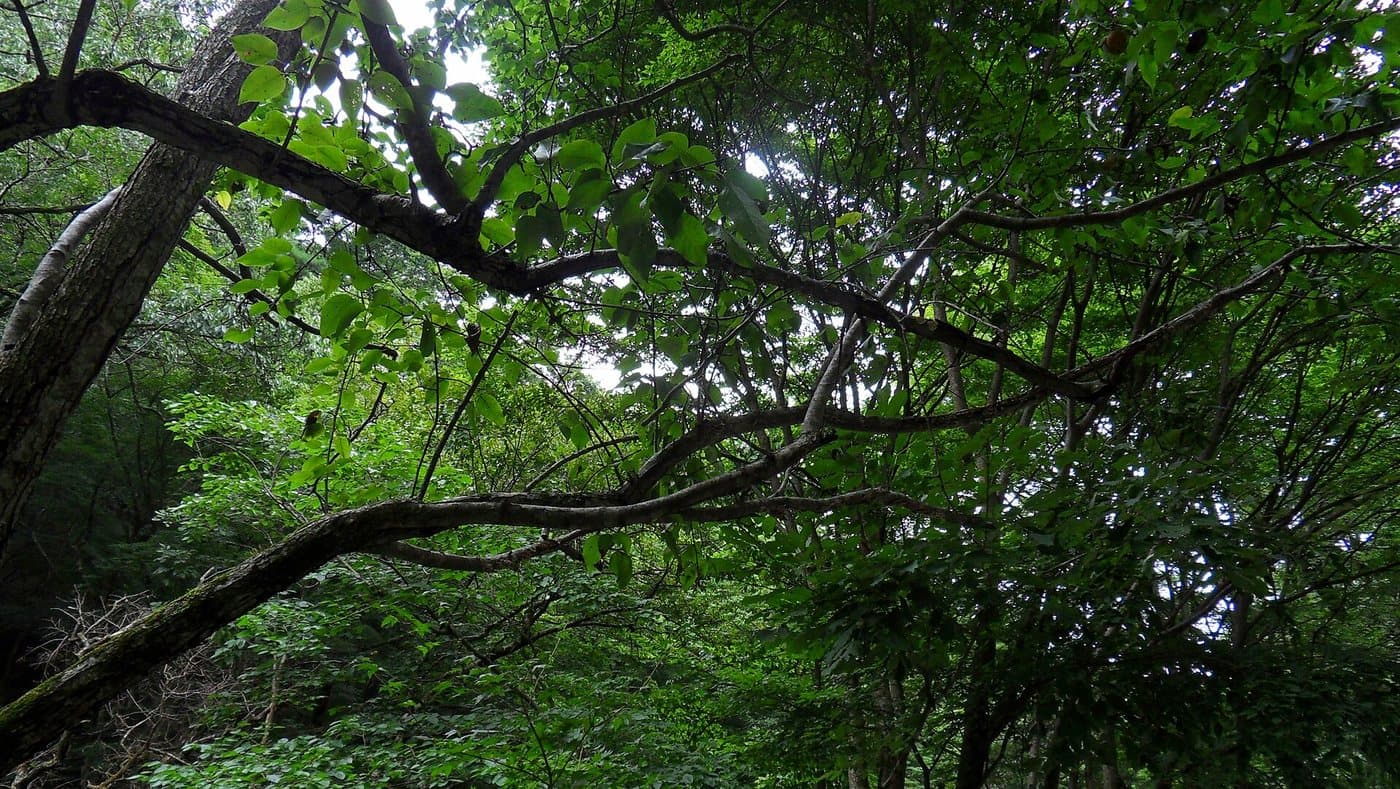
A wild pear tree in leaf in the forest at Songnisan

Wild pear, one of the park’s native fruit trees

Songnisan

Photo by Ashy Minivet, Public domain

Walking it

From the temple to the ridge

Nearly everything at Songnisan starts at Beopjusa. The temple is the destination for most visitors; the ridge behind it, and the flat-topped rock called Munjangdae, is the destination for everyone else.

Beopjusa temple walk

Flat, and the main event

Distance
2 km
Time
1–2 hr
Grade
easy

Route: Park information centre → the temple avenue → Beopjusa

Getting to the start: Intercity bus to Songnisan terminal at Sokrisan, from Cheongju, Daejeon or Seoul.

An easy walk through old pines to the temple. This is what most visitors come for and it needs no equipment or fitness at all.

Munjangdae

The classic climb

Distance
13 km
Time
6 hr return
Grade
advanced

Route: Beopjusa → Sesimjeong → Munjangdae (1,033m)

Getting to the start: Start from the Beopjusa information centre.

The long way up to a broad flat rock platform on the ridge, with steel stairs at the top and a view over the whole park. Thirteen kilometres there and back from the temple, and a full day out.

Cheonwangbong

The actual summit

Time
6–7 hr return
Grade
advanced

Route: Beopjusa → the ridge → Cheonwangbong (1,058m)

Getting to the start: Same start as Munjangdae.

Higher than Munjangdae and much less visited, because Munjangdae has the better view. Combining the two along the ridge makes a long and very good day.

Hwabuk approach to Munjangdae

The short cheat

Distance
6.8 km
Time
4 hr return
Grade
advanced

Route: Hwabuk ranger station → Munjangdae

Getting to the start: From the northern, North Gyeongsang side of the park.

Roughly half the distance of the Beopjusa route to the same rock, because it starts higher. Steep, and it misses the temple entirely.

Distances as published for the Beopjusa routes; the Munjangdae round trip is the commonly given figure from the park information centre.

The temple

Beopjusa, and Korea’s only wooden pagoda

553
Temple founded
5 storeys
Palsangjeon
33 m
Bronze Maitreya
1970
Park designated

Beopjusa was founded in 553, in the Silla period, and at its height is said to have housed thousands of monks. What makes it worth the trip is Palsangjeon: a five-storey wooden pagoda and the only one of its kind left standing in Korea. Every other surviving Korean pagoda of any age is stone. This one is timber, it is a national treasure, and the rebuild dates from the early 1600s after the Japanese invasions burned the original.

In the courtyard stands a bronze Maitreya Buddha 33 metres tall, which is the first thing anyone sees on arriving and the least old thing in the complex — the present statue was completed in 1990, replacing earlier versions on the same spot.

The mountain behind is granite, and the feature everyone climbs to is Munjangdae, a flat rock platform on the ridge at 1,033m reached by steel stairs. The story attached to it is that King Sejo of Joseon came here to read, which is roughly what the name says.

The park is 274 km² spread across two provinces, and it is one of the best broadleaf forests in central Korea — maple, hornbeam, lime and wild pear rather than the pine you might expect. It turns colour in the last week of October, a fortnight after Seoraksan and a fortnight before Naejangsan.
More parks

All 23 national parks →