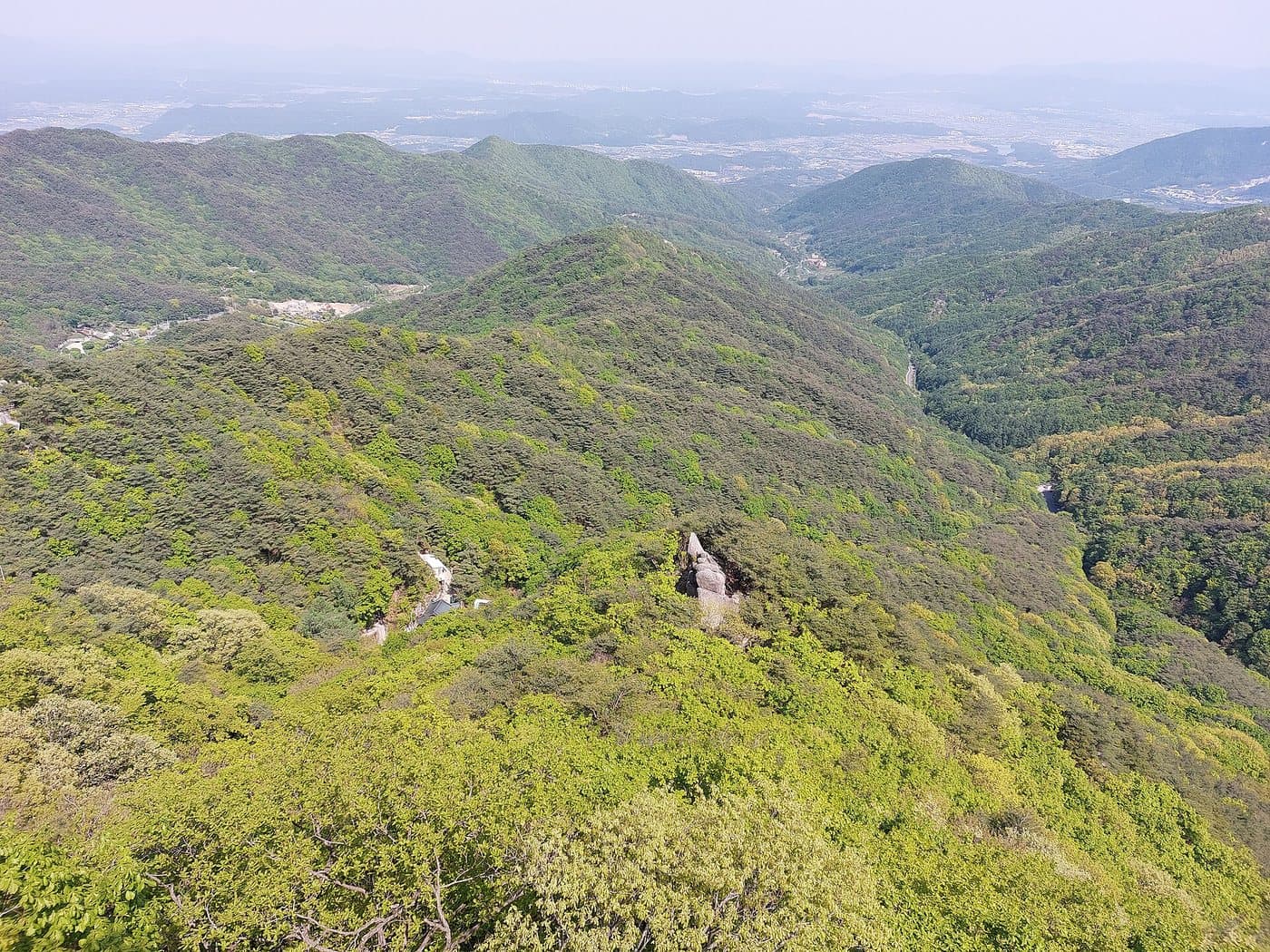
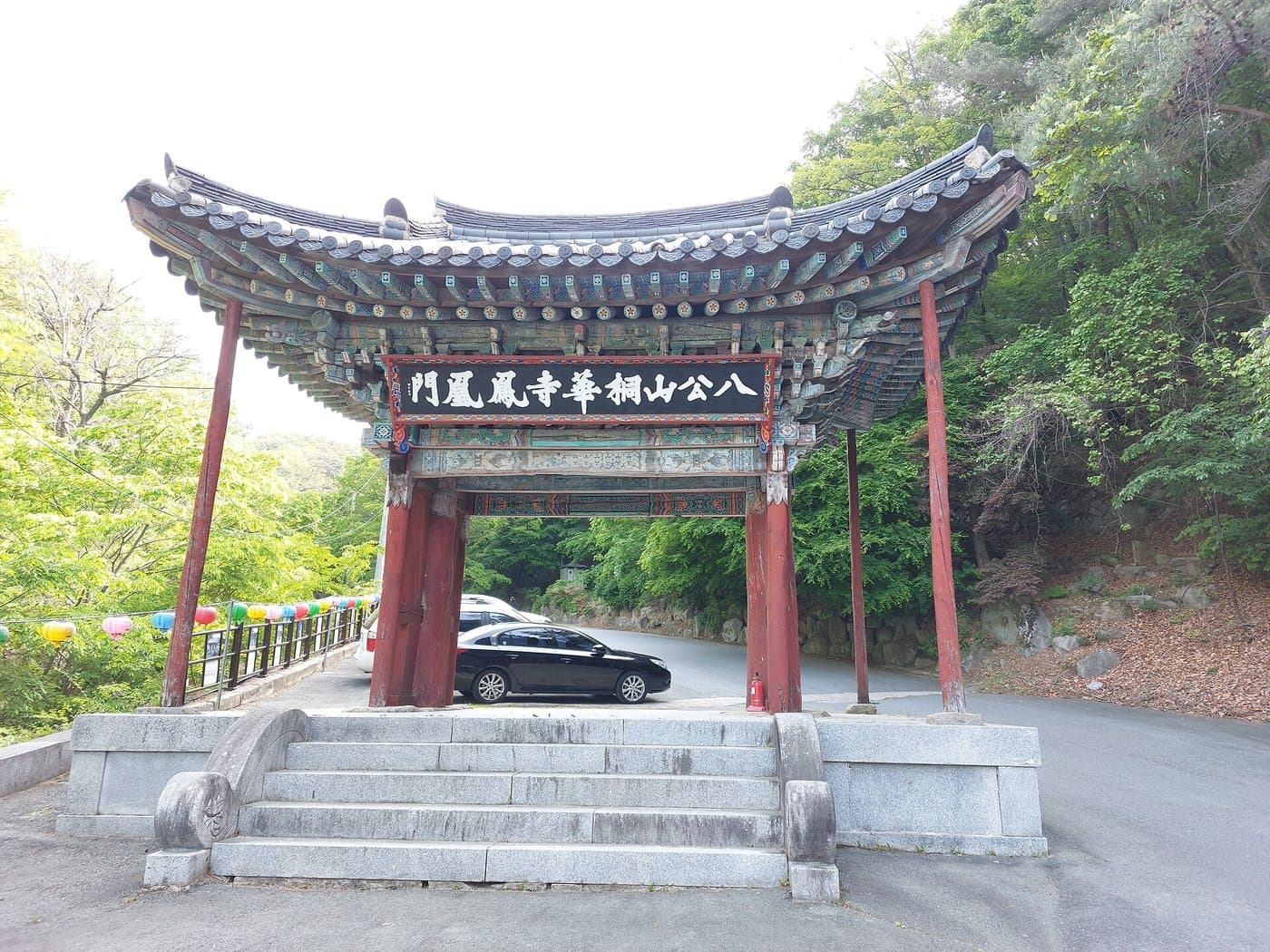
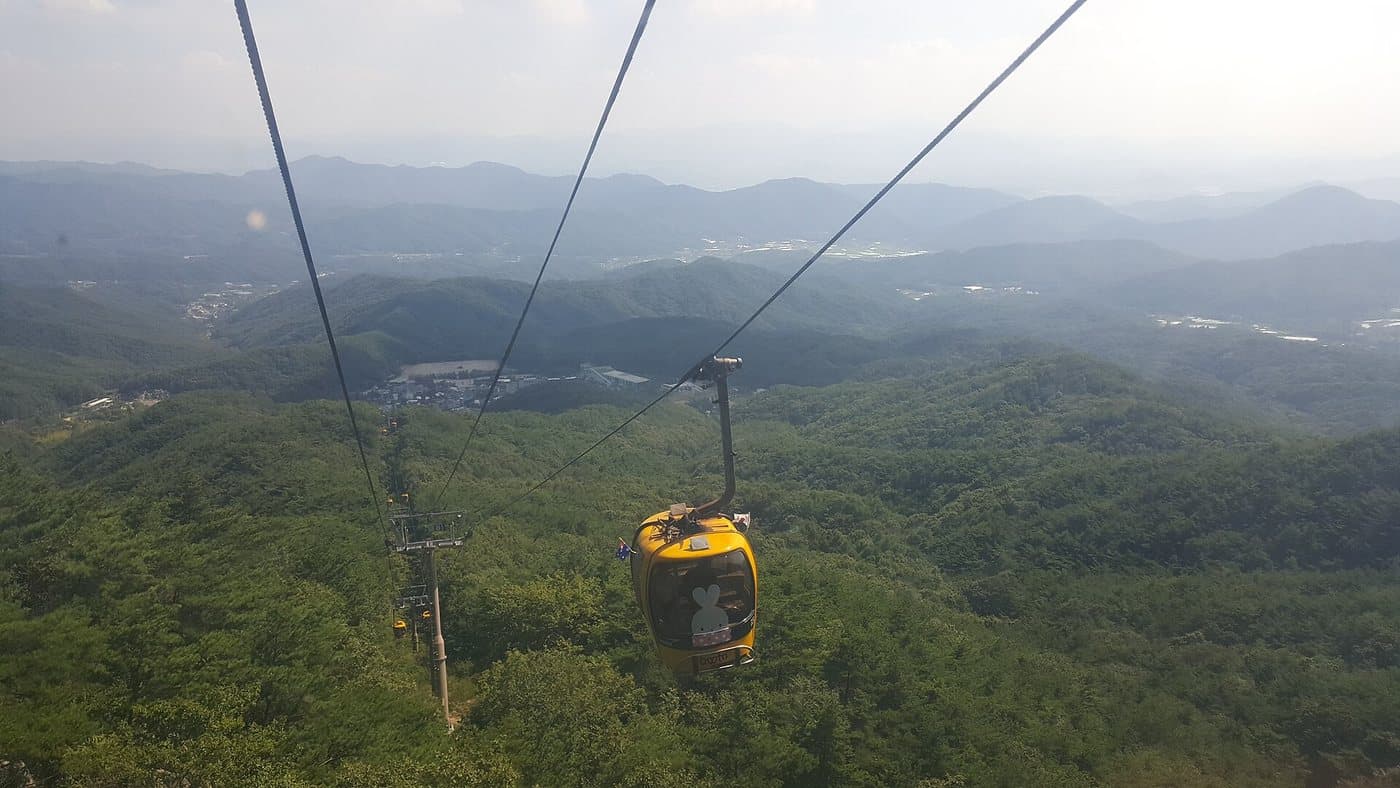
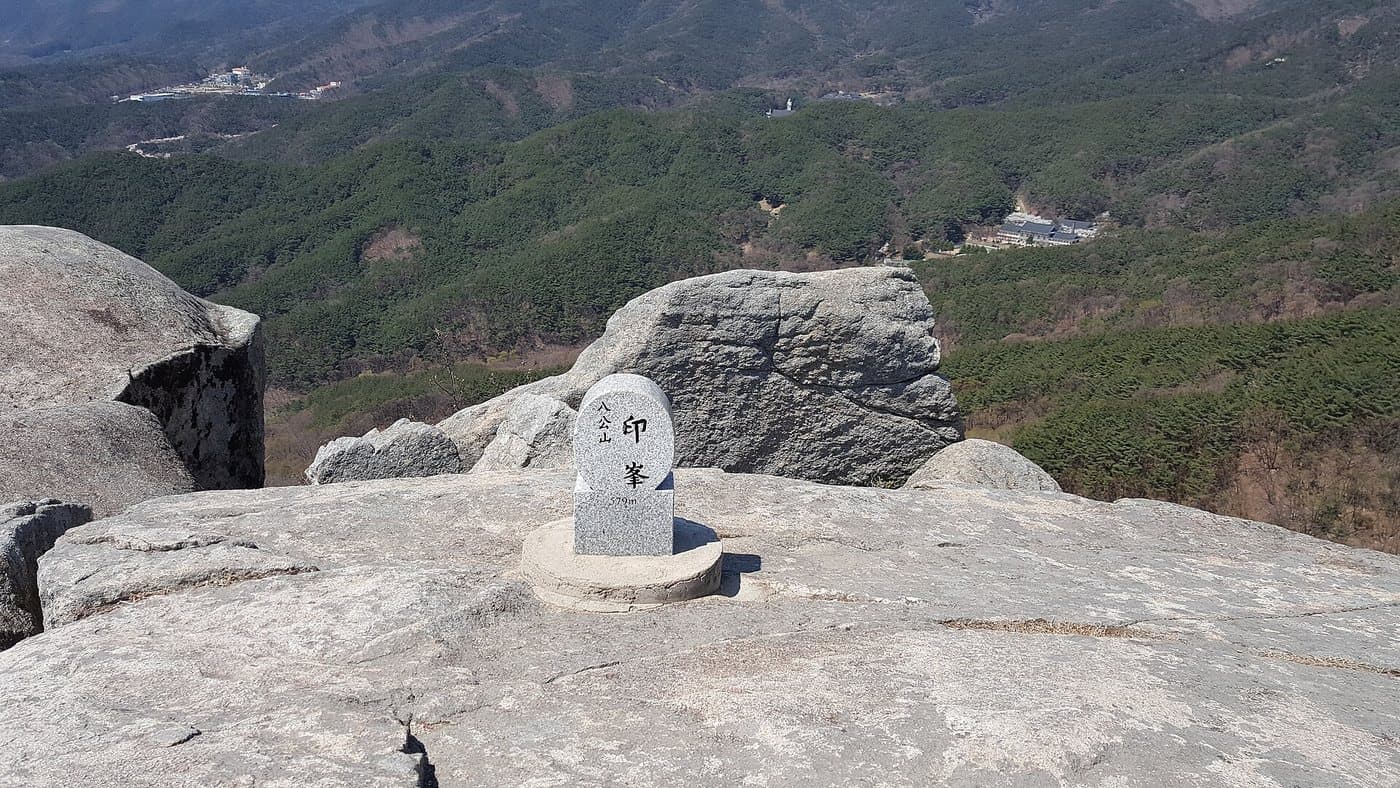
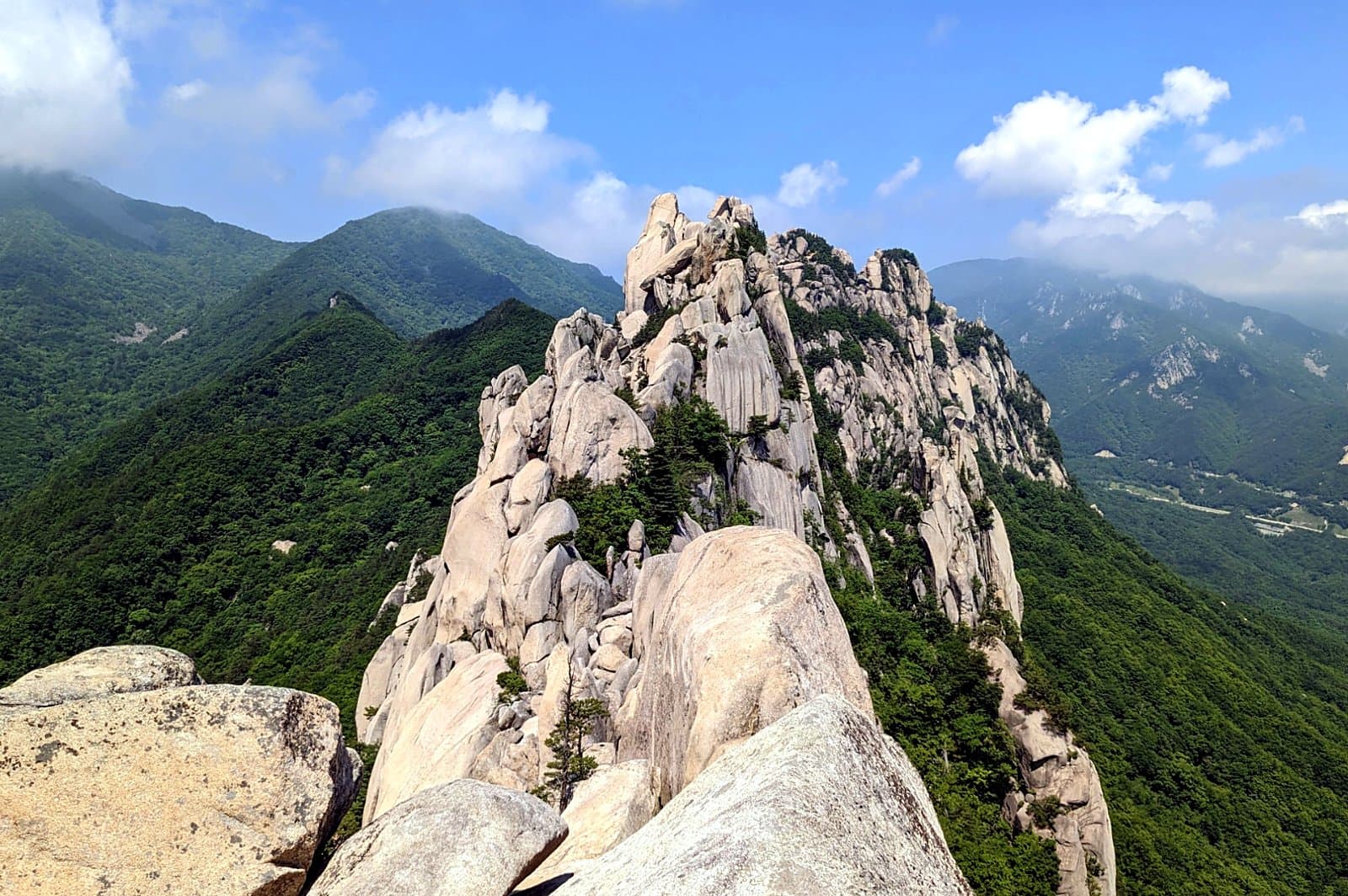
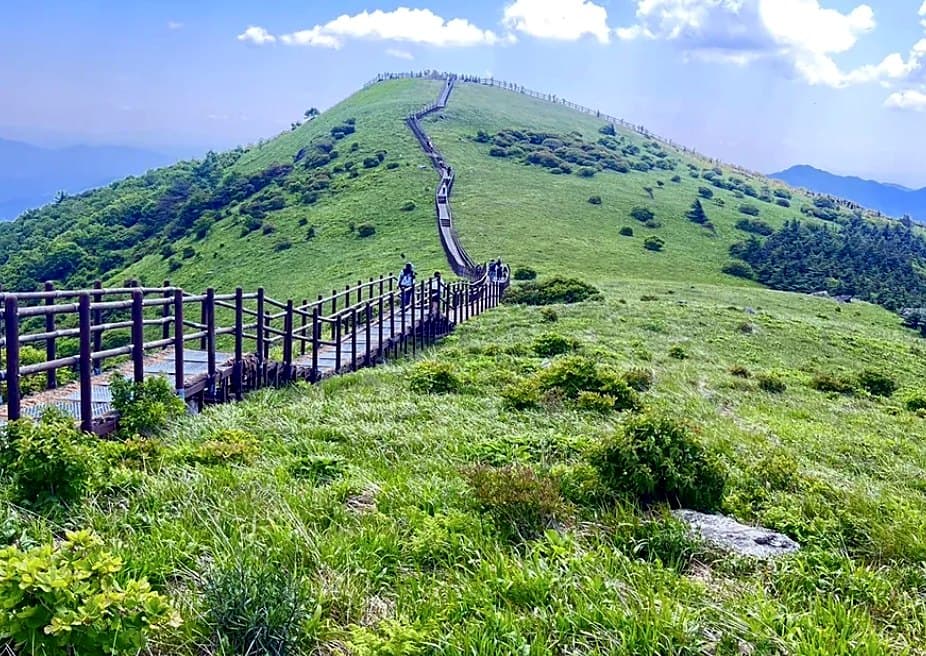
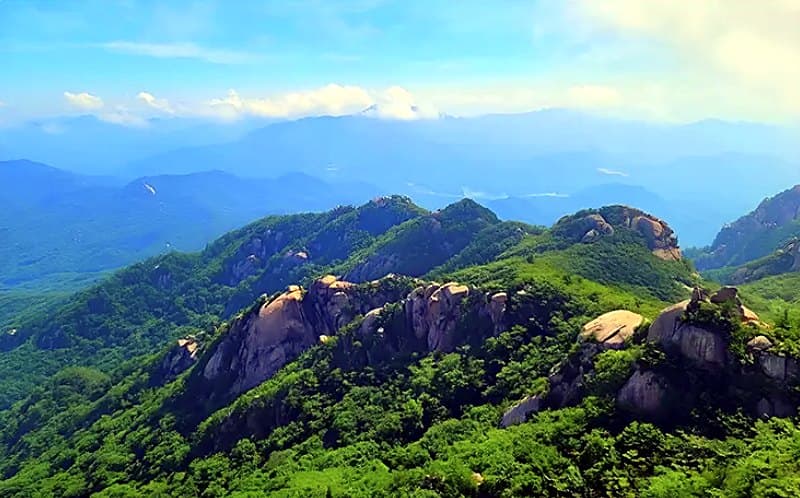
Palgongsan was a provincial park for decades and only became Korea's twenty-third national park in 2023, the most recent addition to the list. It covers 126 km² along a ridge running east to west above Daegu.
The name means ‘eight meritorious’, and is usually explained by a story from the founding of Goryeo: the general Sin Sung-gyeom died here in 927, having swapped clothes with his king so the king could escape an ambush. Eight commanders are said to have been killed in that battle.
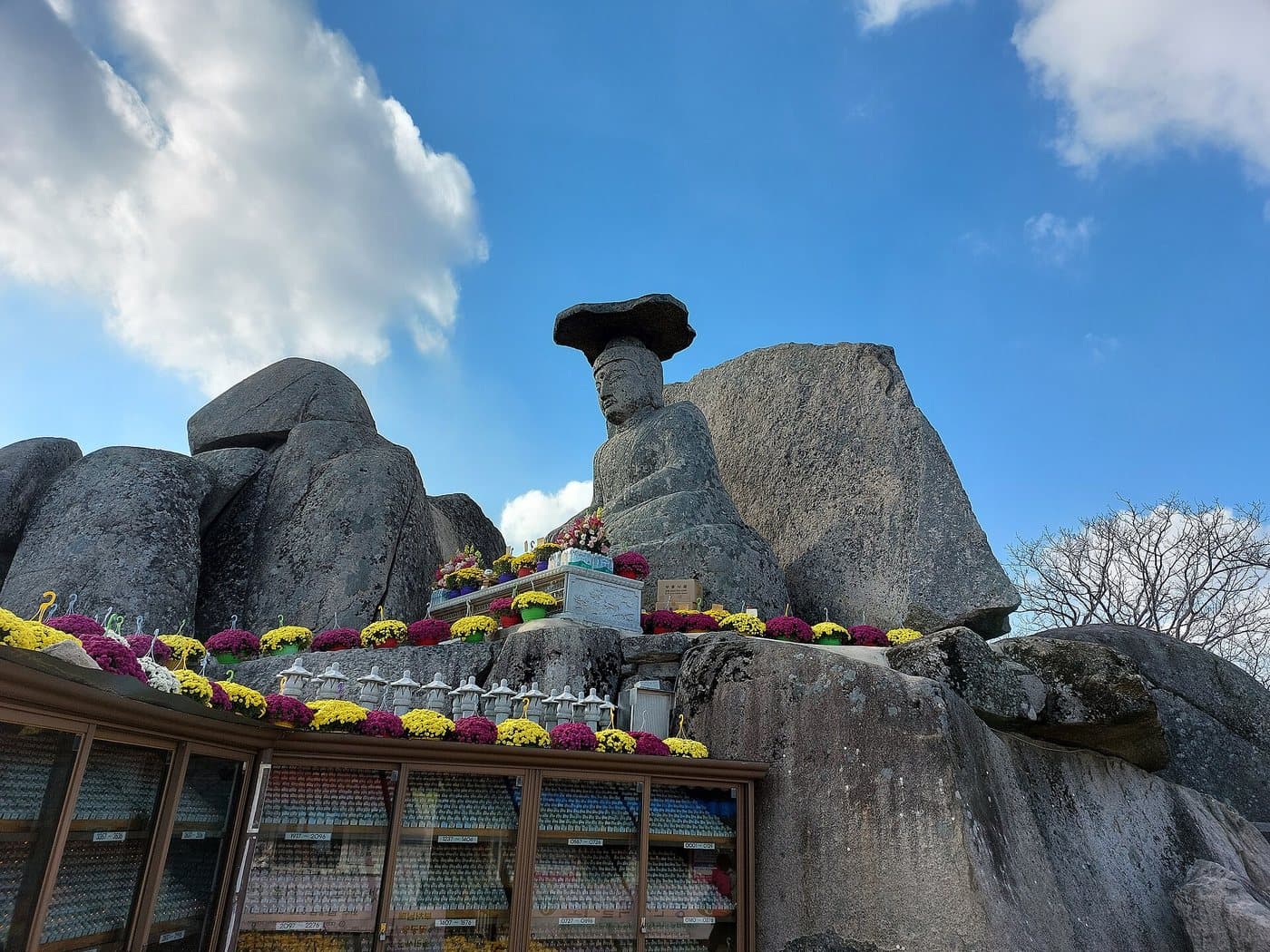
The mountain's real subject is worship. Donghwasa dates to the Silla period, Pagyesa and Buinsa are on the same ridge, and hermitages are tucked all over the slopes. The focus of it all is Gatbawi, a seated stone Buddha carved in the ninth century on the summit of Gwanbong, wearing a flat slab of rock on its head that looks exactly like a traditional Korean <em>gat</em>.
The belief is that Gatbawi grants one wish to each sincere pilgrim. That draws enormous numbers, particularly from families with a child sitting the university entrance exam — which is why a 850m hill has fourteen hundred stone steps built up it and lights that stay on all night.