Skip to content
MyKoreanTrip

Mountain park · Gangwon

Odaesan National Park

오대산국립공원

A thousand-metre fir forest and two of Korea's most important temples.

The walk in to Woljeongsa runs for about a kilometre under old fir trees, and is worth the trip on its own. Further up the valley, Sangwonsa holds a bronze bell cast in 725 — the oldest in the country.

Above the temples, Birobong reaches 1,563m through subalpine forest. The park is quieter than Seoraksan an hour to the north, and better for it.

Odaesan comes in two halves. The Woljeongsa district holds the temples and Birobong; the Sogeumgang district, over on the Gangneung side, is a granite valley of waterfalls and pools below Noinbong (1,338m) — a shorter, sharper day, and only 3.9km to the top if you start from Jingogae pass, which is already at 960m.

Getting there from Seoul

Door-to-door estimates for a normal day; they stretch on a holiday weekend. Check the timetable before you rely on a last bus back.

  • Bus

    Express coach from Seoul to Jinbu, about 2h 30m, then a local bus to Woljeongsa or Sangwonsa.

  • Train

    KTX to Jinbu on the Gangneung line, about 1h 30m — the quickest route, and one of the best-value park trips from Seoul.

  • Car

    About two and a half hours on the Yeongdong expressway.

Wildlife & plants

Animals

Musk deer, goral, marten and flying squirrel. The park is one of the more important habitats in Gangwon and the high forest is genuinely quiet.

Trees & flowers

The fir avenue at Woljeongsa is about a kilometre of trees averaging eighty years old. Higher up, subalpine forest of Korean fir and dwarf bamboo, and one of the largest surviving natural stands of Korean yew.

Korea’s wildlife is shy and mostly nocturnal — you’re far more likely to see tracks than animals. Wild boar are the one to know about: keep your distance, don’t run, and never get between a sow and her young.

What grows and lives here

The mountain up close

Odaesan is a gentler mountain than its neighbours — rounded, heavily forested, and known for trees rather than rock. The fir avenue at Woljeongsa is one of the best-loved short walks in the country, and the park’s eastern half, Sogeumgang, was the first place in Korea ever designated a scenic site.

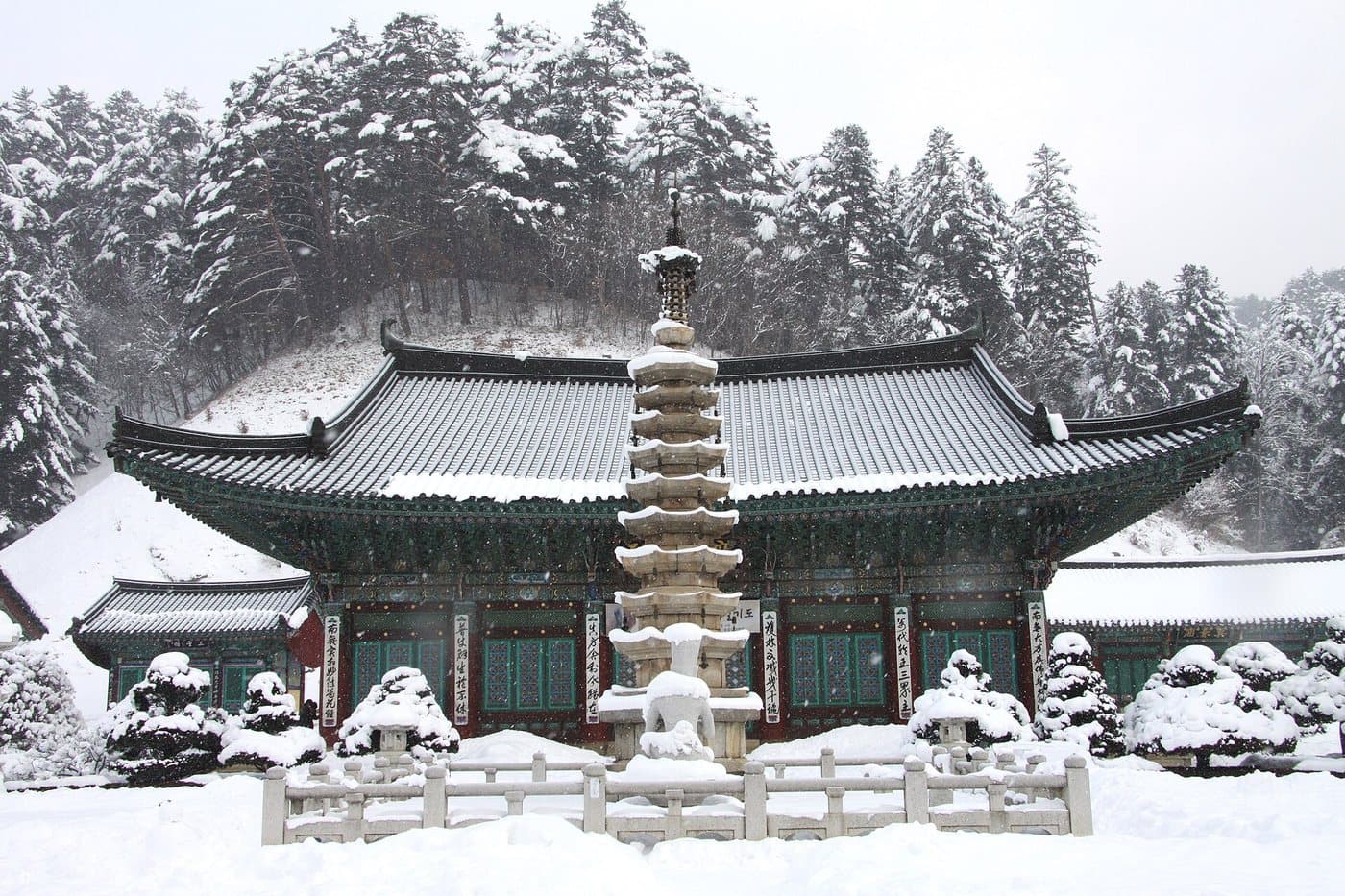
Woljeongsa temple hall and its stone pagoda under deep snow

Woljeongsa under snow

Odaesan

Photo by Leejiwoong35, CC BY-SA 4.0

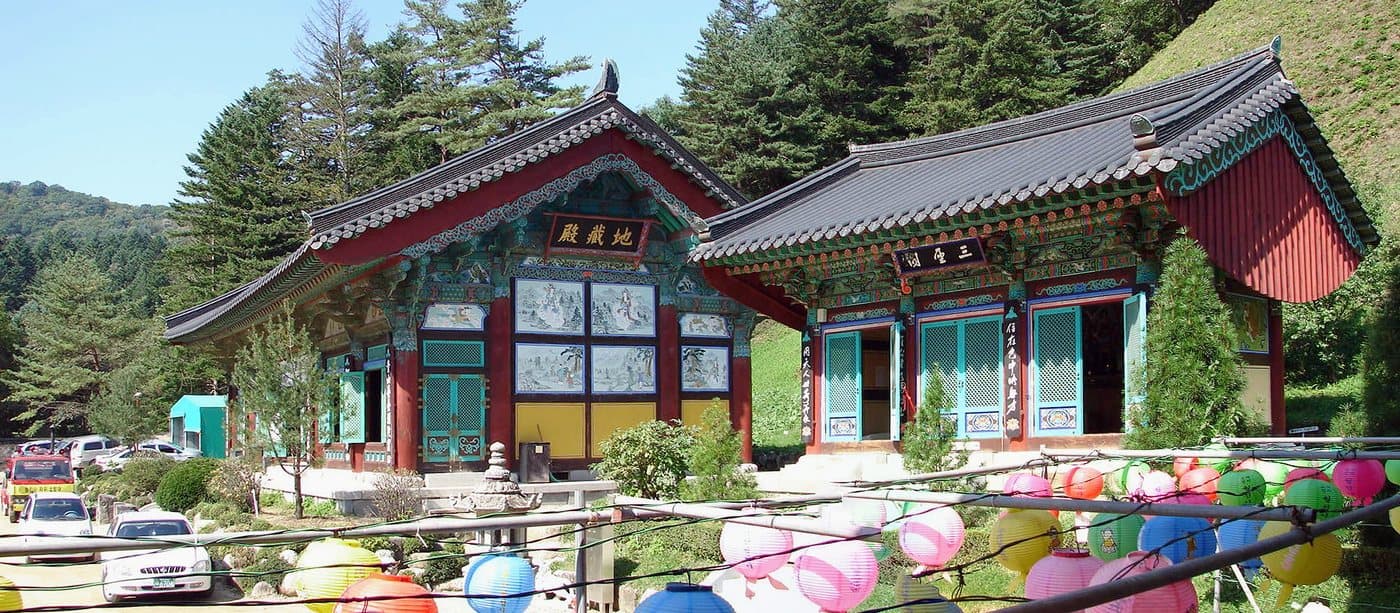
Brightly painted worship halls at Woljeongsa with rows of paper lanterns

Painted halls and lanterns

Woljeongsa, Odaesan

Photo by Steve46814, CC BY-SA 3.0

Wind-shaped rime ice coating low scrub along the Birobong summit ridge

Rime ice on the summit ridge

Birobong, Odaesan

Photo by Lcarrion88, CC BY-SA 4.0

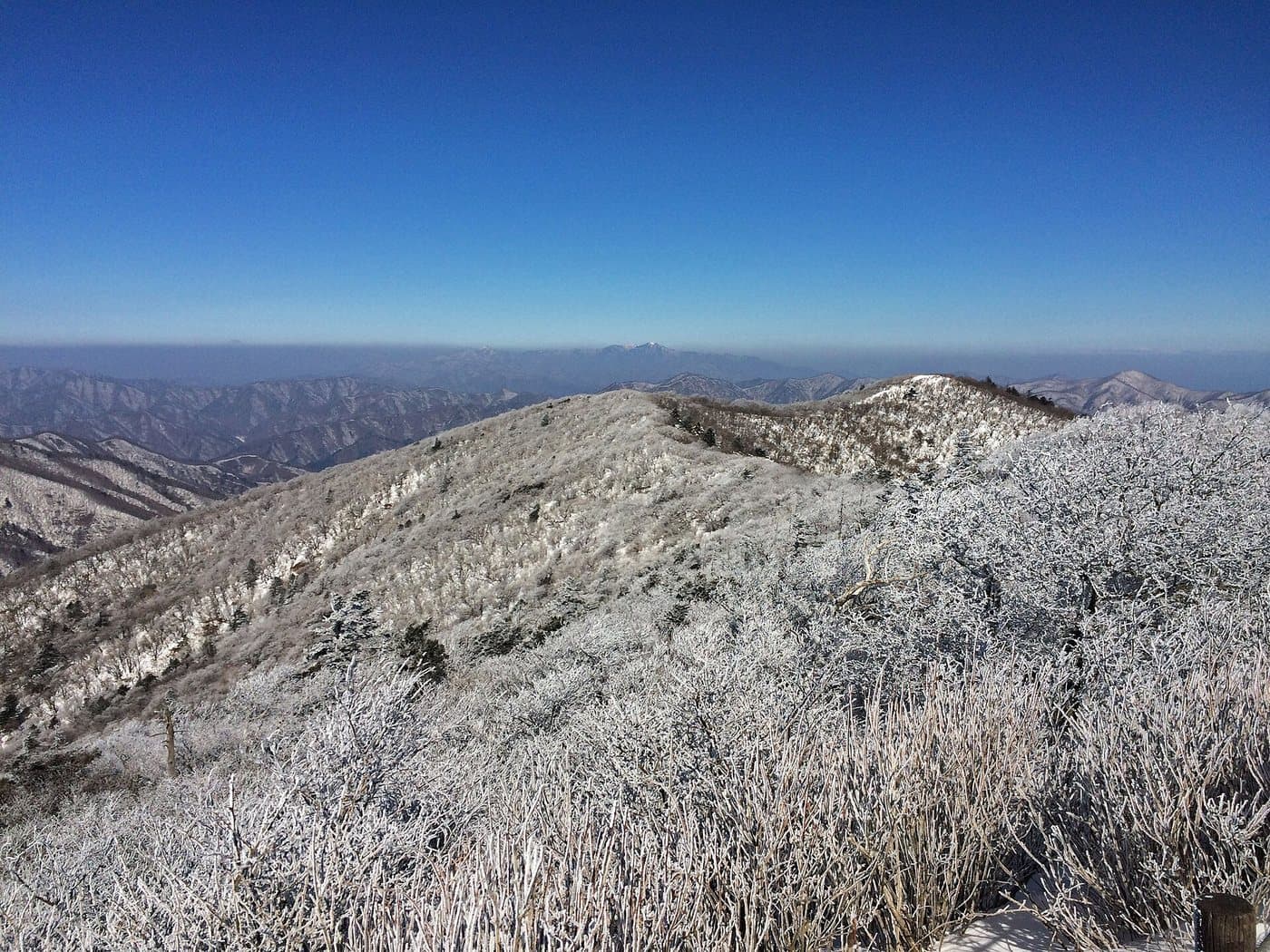
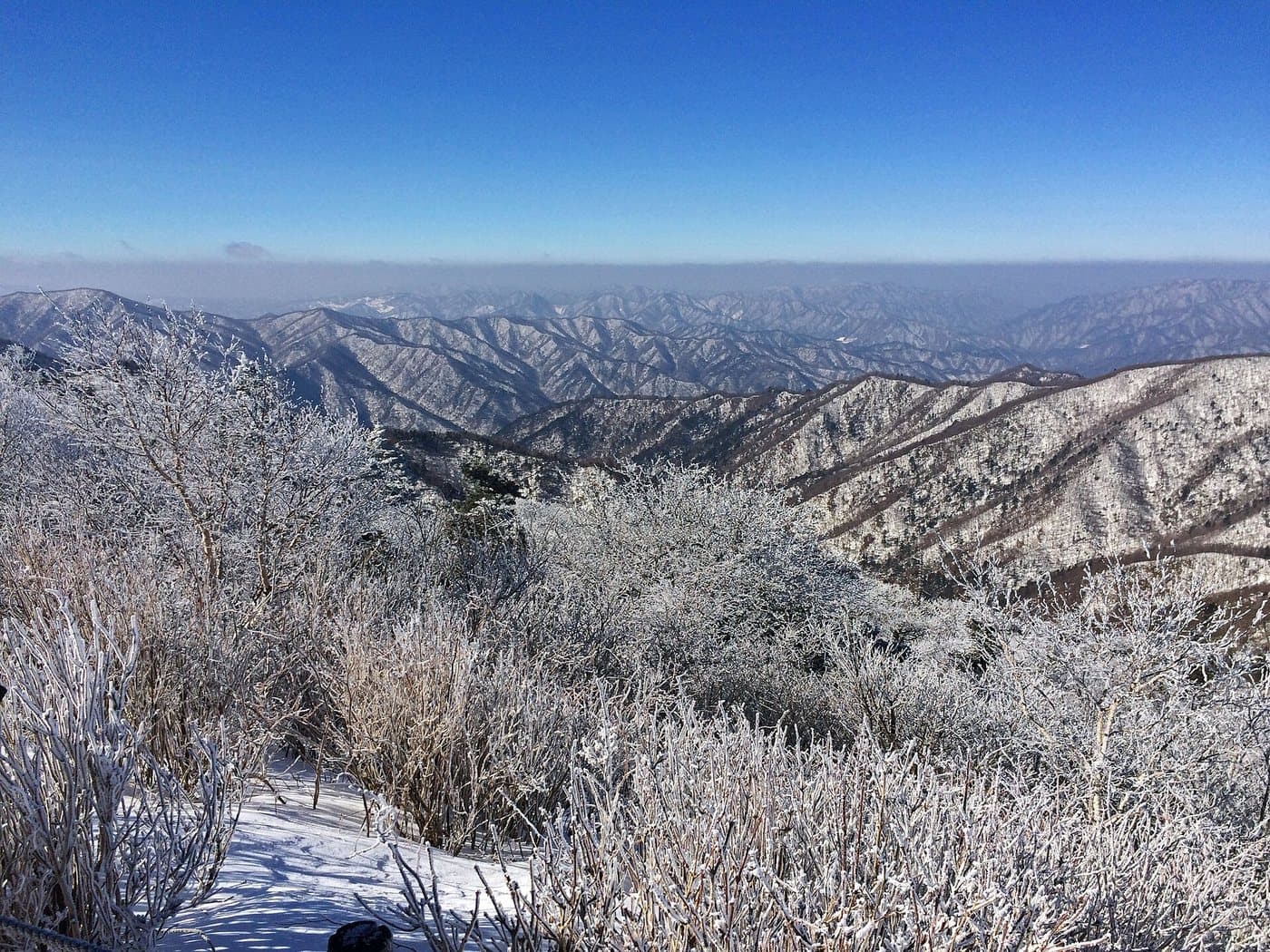
Snow-covered ridges seen from Birobong, the summit of Odaesan

From Birobong, 1,563m

Odaesan

Photo by Lcarrion88, CC BY-SA 4.0

Two halves, an hour apart

Odaesan is really two places with one name. The western half holds Woljeongsa, Sangwonsa and the climb to Birobong. The eastern half is Sogeumgang, a separate gorge reached from Gangneung, with its own entrance and its own peak, Noinbong. There is no quick way between them — decide which one you are going to before you set off.

Walking it

Forest paths and one real climb

Most people come to Odaesan for the fir avenue and the temples and never go higher. That is a perfectly good day. The climb to Birobong is the serious option, and Sogeumgang, over on the eastern side, is a gorge walk rather than a summit.

The Woljeongsa fir avenue

The one to do whatever else you do

Distance
1 km
Time
30–40 min
Grade
easy

Route: Iljumun gate → the fir forest path → Geumgang bridge → Woljeongsa

Getting to the start: Bus from Jinbu, which is on the KTX line from Seoul via Pyeongchang.

A flat earth path under fir trees several centuries old, running beside a stream up to the temple. It is about a kilometre, it is beautiful in any season and it is extraordinary in snow. No fitness required.
Sangwonsa to Birobong

The summit

Time
2 hr 30 min up
Grade
advanced

Route: Sangwonsa → Jeokmyeolbogung → Birobong (1,563m)

Getting to the start: Shuttle bus up the valley from Woljeongsa to Sangwonsa.

A steady climb on stone steps from the temple to the top. Not technical, but there is a lot of it. The ridge on to Sangwangbong and Durobong makes a longer loop for anyone with the day to spare.

Sogeumgang gorge

The other half of the park

Time
4–5 hr return
Grade
average

Route: Sogeumgang entrance → Guryong falls → Manmulsang rocks → Noinbong

Getting to the start: From Gangneung on the east coast, not from the Woljeongsa side.

‘Little Geumgangsan’, named after the famous mountains now in North Korea, and registered as Korea’s Scenic Site No. 1 — the very first thing the country listed. A gorge of waterfalls and rock formations. Turning back at the falls makes it a half-day.

Given by walking time. Distances for the Sangwonsa–Birobong climb differ between sources, so it is left out rather than guessed at.

Scenic Site No. 1

Fir trees, and the temple that keeps the relics

1975
Designated
304 km²
Area
1,563 m
Birobong
Scenic Site No. 1
Sogeumgang

Odaesan means ‘five-plateau mountain’, and the shape is the point: five broad rounded summits rather than the spires of Seoraksan an hour up the road. That geology gives it deep soil, and deep soil gives it the forest it is known for — one of the best-preserved natural woodlands in the country.

Woljeongsa was founded in 643 and sits at the bottom of the valley behind the fir avenue. Its octagonal nine-storey pagoda is a national treasure, and unusual: most Korean stone pagodas are square and squat, and this one is neither.

Further up the valley is Sangwonsa, which holds the oldest dated bronze bell in Korea, cast in 725. Above it is Jeokmyeolbogung, one of the five Korean shrines said to hold relics of the Buddha brought back from Tang China in the seventh century. There is no Buddha statue inside — the point is that the relics themselves are behind the building, on the mountain.

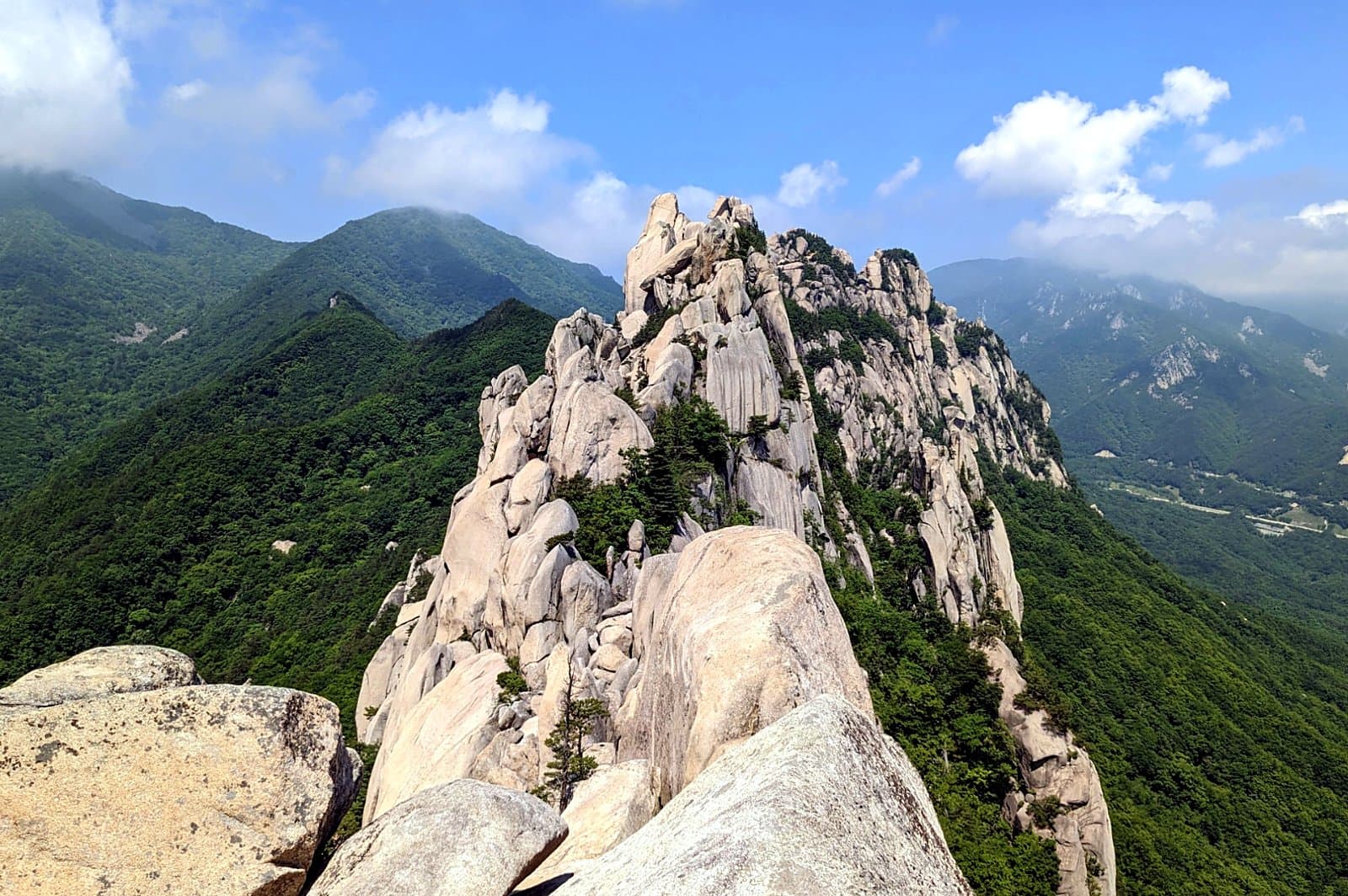
The eastern side of the park, Sogeumgang, was designated Korea’s Scenic Site No. 1 in 1970 — the first entry on the national list of protected scenery. It is a steep gorge of waterfalls and weathered rock, and it feels nothing like the soft forested west.

More parks

All 23 national parks →