Biyangdo
The island in the view
A small volcanic island about 1.5 km offshore, and the thing that makes this view. Ferries run from Hallim port in fifteen minutes, and you can walk right round the island in about an hour and a half.
Jeju · Hallim, Jeju
협재해수욕장
White shell sand, water the colour of a swimming pool, and an island offshore.
Hyeopjae's sand is pale because it is largely crushed shell, and against the black volcanic rock either side the water reads an improbable turquoise.
It is shallow a long way out, which makes it good for children, and the small island on the horizon is Biyangdo, reachable by ferry from Hallim.
What else is here
Hyeopjae has the whitest sand on Jeju — made largely of crushed shell rather than volcanic grit — set against black basalt, with the cone of Biyangdo sitting in the water in front of it.
The island in the view
A small volcanic island about 1.5 km offshore, and the thing that makes this view. Ferries run from Hallim port in fifteen minutes, and you can walk right round the island in about an hour and a half.
In the pines, first come first served
There is camping in the pine grove between Hyeopjae and Geumneung beaches, immediately behind the sand — one of the few places on Jeju you can pitch a tent within sight of the water. It is first-come, first-served and fills in July and August.
Same bay, fewer people
Effectively the same stretch of sand a few hundred metres south, with the same view of Biyangdo and consistently smaller crowds.
Next door
A large botanical garden built on the lava field beside the beach, containing two lava tube caves you can walk through. Good on a wet day.
Why the sand is white
Most Jeju beaches are dark, because the island is basalt and basalt weathers to grey and black grit. Hyeopjae is pale because a large proportion of its sand is crushed shell carried in from the shallows, which is also why the water over it reads turquoise rather than blue-green.
The water is shallow a long way out and unusually clear, which makes it the best swimming beach on the island for anyone who is not confident. The black lava rocks at either end are where everyone photographs the contrast.
Jeju's official season runs roughly July to late August with lifeguards posted; the water is comfortable from June into September, and out of season this is still the prettiest stretch of coast on the west side of the island.
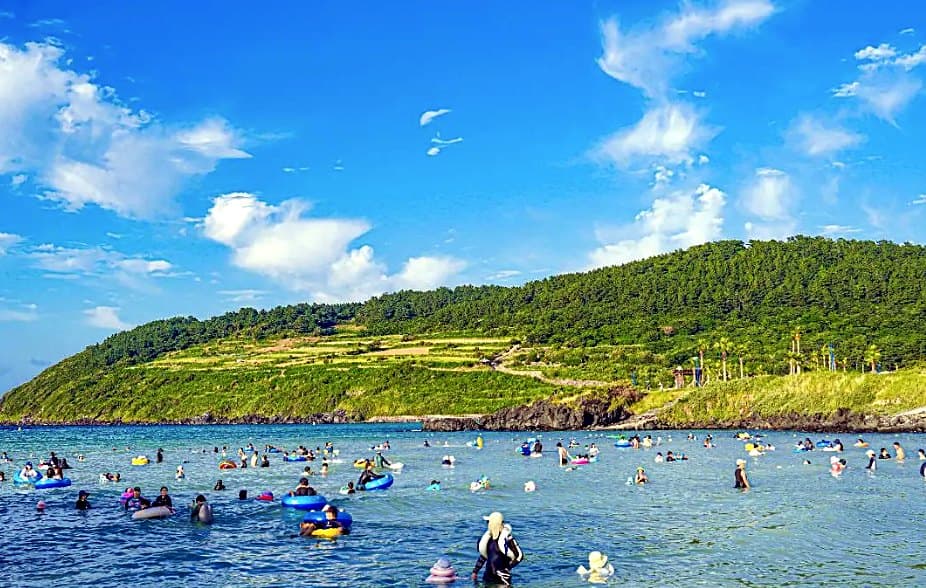
Hamdeok Beach
Shallow, calm and close to the airport — the easy Jeju beach day.
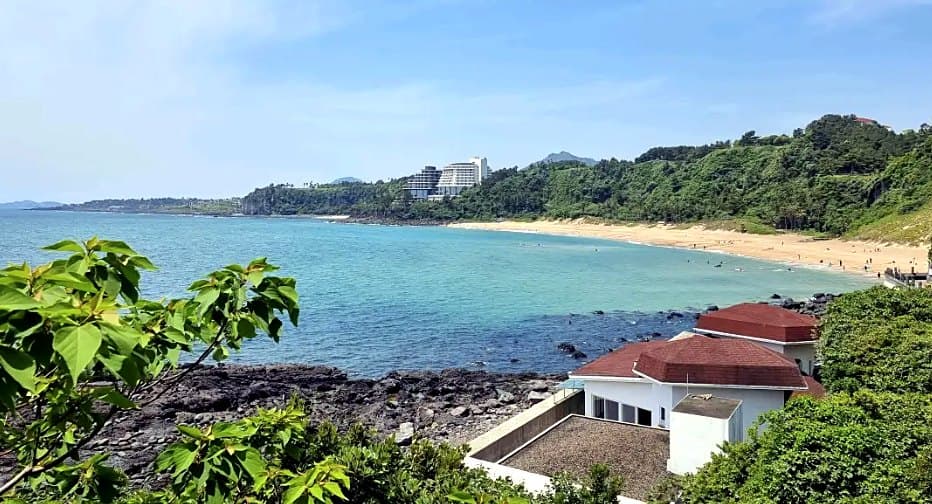
Jungmun Saekdal Beach
Four colours of sand, real waves, and the island's surf and dive centre.
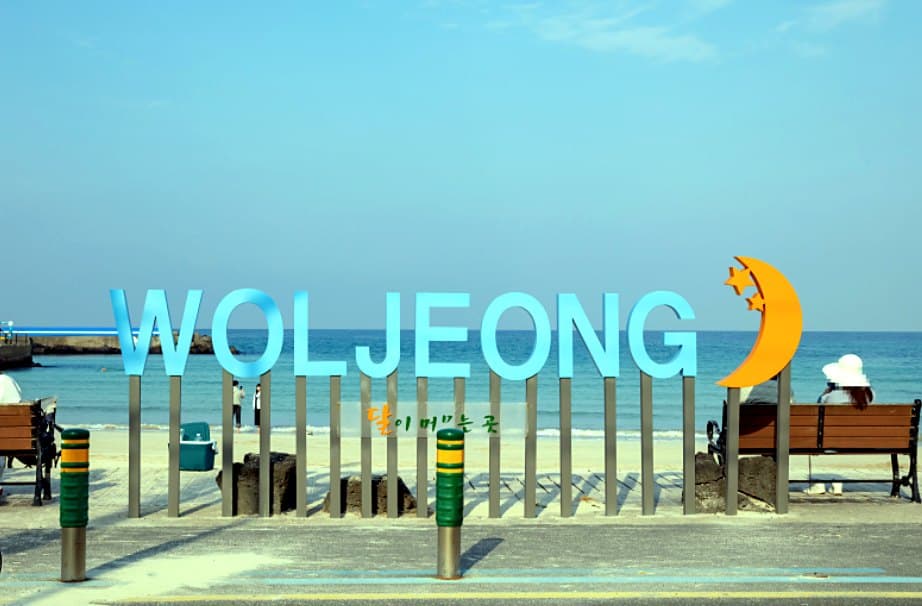
Woljeongri Beach
A row of cafés looking straight out at very blue water.