Skip to content
MyKoreanTrip

East coast · Yangyang, Gangwon

Hajodae Beach

하조대해변

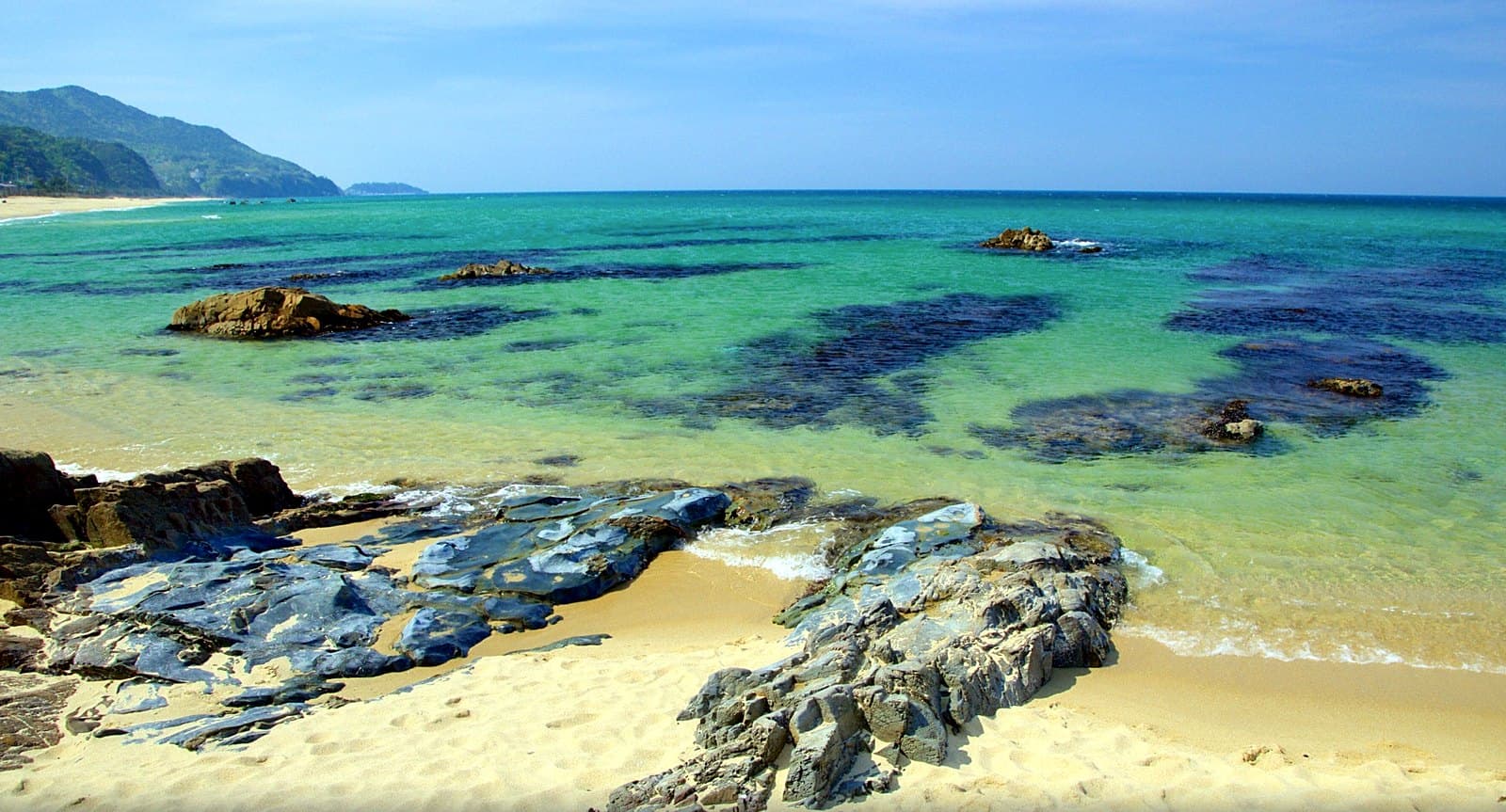
Turquoise water, very few people, and Korea's surf scene a few minutes up the road.

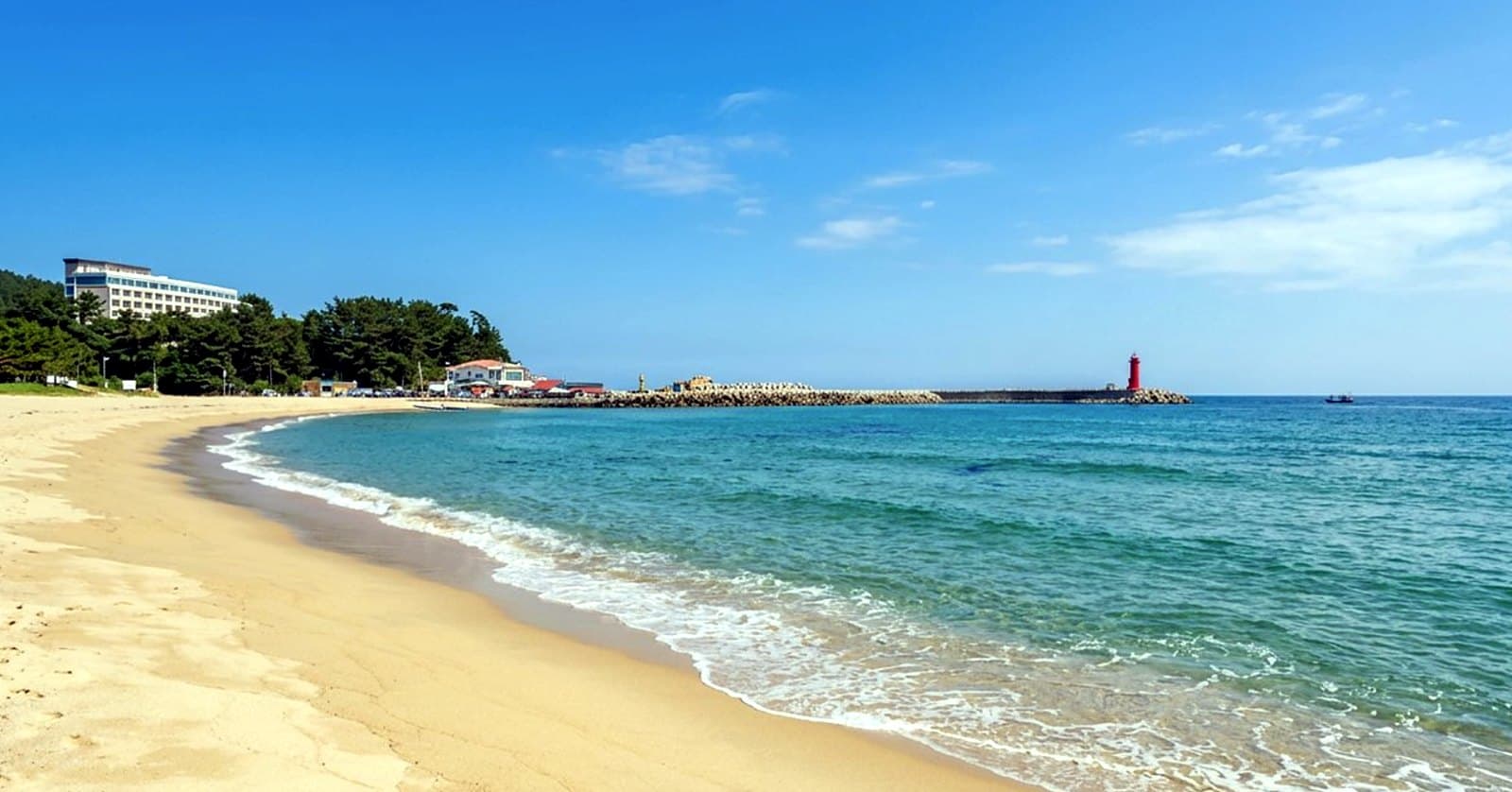
Hajodae is the east coast beach people name when they want somewhere clean and empty. The pavilion on the rocks at the northern end, and the lighthouse beyond it, are the classic view.

Yangyang county has become the centre of Korean surfing over the last decade, and the surf beaches and schools around Jukdo are a short taxi ride away.

What else is here

A headland, a pavilion and a lighthouse

Hajodae is small and the beach is not the point — the point is the rocky headland at the end of it, with pines growing out of the granite, a Joseon pavilion on top and a little white lighthouse you can walk up to.

Hajodae pavilion

Joseon, on a rock

A wooden pavilion on the headland, reached by a short flight of steps. It is named after two officials, Ha and Jo, who are said to have come here in the early Joseon period. The view south down the coast from it is the photograph everyone takes.

The unmanned lighthouse

Open to walk up

A small white lighthouse on the seaward rocks, usually open to visitors during the day. The walkway out to it runs over the water on a steel deck.

Getting there: Signed from the beach car park; a five-minute walk.

The 38th parallel

A kilometre south

Hajodae sits just north of the 38th parallel — the line that divided Korea in 1945, before the current border settled further north. There is a marker on the coast road, and this area was part of the North until the armistice.

Surf at Jukdo

Ten minutes away

The Yangyang surf scene is concentrated a few kilometres north at Jukdo and Ingu. Hajodae's own beach picks up the same swell and is much less crowded.

Small and worth it

The best headland on this coast

Yangyang, Gangwon
Location
July–August
Swimming
≈2 hr 30 by bus
From Seoul
Sokcho, 30 min
Nearest big town

Most of Korea's east coast is a long straight beach broken occasionally by a river mouth. Hajodae is one of the exceptions: a knuckle of granite pushing into the sea, weathered into slabs and boulders with wind-bent pines growing straight out of the cracks.

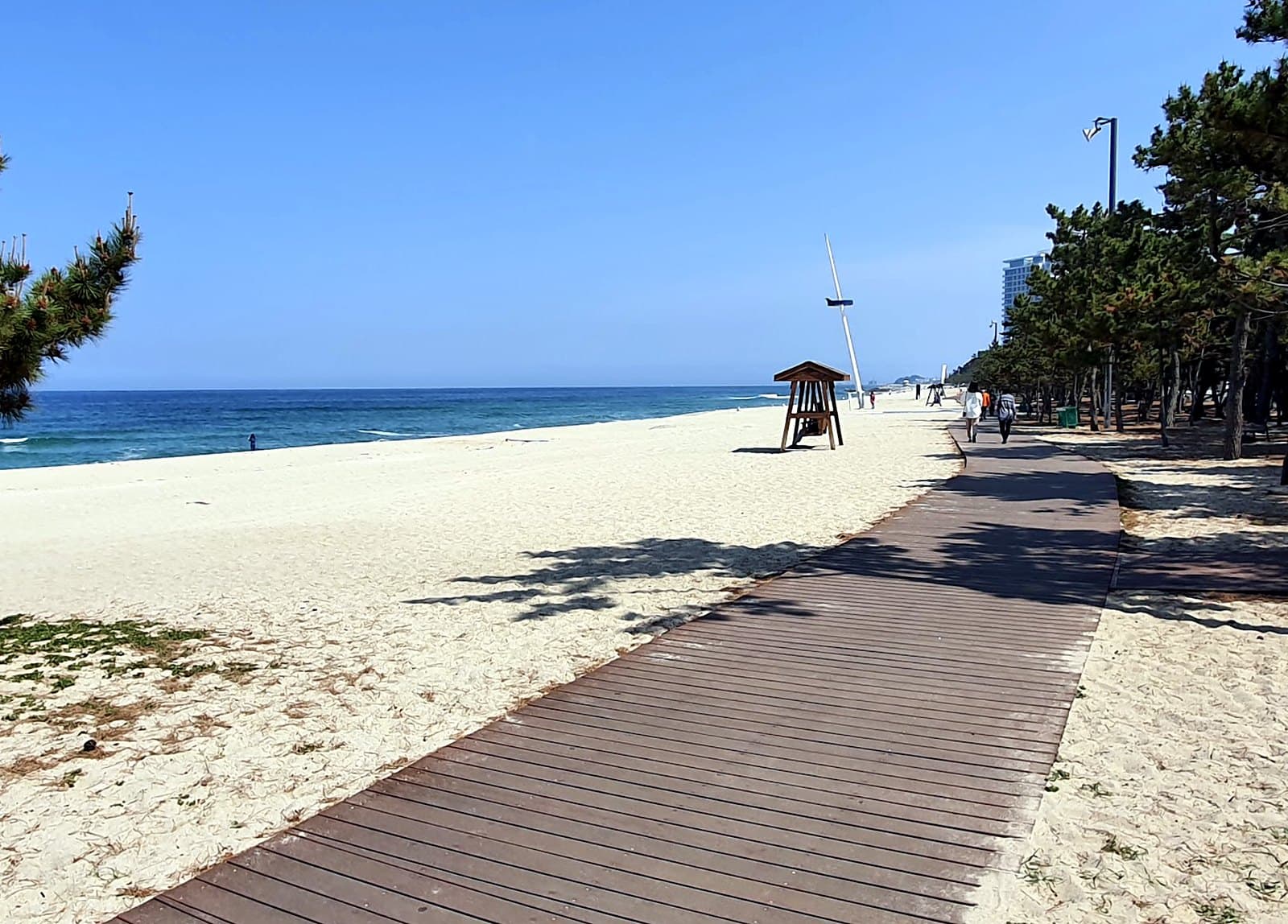
The beach itself is modest, maybe a kilometre, and in July and August it fills with families. Out of season it is nearly empty, and the headland is the reason to make the detour — particularly at sunrise, when the sun comes up directly out of the sea beyond the lighthouse.

It pairs well with Naksan twenty minutes south and Seoraksan half an hour inland, and it is a natural stop if you are driving the coast road rather than taking the train.
More on the east coast

All 22 beaches →