Dongbaekseom
The headland at the western end
A wooded former island, now joined to the shore, with a boardwalk right round it, a lighthouse and a mermaid statue. Twenty minutes, flat, and the best view back along the beach.
South coast & Busan · Busan
해운대해수욕장
The most famous beach in Korea, with a city of towers standing behind it.
Haeundae is what most Koreans picture when you say 'beach' — about a kilometre and a half of sand with high-rises behind it, parasols packed edge to edge in August, and a subway station two minutes' walk away.
The Busan Sea Festival takes over the beach in early August. Out of season it is a pleasant city walk, and the coastal path around Dongbaekseom at the western end is open year round.
What else is here
Haeundae is the beach every Korean knows: a kilometre and a half of sand with a wall of high-rises behind it, in the middle of a city of three million. It is not a quiet escape and it is not trying to be.
The headland at the western end
A wooded former island, now joined to the shore, with a boardwalk right round it, a lighthouse and a mermaid statue. Twenty minutes, flat, and the best view back along the beach.
The beach train and sky capsule
A restored coastal railway running south to Songjeong, with an open-sided train and small pastel 'sky capsules' on an elevated rail above it. The capsules sell out days ahead in summer; the train usually does not.
Late May or early June
Large-scale sand sculpture on the beach, free to walk around, before the swimming season starts. The Busan International Film Festival also has its centre a few minutes inland at Centum City in October.
A Busan-wide rule
Busan bans tents and shade screens on its beaches outright — including the small pop-up sun shelters that are normal elsewhere in Korea. Parasols are hired on the beach instead. Do not plan to camp on any Busan beach.
The other Busan
If Haeundae feels too polished, the metro runs across town to Jagalchi fish market and Gukje market in about forty minutes. That is the older, rougher, better-fed side of the city.
The numbers
Haeundae's sand is about 1.46 kilometres long, and at the peak of the season it routinely holds crowds that make international news photographs — a solid field of parasols with no gaps. Busan opens it earlier than most Korean beaches, from 1 June rather than 1 July, along with Songjeong and Songdo.
Behind it is a genuine city: metro line 2 runs to the beach, the hotels are high-rise and year-round, and the restaurants do not shut in September. That makes Haeundae the one Korean beach that works perfectly well as a winter destination, when the sand is empty and the sea is grey and dramatic.
If you want the famous view, walk out onto Dongbaekseom at the western end or go up to the observation deck at Busan X the Sky in the tower behind the beach. If you want a quieter swim, go four stops down the coast to Songjeong.
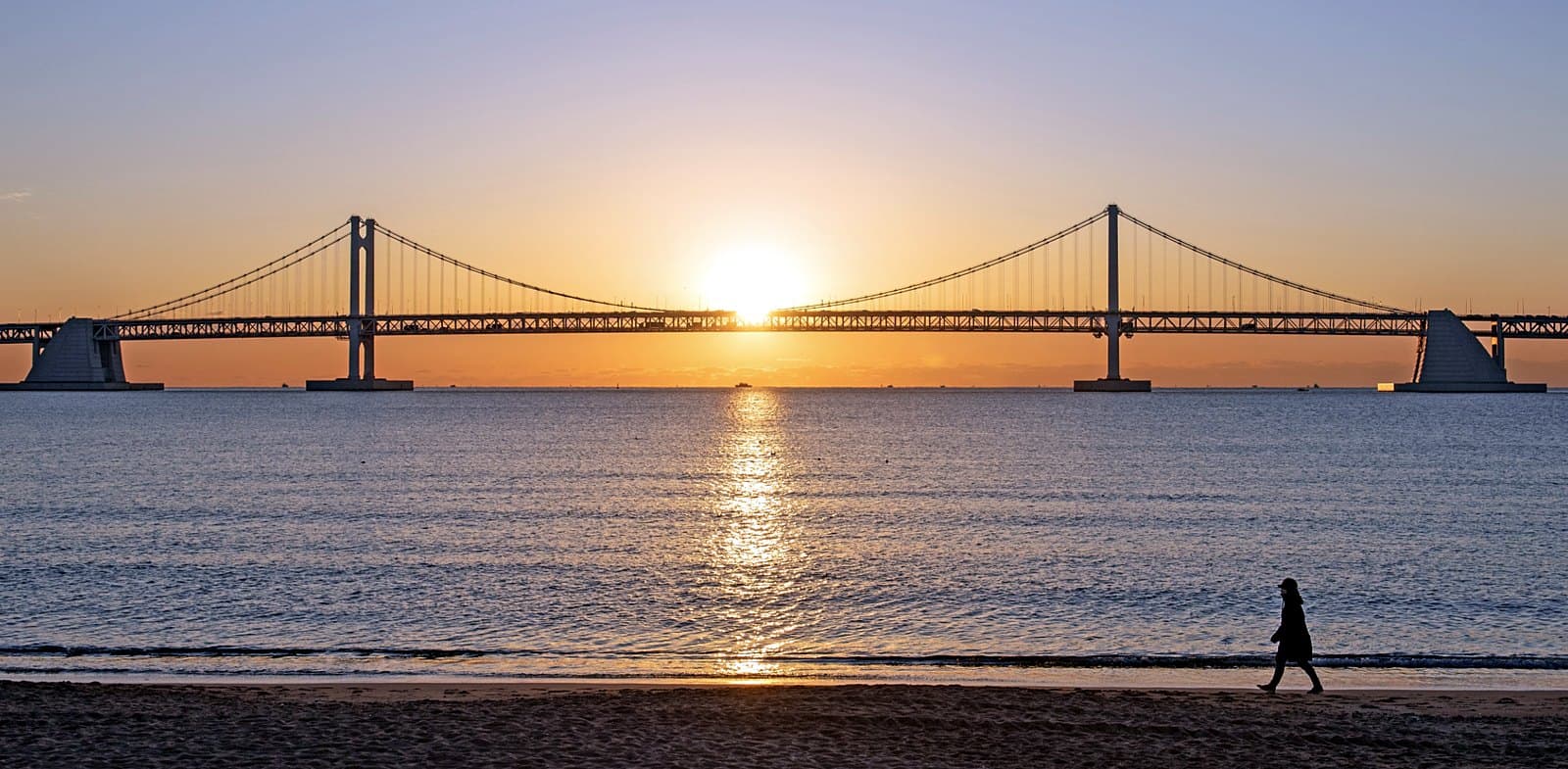
Gwangalli Beach
The beach to be on after dark — Gwangan Bridge lit up across the bay.
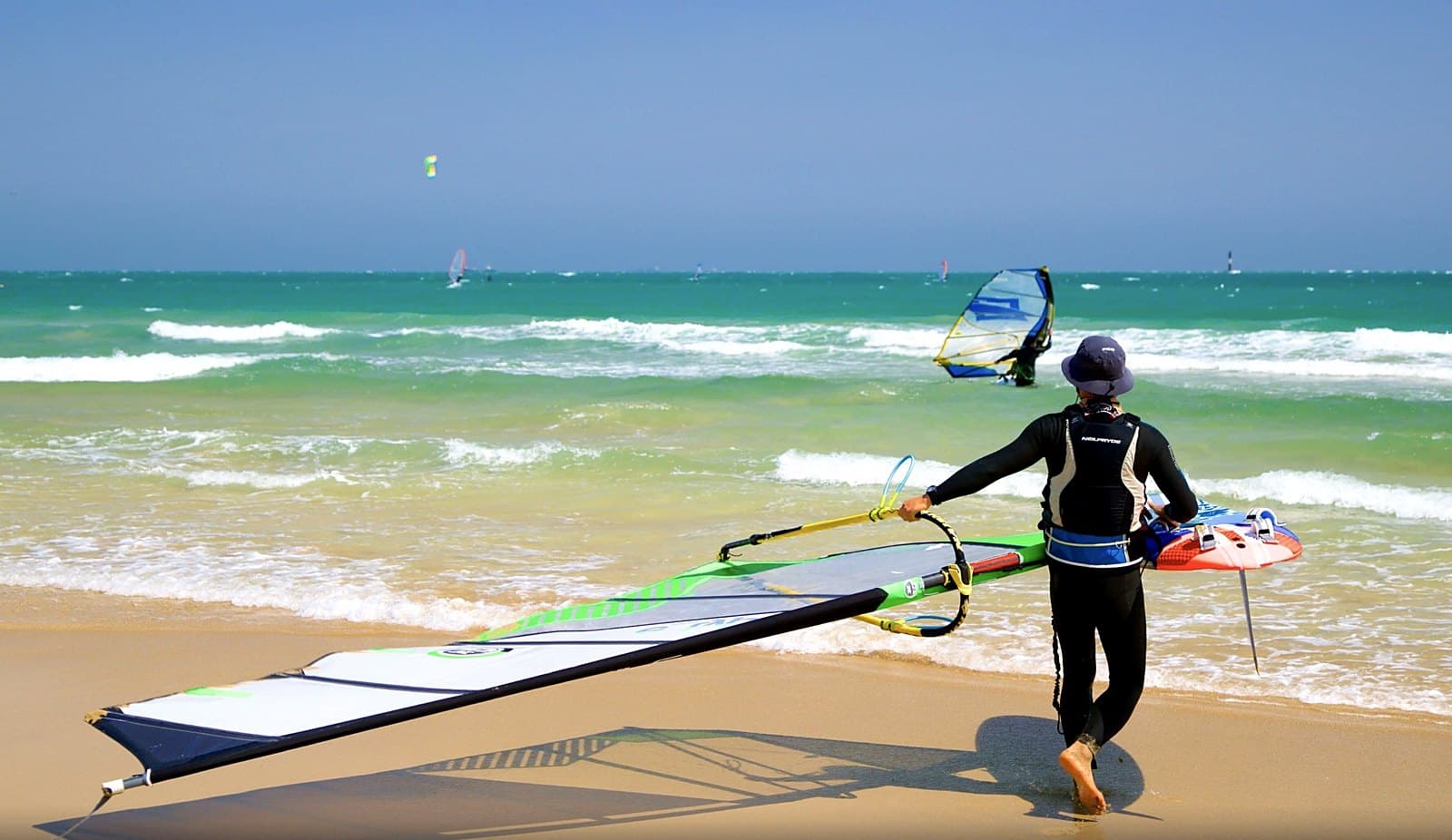
Songjeong Beach
Busan's surf beach — gentler, younger and a long way from the Haeundae crowds.
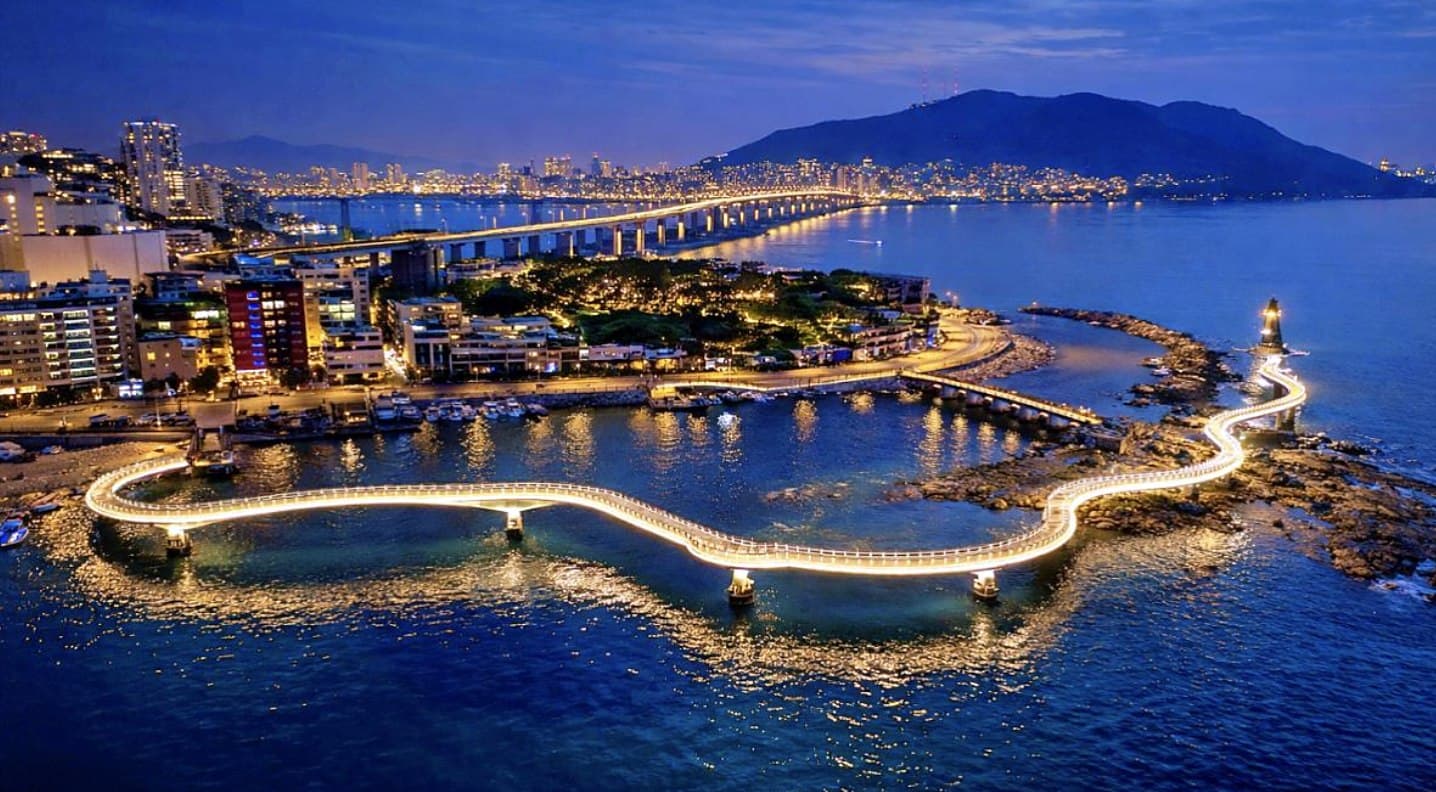
Songdo Beach
Korea's first public beach, opened in 1913 — with a cable car over it.